







 Debunking Viral Claim About the Talmud and Minors

28 min read
17 min view


4 min read


Rabbi Sacks’ response to Emil Fackenheim’s proposed post-Holocaust 614th commandment.
While the Jewish tradition believes there to be 613 mitzvot, a remarkable suggestion was made by the German-born concentration camp escapee Emil Fackenheim, the eminent Jewish philosopher who passed away in 2003.
Fackenheim, at age 22, managed to flee Sachsenhausen and make his way to England. His older brother was tragically killed by the Nazis. Having been lucky enough to survive the horrors of the Holocaust, years later he argued in a provocative 1968 article in Commentary magazine for what became known as the 614th mitzvah. He wrote:
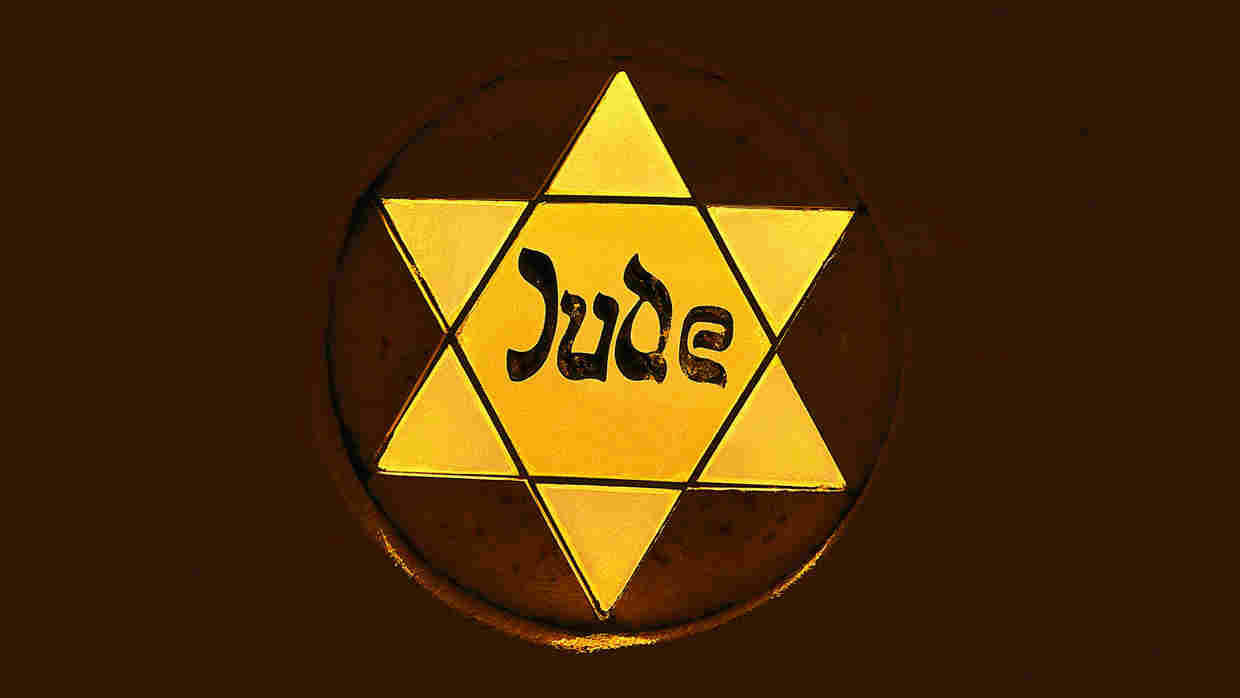
At Auschwitz, Jews came face to face with absolute evil. They were and still are singled out by it, but in the midst of it they hear an absolute commandment: Jews are forbidden to grant posthumous victories to Hitler. They are commanded to survive as Jews, lest the Jewish people perish… Finally, they are forbidden to despair of the God of Israel, lest Judaism perish… A Jew may not respond to Hitler’s attempt to destroy Judaism by himself cooperating in its destruction. In ancient times, the unthinkable Jewish sin was idolatry. Today, it is to respond to Hitler by doing his work.
The case Fackenheim made is convincing on its surface. He believed it incumbent upon every Jew to keep his or her faith so as to not grant a victory to Hitler, who had so heartily sought the destruction of not only Jews but of Judaism.
Yet Rabbi Jonathan Sacks, in the chapter of his book Tradition in an Untraditional Age (1990) titled “The Holocaust in Jewish Theology,” published a year before he became Chief Rabbi of England, took issue with Fackenheim’s argument.
“Fackenheim is trying to rescue something positive from the Holocaust,” he conceded at the start. “After all, Jews have gone on living and having children. Above all, they created the state of Israel, driven by the imperative never again to be vulnerable to another Holocaust.”
But then he went on to offer his rebuttal.
Jewish survival has religious significance after the Holocaust only because it had significance before the Holocaust.
“The Holocaust did not make Jewish survival a mitzvah unless it was already a mitzvah,” he argues. After all, while Jews were the Shoah’s main victims, they weren’t the only ones. Gypsies too were killed en masse, “but that did not make it a command to be a gypsy.” Rather, “Jewish survival has religious significance after the Holocaust only because it had significance before the Holocaust.”
Some Jews reacted to what they had experienced in the camps by remaining Jewish. Others abandoned their faith. The Holocaust, Rabbi Sacks wrote, was not the source of a providential imperative, but rather “proved that it was dangerous to be a Jew. But it also proved that it was dangerous to assimilate, and yet that has not stopped Jewish assimilation.”
Fackenheim, Sacks believed, “erred in building a Jewish theology on the very foundations of the Holocaust. That way, madness lies. There is no way of building Jewish existence on a command to spite Hitler. That is giving too much to Hitler and too little to God.”
After all, the Jewish faith existed for over 3,000 years before the Führer. And while of course the Holocaust was unique in its awful scope, it was not the first attempt to exterminate the Jewish people. The past couple of months alone we recalled in our calendrical commemorations two holidays that describe other such efforts, Purim and Passover. “The people [of] Israel did not survive Egypt to spite Pharaoh, nor did it survive Purim so as not to hand Haman a posthumous victory.” Rather, the Jews survived to continue their covenantal commitment to God that had long predated our Egyptian and Persian adversaries, and has continued well-beyond the Nazis.
“We are Jews today despite the Holocaust, not because of the Holocaust,” Rabbi Sacks concluded. “The Holocaust has not changed the meaning of Jewish life: and that is the miracle.”
This Holocaust Remembrance Day, while we mourn the countless lives lost, many of us no doubt will strengthen our commitment to continued faith. But, taking a page from Rabbi Sacks, let us do so not because we are antithetical to those modern enemies who seek our annihilation, but because of our adhesion to a miraculous, millennia-long tradition that has always withstood both tyrants and time.










Wow! You Jews... What a People, what a Culture, what a Religion, what a Mensch to Humanity!! (dont mention it!)
Im 83. Raised a nice little Baptist goy. In church I heard bad stories about jealous Jews killing and other blood libel stuff. So that when I heard the word Jew, I was scared.
So then my brother brings this Jewish kid home, and their best buds. And he seems real nice but I kind of hold back. My mom gave him the third degree about Jesus.
And Joel (the Jewish kid) very respectful and gentlelike, explains that the Jews see Jesus as a prophet but not as a god. Well, his maturity (God! He was only eleven!) And tact kind of won that round. I was impressed, like my mom was I think. Joel at 84 is still my brother's oldest friend, and mine as well.
Am Yisrael Chai!!
Oops ! Should have read:
"In church I heard bad stories about jealous Jews Killing Jesus..."
Holocaust theology is very complex, especially in how it affected many people. This article was a nice start but a much fuller treatment of the issue is required.
Thank you for this significant "food for thought."
Let's just stick to the 613 Commandments and merit the ultimate redemption!