







 Debunking Viral Claim About the Talmud and Minors
Jewish Geography
Jewish Geography




8 min read


A number of Jews have called Greenland home.
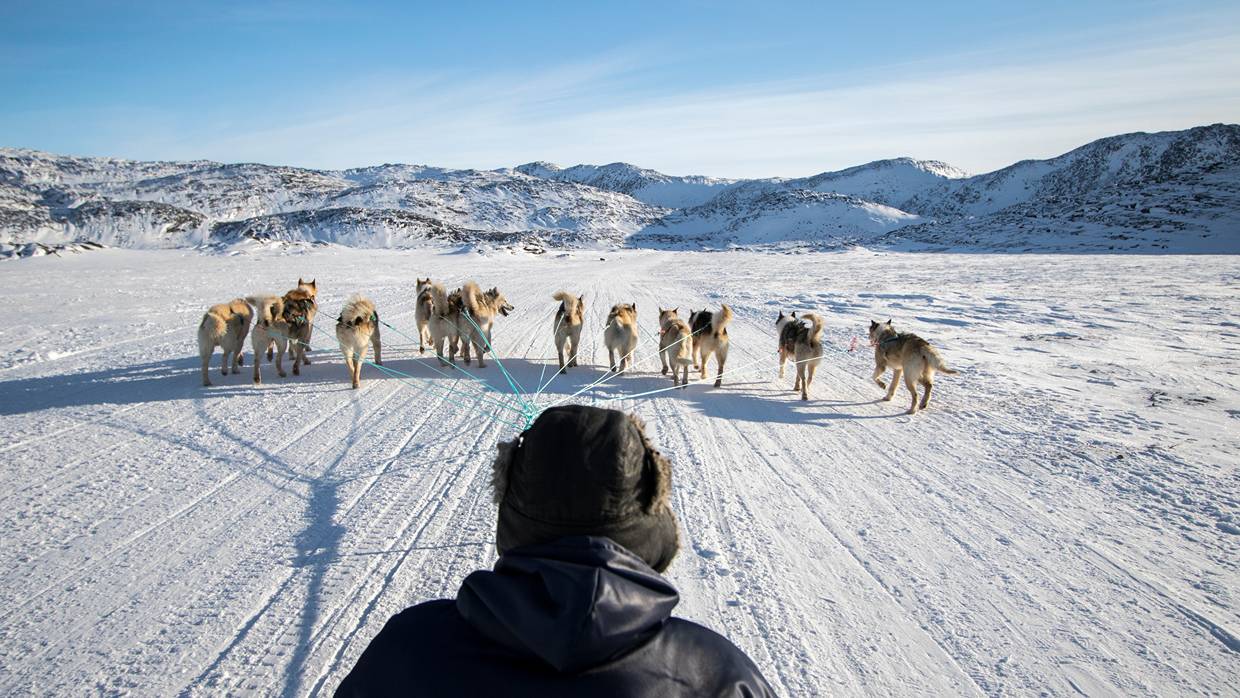
Greenland has been in the news recently, drawing attention to this remote Arctic island. Considered the world’s largest island at over two million square kilometers, Greenland has a population of just 57,000. 80% of the island is covered with ice and most of it lies inside the Arctic Circle. Nearly 90% of Greenland residents are members of the indigenous Inuit ethnic group. About 12% of the population is non-Inuit, primarily from Denmark, which has had settlements on the island since the Middle Ages. Long associated with Danish rule, Greenland became an official part of Denmark in 1953.
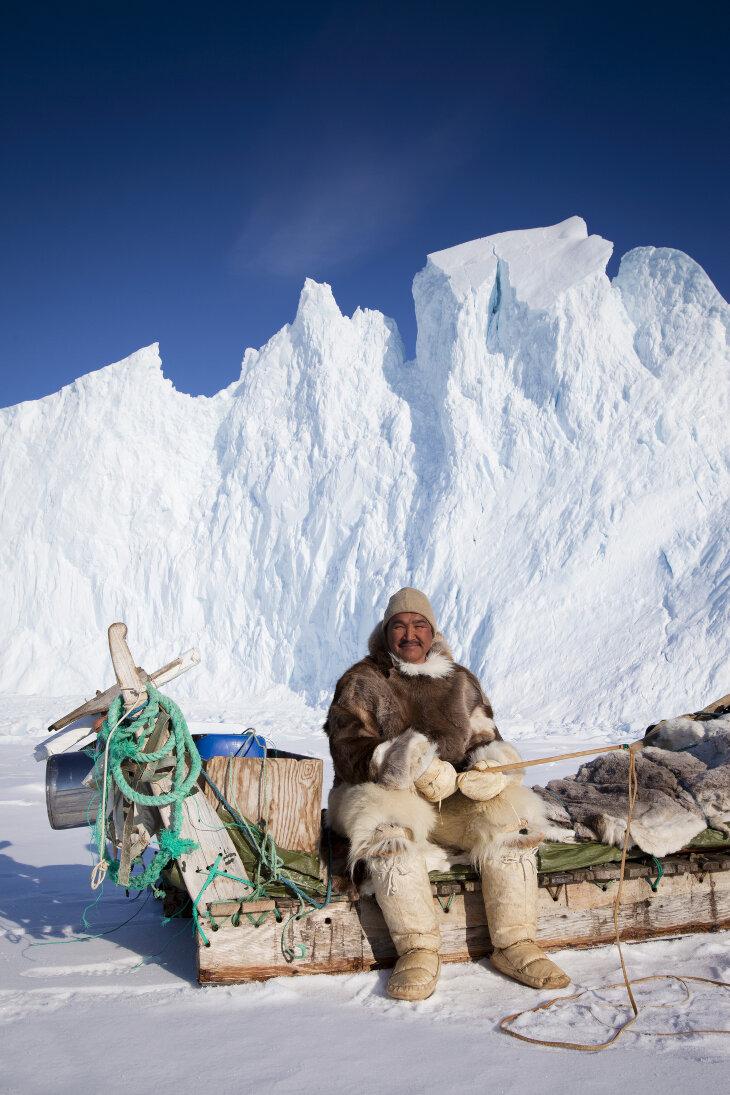
While Greenland has never had a permanent Jewish community, a number of Jews have called Greenland home. Here are the stories of a few of these remarkable Jewish residents.
Icelandic historian Dr. Vilhjalmur Orn Vilhalmsson believes that the first Jews to set foot on Greenland were likely whalers working in the arctic waters around Greenland in the 1500s and 1600s. He notes that Jews worked in the whaling industry in the Netherlands then and that Dutch whalers worked in and around Greenland during that time. It’s possible that some Dutch Jews formed a minyan or celebrated a Jewish holiday in what must have seemed like the frigid edge of the world in the course of a long-ago whaling expedition.
Dr. Fritz Loewe was a brilliant Jewish meteorologist who was born in Berlin in 1895 and became a leading expert on continental drift theory. He traveled to Greenland in 1929 along with two other scientists; they set up a remote camp in Greenland’s forbidding interior and studied Greenland’s forbidding weather and thick ice cover.
It wasn’t easy. During one trip to bring supplies to the camp, local employees they’d hired quit. Dr. Loewe and two colleagues carried all the supplies themselves over rugged terrain in temperatures that reached -54 degrees Celsius (-65 degrees Fahrenheit). By the time he reached the camp, Dr. Loewe’s toes were all frostbitten. When they became gangrenous, a colleague was forced to amputate them using only the crude instruments he had at the camp: a pair of scissors and a penknife.
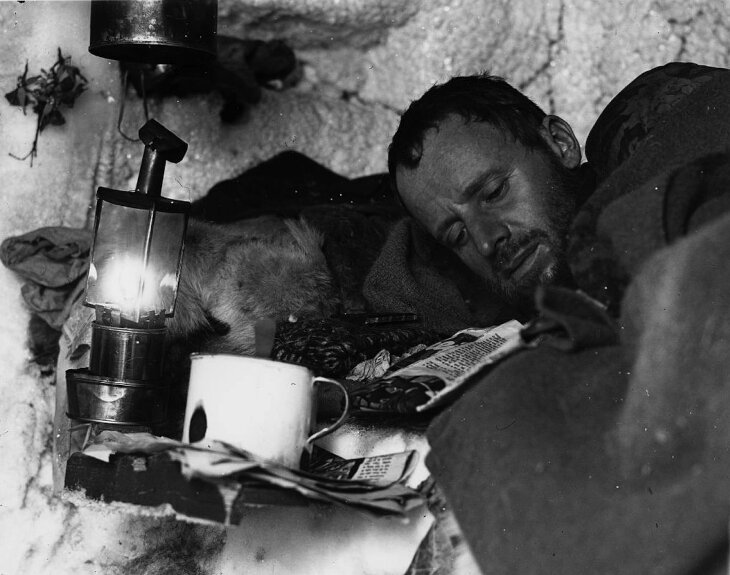 Dr. Fritz Loewe in Greenland
After the expedition’s senior scientist perished during the research trip, Dr. Loewe took over as leader of the team. He led the remaining scientists to safety after their measurements were complete. Dr. Loewe returned to Greenland a couple of years later, in 1932, along with his wife and a German film crew which made a movie about his exploits. The film S.O.S. Eisberg was released in 1933.
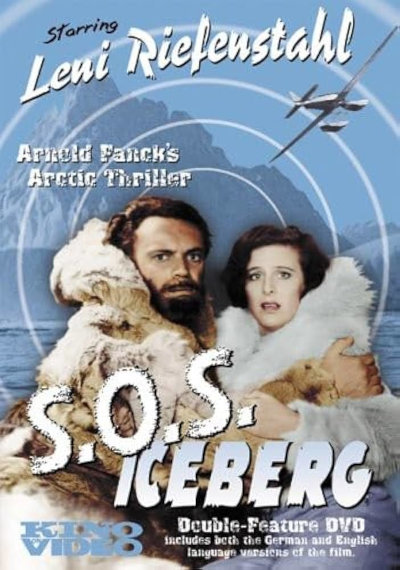
Instead of bringing Dr. Loewe fame and acclaim, the movie – which starred Nazi propagandist Leni Riefenstahl – coincided with the election of Hitler as Chancellor of Germany. Dr. Loewe lost his job and was briefly arrested. He fled Germany with his wife and daughters. He taught at Cambridge in England for a time, then moved to Australia, where he is today remembered as the beloved founder of the University of Melbourne’s Meteorology Department and one of the fathers of Australian scientific research. https://adb.anu.edu.au/biography/loewe-fritz-philipp-10850
In the 1950s, Greenland was home to a religiously observant Jewish nurse. Rita Scheftelowitz was a Jew whose parents had moved to Denmark where she grew up. During the Holocaust she was saved by her teacher, Gerda Valentiner, who risked her life to save Jewish children and was named a Righteous Gentile after the war. As an adult, Rita kept kosher and was a passionate Zionist. Looking for adventure, she signed up to work in western Greenland in 1955. It was a year she never forgot.
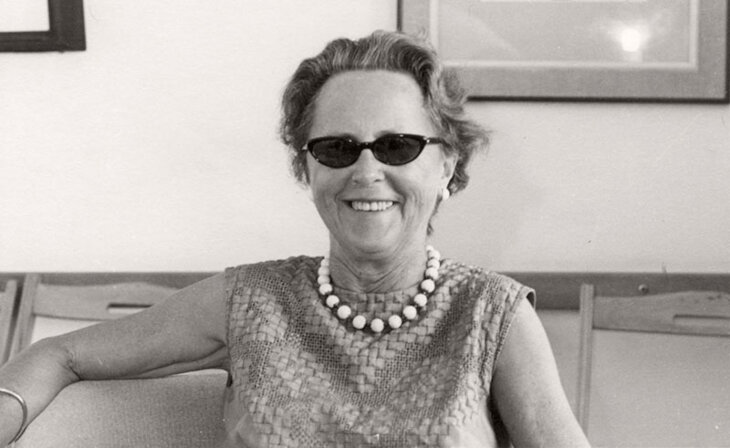 Gerda Valentiner, the teacher who saved Rita
When Rita’s ship, carrying doctors and other officials from Denmark, docked in the small town of Aasiat, virtually the entire populace had gathered at the harbor to welcome them. Rita soon found that her medical help was vitally needed: local Inuit had no little immunity to diseases like tuberculosis and measles and many people were ill. Rita did most of her traveling around the shore hamlets of western Greenland by boat. When the sea froze over in winter, she travelled inland by dogsled.
Rita found that keeping kosher wasn’t difficult in Greenland; she subsisted on a diet that consisted mostly of kosher fish caught in the waters off Greenland. Supplies were delivered twice during the winter, dropped from an airplane flying through western Greenland. One of these precious packages contained a gift from her mother back in Denmark: matzah to eat on Passover.
In 1955, a German Jewish couple, the Fischers, visited Greenland, and were amazed to find a fellow Jew so far from any Jewish community. Alfred Fischer later recalled that he and his wife toured Aasiat’s hospital. Rita asked the visitors if they, too, were Jewish, then explained that her parents had fled antisemitism in Russia and settled in Denmark, and that her dream - after she was finished with working in Greenland - was to make Aliyah and work in a children’s home in Israel. The Fischers shared some of their stores of tea and canned pineapple with Rita. When they left she told them B’Shana b’Yerushalayim - “Next Year in Jerusalem.”
Rita planned to return to Greenland for work but never managed to. Instead, she moved to Israel, learned Hebrew, and worked in Tel Aviv. She met her husband in Israel and they eventually moved to Denmark to raise their family.
Pituffik Air Force Base (formerly Thule Air Base), an American base on the northwest coast of Greenland, well within the Arctic Circle, is home to the northernmost Jewish congregation in the world. The United States and Danish militaries established a base at Thule in 1941 from which to study weather patterns and to broadcast radio messages. A decade later, the US began building up Thule Air Base, turning it into a major military base with over 10,000 soldiers.
Some of the soldiers pouring into Thule Air Base were Jewish and in 1954, Thule finally got its own regular Jewish organization. Airman 2nd Class William J. Gordon was a graduate of Yeshiva University in New York. Army Pfc. Mautice Betman, from Detroit, also wanted a Jewish place to pray: together the two young soldiers set up a synagogue inside the base. Jokingly, they called it B’nai Thule, or the Children of Thule. Over two dozen servicemen regularly attended the makeshift synagogue.
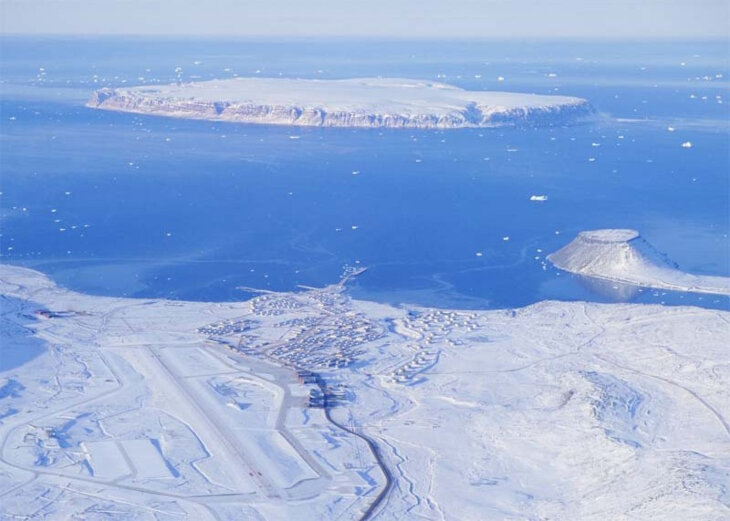 The Pituffik Air Force Base (formerly Thule Air Base)
In 1955, an energetic young Jewish lawyer from New Orleans, Lt. Maurice Burk, organized a Passover Seder at Thule Air Base. He arranged for matzah, kosher food and wine, and Haggadahs to be flown to the base. Over 50 servicemen attended, including soldiers from other bases in Greenland. At Rosh Hashanah, soldiers enjoyed services led by a rabbi who was on the base, and ate canned gefilte fish sent to Thule for the holiday.
A Jewish visitor to Thule in 1955 described some of the Jewish servicemen based in Thule. It was a diverse crowd. One serviceman, Robert J. Mezistrano, was born in Casablanca, and spoke, Arabic, French, Italian, and German as well as English; he’d moved to the US and joined the military. Louis Helish was a Holocaust survivor from Berlin who’d moved to America with his surviving family after the war and joined the Air Force. Far from home, these men and others found camaraderie and a Jewish community in the unlikeliest of places, the far north of Greenland’s rugged, forbidding landscape.
During World War II, the Northland was one of America’s most storied vessels. The Virginia-built ship was well equipped for arctic conditions; the US Coast Guard describes: the “new cutter (having) a reinforced welded hull to survive the pressures of sea ice with cork insulation to keep out the cold.” It was deployed along the West Coast of America, including Alaska. When World War II broke out, the Northland was sent to Greenland, where the US was patrolling the island after Denmark succumbed to the Nazi invasion.
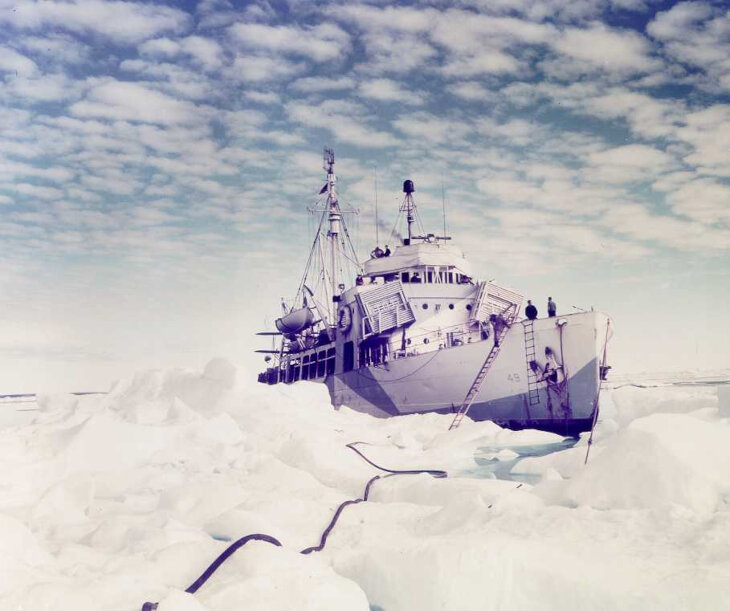 The Northland
The Northland racked up an impressive array of victories. In 1940, while the United States was still ostensibly neutral, the ship’s presence helped prevent the resupply of a major Norwegian weather base in eastern Greenland. This had a huge effect, compromising Nazi weather forecasts for northern Europe and helping to lead Germany to call off a planned sea invasion of Britain. In 1941, sailors on the Northland apprehended a boatload of German spies travelling on a Norwegian commercial vessel. Once the US entered the war, the Northland engaged in further action, including intercepting several Nazi ships bringing spies to Greenland.
In 1946, the Northland was decommissioned and sold to an American company which supported the Haganah, the secret Jewish fighting force that would soon become the Israel Defense Force (IDF). In 1947, the ship was renamed Matzpen - “Compass” in Hebrew - and brought Holocaust survivors to British-ruled Mandatory Palestine in defiance of Britain’s ban on Jews moving to the area. The US Coast Guard notes: “It was the only ship known to carry Nazi POWs to prison and, later, carry Jewish refugees to Palestine.”
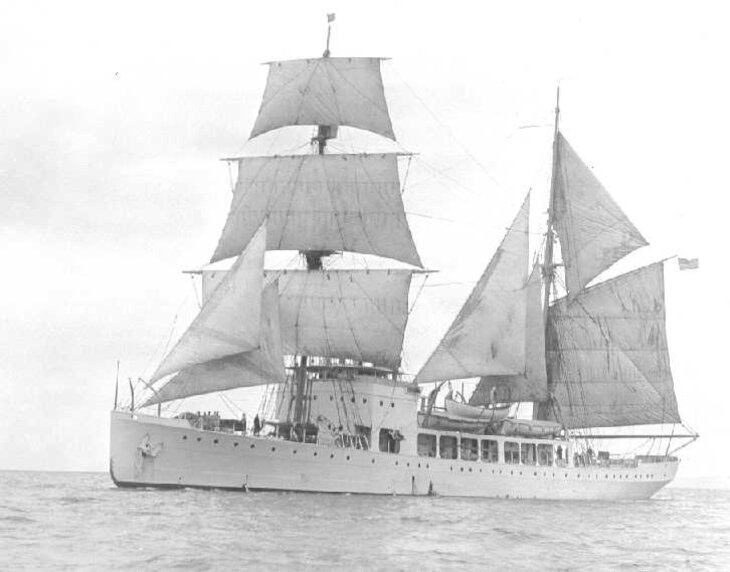 The Matzpen
When Israel became a state in 1948, the Matzpen became the first ship in Israel’s new Navy. It was renamed Medinat HaYehudim: “The Jewish State.”
Greenland is a beautiful, rugged, and forbidding island. Scarcely inhabitable, it’s nevertheless nurtured remarkable Jewish soldiers, scientists, and adventurers.











The Inuit are but one of a number of Alaskan native groups. The inane idea that name should replace "eskimo" ( a word of unknown origin, and not pejorative ) to use "Inuit" is actually insulting to the other Alaskan native groups - some much larger than the Inuit. Eskimo is more neutral and its replacement with Inuit by those purporting to be intelligent and/or sensitive is a demonstration of ignorance and insensitivity instead.
What an uncalled for, off topic and inane remark.
Are they Jews in Greenland now? It is interesting where Jews end up sometimes
Fascinating! Thank you.
Very interesting.
What a fascinating and unknown story for me!! Thanks sir very much!!!
I do not dispute that there might have been Jews involved in the whaling business, years back in Greenland, as well as elsewhere in the North Atlantic. But it must be noted, whales as food are traif.
Whale oil was the main reason for whaling before the widespread discovery and use of petroleum. The bones were also used, for example in corsets. I don’t think whale meat was ever a mainstream food for Europeans, although it was part of the diet of far north dwelling indigenous people such as the Inuit and Sami peoples.
Very interesting article…thank you.
Michal ( from Israel).
I enoyed reading this article. My father was born in Denmark and emigrated to America.