







 Debunking Viral Claim About the Talmud and Minors




8 min read


How did a Jewish kid from Brooklyn become a salsa legend known as “El Judío Maravilloso”?
When Larry Harlow passed away on August 20, 2021, the Latin music world mourned not just a pioneer, but a paradox: a Jewish man from Brownsville, Brooklyn, hailed across the Americas as “El Judío Maravilloso” — The Marvelous Jew. Though Harlow was neither Puerto Rican nor Cuban, he became a founding father of salsa, a genre born from the streets and barrios of New York City—a vibrant fusion of Afro-Caribbean rhythms, jazz, and Latin soul that became a cultural force.
His improbable journey—from a bar mitzvah-funded trip to Cuba to his groundbreaking work with Fania Records and the legendary Fania All-Stars—defied expectations and reshaped Latin music. Harlow didn’t just master the genre; he helped define it, leaving behind a legacy as bold and unforgettable as his nickname.
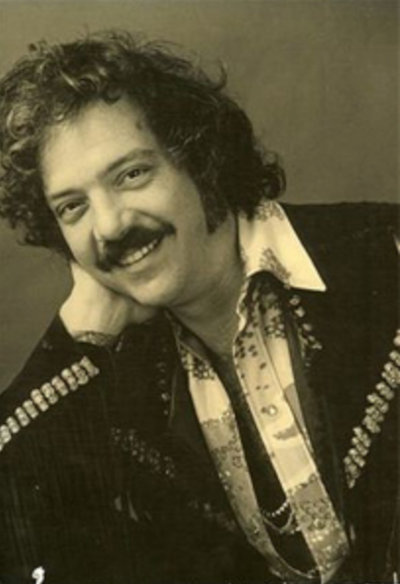
Born Lawrence Ira Kahn on March 20, 1939, in the Brownsville section of Brooklyn, Larry Harlow grew up surrounded by music. His paternal grandfather was a theater critic for The Jewish Daily Forward, but it was his father, Buddy Kahn, who became a formative influence. Buddy was a mambo musician, bass player, and bandleader. Larry’s mother, Rose Sherman, was an opera singer. By the age of five, Larry had already begun playing piano and spent his early years backstage at his father’s club, the Latin Quarter, absorbing the eclectic mix of sounds and performances.
Inspired by his father, who performed under the name “Buddy Harlowe,” Larry adopted a similar stage name, dropping the final “e” to become “Larry Harlow.” He was accepted into New York City's prestigious High School of Music and Arts, where he became fascinated by the Latin music that echoed through the bodegas and neighborhoods of Harlem.
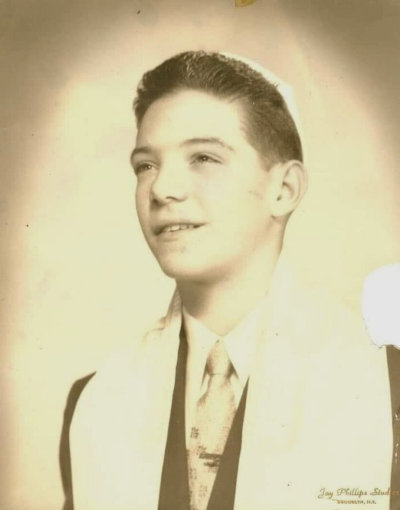 Larry Harlow, Bar Mitzvah boy
“When I got out of the subway, I would walk up this huge hill and hear this strange music coming from all the bodegas,” Harlow recalled in a 2006 interview with The Jewish Daily Forward. “I thought, ‘What kind of music is this? It’s really nice.’”
That music—what would come to be known as salsa—was itself a hybrid creation: a high-energy blend of traditional Cuban music, Afro-Puerto Rican rhythms, cha-cha-chá, mambo, rumba, jazz, bebop, R&B, and even rock. Coined in 1960s New York, “salsa” gave a name to this electrifying mix that, for many Latin Americans in the U.S., became a bridge between cultural heritage and the modern urban experience.
As biographer Aurora Flores noted, “a new music was born on the streets of New York, and Larry Harlow was one of its fathers… It was a sound conceived by the American-born children of Puerto Rican citizens, Cuban and Dominican immigrants, African-Americans and the great-grandson of an Austrian rabbi.”
After graduating, Harlow used his bar mitzvah money to purchase a reel-to-reel tape recorder and a one-way ticket to Cuba and then Mexico, immersing himself in Afro-Cuban music and dance. “I’d never been out of the States before – and I ended up in paradise. I fell in love with the mambo, the cha-cha, and the African roots and I started practicing my craft,” he later said.
Though he briefly worked as a schoolteacher, Harlow’s passion for Latin music prevailed. “It was very difficult bucking the odds, being the gringo and being the white Jewish guy from New York trying to play Latin music… until I was able to command the language and I could play as good as everyone else if not better.”
Determined, he attended audio school and became a skilled recording engineer, positioning himself at the forefront of Latin music’s electronic age. His talents soon caught the attention of Latin music labels, and he became a prolific producer—most notably for Fania Records.
Despite having no Latin heritage, Harlow’s deep love for the genre led him to become nearly fluent in Spanish, even if his Brooklyn accent lingered. In Havana, he spent time at a local luncheonette named Fania—a popular hangout for musicians—where he met Brooklyn businessman Jerry Masucci. That meeting would eventually lead to one of the most important collaborations in Latin music history.
When the Cuban Revolution forced him back to New York, Harlow’s mother arranged gigs for him in the Catskills’ resort hotels, a beloved vacation destination for Jewish families. Before the revolution, Cuba had been a favored destination for affluent Americans, who returned with a deep appreciation for mambo, cha-cha, and rumba.
Soon, Cuban rhythms found their way into the Borscht Belt resorts, where energetic mambo bands and dance instructors became the norm. Legends like Tito Puente played at Grossinger’s, while the Irving Fields Trio gained fame for blending Jewish melodies with Latin rhythms. Their popular album Bagels & Bongos fused songs like My Yiddishe Momme with the vibrant pulse of Latin music.
After the U.S. imposed trade and travel embargoes on Cuba, major labels cut ties with many Latin American artists. Sensing an opportunity, Jerry Masucci co-founded Fania Records in 1964, naming it after the Havana diner where he and Harlow had first connected. The label’s very first signing? Larry Harlow.
Masucci and his partners began by selling records out of a car trunk in Spanish Harlem. Their grassroots strategy worked. Soon, Fania Records had spread to Miami, Chicago, and Puerto Rico, eventually becoming a powerhouse that launched the careers of many salsa legends.
The Fania All-Stars, a supergroup of the label’s top talent, included Harlow and became known for their high-energy performances. In 1971, a documentary film titled Our Latin Thing captured one of their explosive concerts at New York’s Cheetah Lounge. Filming the event was Harlow’s idea, and it helped propel Fania into the mainstream. A year later, they performed at Yankee Stadium before a crowd estimated between 30,000 and 45,000. The All-Stars sold out Madison Square Garden in 1973 and returned triumphantly to Yankee Stadium in 1974.
That same year, they brought salsa to a global audience with a performance in Kinshasa, Zaire, held in conjunction with the famed Muhammad Ali–George Foreman “Rumble in the Jungle” boxing match. The 80,000-person crowd roared its approval.
Harlow earned renown for his electrifying sound, incorporating instruments like the clavinet keyboard and Fender Rhodes electric piano. A versatile talent, he also played flute, bass, oboe, English horn, vibraphone, violin, percussion, and various electronic keyboards.
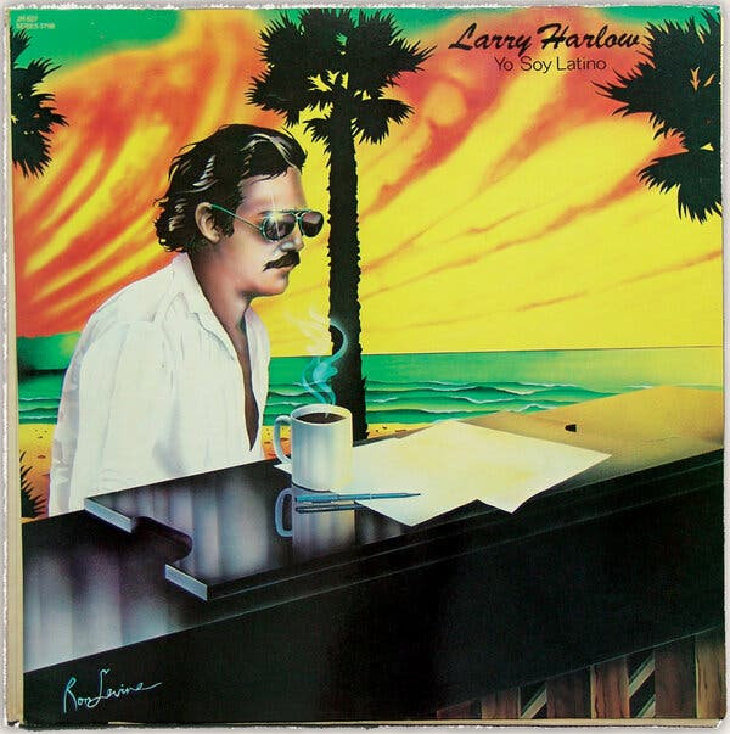
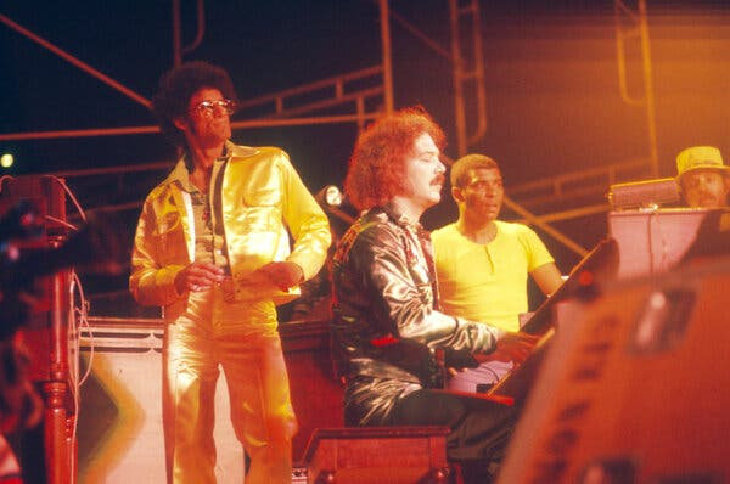 Larry at the piano
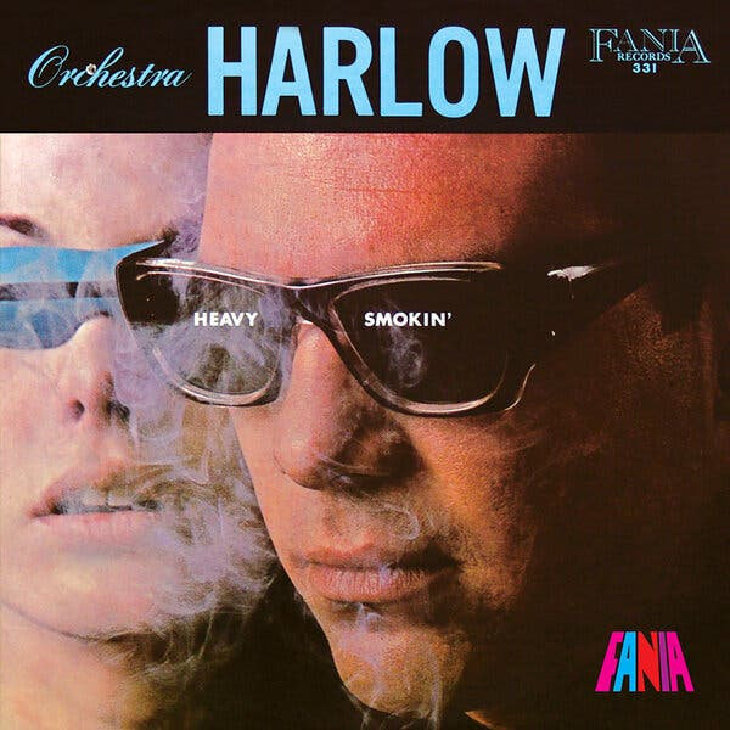
His 1965 debut album, Heavy Smokin’, was groundbreaking—it featured a female conga drummer, a rare sight in the male-dominated Latin music world. He continued to challenge conventions, later producing Latin Fever, an all-female orchestra that defied industry norms.
As one of Fania’s most prolific contributors, Harlow played on over 200 albums and recorded 50 of his own. He revolutionized the sound of salsa by introducing a two-trumpet, two-trombone frontline—now a standard configuration in salsa bands.
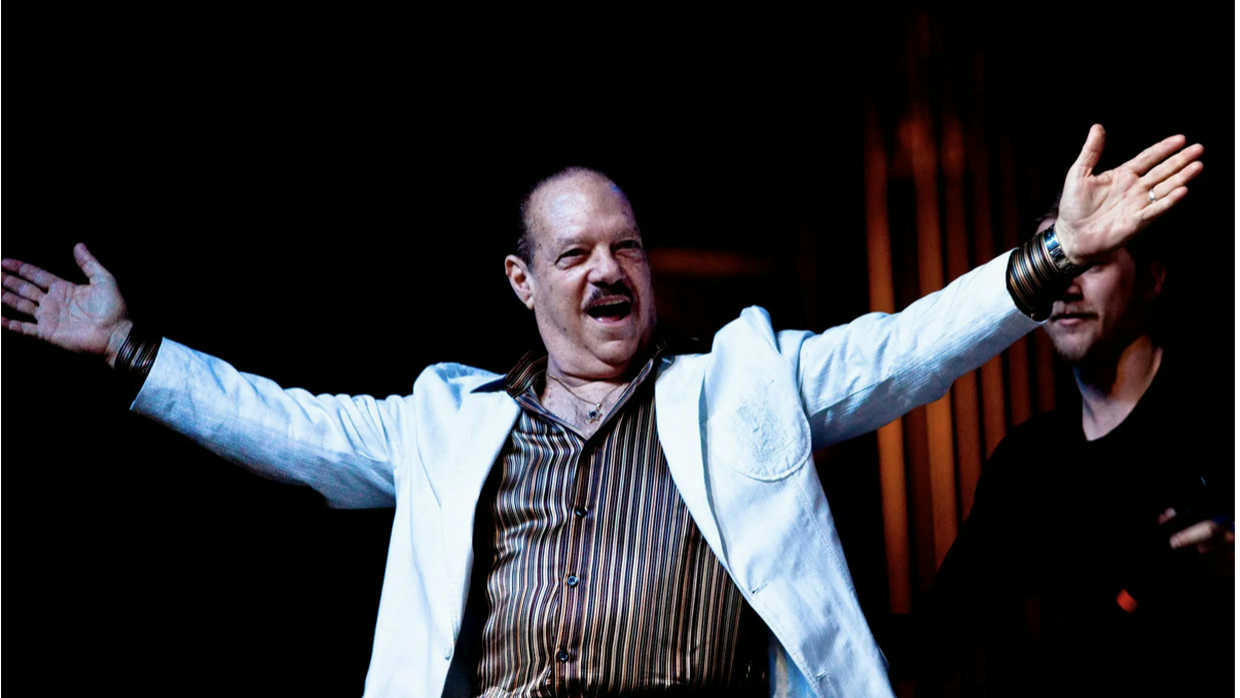
At concerts, he was famously introduced as El Judío Maravilloso — “The Marvelous Jew” — a title he embraced proudly. It became a symbol of his singular place in Latin music.
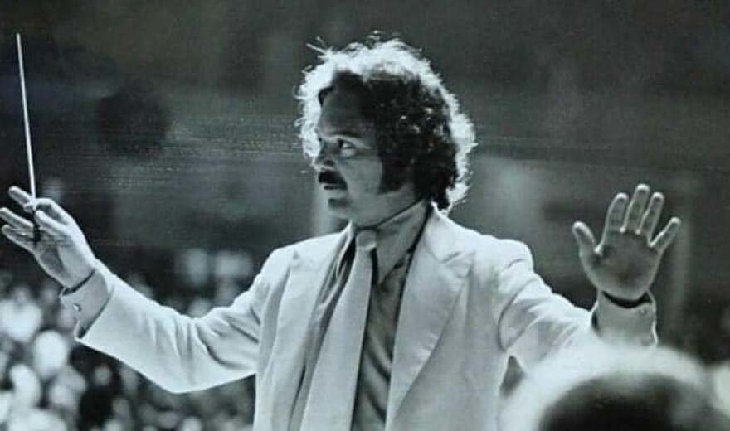 Larry conducting Hommy at Carnegie Hall in 1973
Harlow was a voracious collaborator. He recorded bilingual Beatles covers, designed psychedelic album art, and worked with artists like Stephen Stills and Janis Ian. He even formed a rock-jazz project with Blood, Sweat & Tears keyboardist Jerry Weiss. In 1972, he painstakingly adapted The Who’s Tommy into a salsa opera titled Hommy, relocating the British rock opera’s storyline to New York’s Latino barrios.
One of Harlow’s most enduring contributions came in 1974, when he spearheaded a campaign to have Latin music formally recognized at the Grammy Awards. He gathered more than 100,000 signatures and delivered them in person to the awards ceremony.
His efforts paid off. Today, the Latin Grammy Awards boast over 50 competitive categories, including Album, Record, and Song of the Year. In 2008, Harlow was honored with the Trustees Lifetime Achievement Award from the Recording Academy—the very institution he once lobbied.
Many Latinos considered him an honorary Puerto Rican, a title he accepted with humility. But Harlow never lost sight of his roots. “I’m a proud SOB,” he often said — “Son of Brooklyn” — adding, “I was always proud to be Jewish.” He was frequently seen wearing a Star of David around his neck.
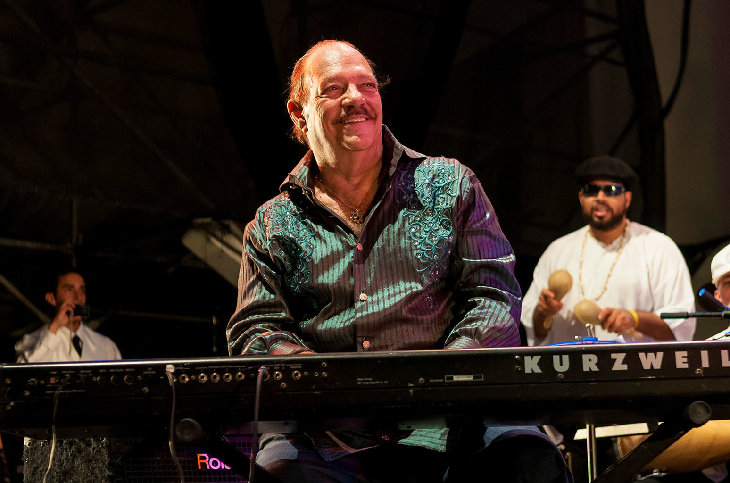
Larry Harlow died at a care center in the Bronx at the age of 82. Even after his time with Fania, he remained active in recording and performing until just before the pandemic.
“Larry’s contributions to what today is known as salsa are immense,” wrote seven-time Grammy nominee Bobby Sanabria on Facebook. “A true part of NYC’s history has been lost… to our Latino community and it is heartfelt.”
In tribute, the City of New York renamed the intersection of Columbus Avenue and West 86th Street — Harlow’s neighborhood for 50 years — “Larry Harlow Way.” At the dedication, a 13-piece band composed of musicians who had worked with Harlow over the decades filled the air with the sounds of salsa, celebrating the life and legacy of “The Marvelous Jew.”
SOURCES







The correct translation is The Jewish Marvel. Here's my take:
https://open.substack.com/pub/aurorafloreshostos/p/larry-harlow-el-judio-maravilloso?r=lcx8c&utm_medium=ios
Very interesting and a nice tribute to Larry. Mazel Tov.
Thank you, Henry.
Pretty good read.....!! Great job, Dan.
Thank you, Bill. I had a lot of fun with this one. His life story is movie-worthy. At a minimum it would have a great soundtrack.