







 Debunking Viral Claim About the Talmud and Minors




6 min read


The Treaty of San Remo redrew the map of the region and sowed the seeds of long-standing geopolitical conflicts.
You’ve probably heard of the Balfour Declaration of 1917 or the U.N. Partition Plan of 1947. But chances are you haven’t heard of The Treaty of San Remo, created in 1920 which radically transformed the Middle East and sowed the seeds of conflict that reverberate to this very day.
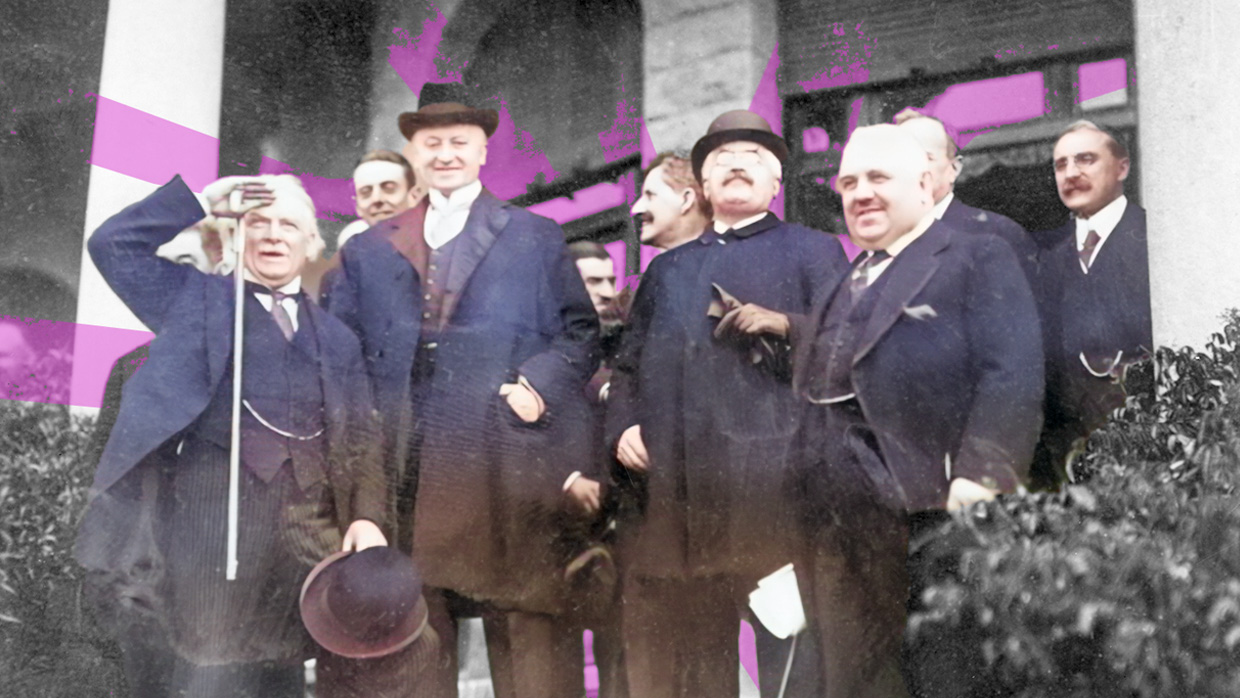
A year and half after the end of World War I, the victorious Allied Powers convened at a villa in northern Italy to decide the fate of the defeated Ottoman Empire and redraw the map of the Middle East, which had been part of that empire. The result of this conference was The Treaty of San Remo which was signed on April 24, 1920.
The Treaty of San Remo redrew the map of the region, creating several new nation states, and also sowed the seeds of long-standing geopolitical conflicts. The decision to grant Britain the mandate over Palestine, in particular, had profound consequences.
At the heart of the Treaty was the dismantling of the Ottoman Empire. The Allied Powers, including Britain, France, Italy, and Japan (with American diplomats present as observers), convened to discuss the post-war division of the Ottoman territories. The outcome of this conference shaped the political boundaries of the Middle East and laid the foundation for the establishment of many of the nation-states, with the League of Nations overseeing the mandates entrusted to specific European powers.
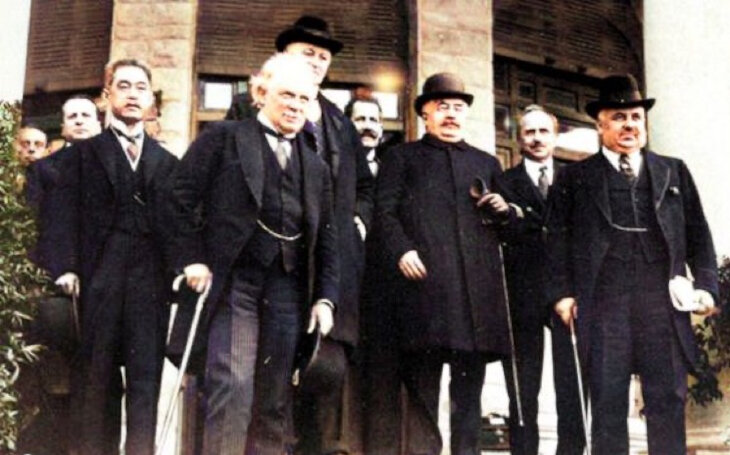 After the resolution on 25 April 1920, standing outside Villa Devachan, from left to right: Japan’s Matsui, British Prime Minister Lloyd George, Earl Curzon, French diplomat Philippe Berthelot, Prime Minister Millerand, Vittorio Scialoja, Italian Prime Minister Nitti
The British Empire emerged from World War I as a major player in the Middle East, and the Treaty of San Remo solidified its influence in the region. The Sykes-Picot Agreement of1916, a secret understanding between Britain and France, had already outlined their intentions for the post-Ottoman division of the region. The San Remo conference brought these plans into the public domain and legitimized the British control over Palestine.
One of the most notable outcomes of the treaty was the establishment of the mandate system, which granted certain territories to the control of mandatory powers – Great Britain and France. The League of Nations, the international organization formed after World War I, entrusted Britain and France with the administration of various territories in the Middle East. These mandates laid the groundwork for the creation of several modern states: Iraq gained independence from the British mandate system in 1932 and the French mandate led to the creation of Lebanon in 1943 and Syria in 1946.
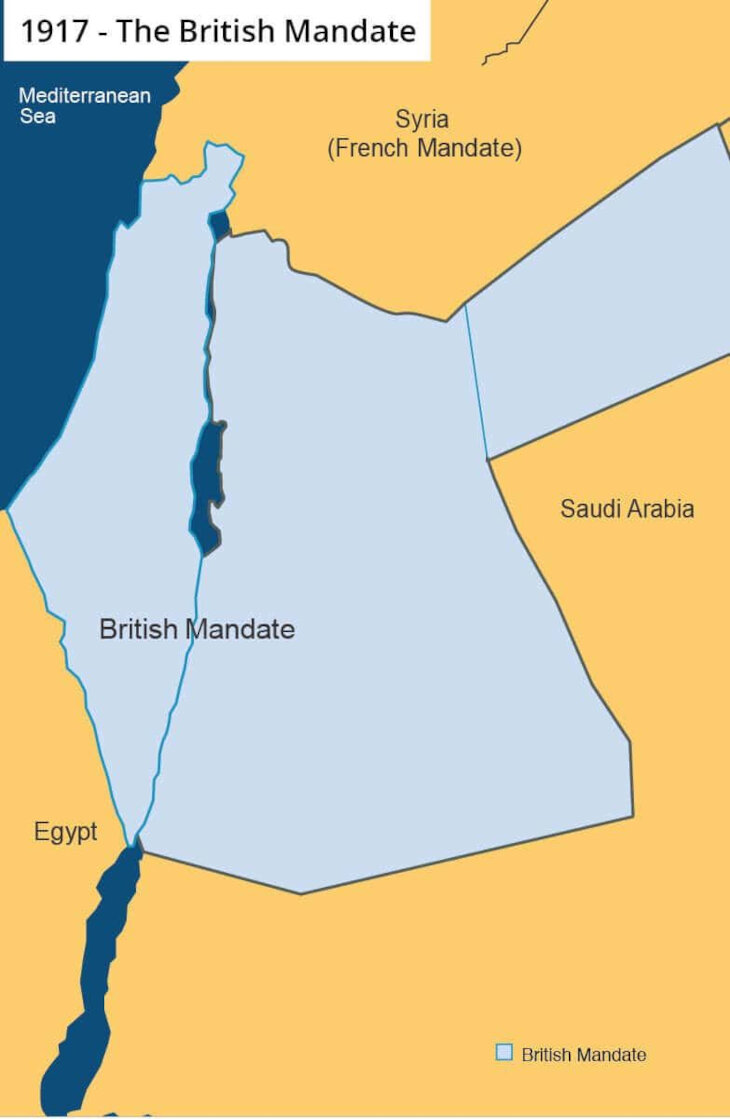
In hindsight, it’s clear that the biggest weakness of the mandate system was that the artificial creation of these modern Middle Eastern states was largely based on the political, economic and historical interests of European colonial powers. It did not take into consideration the past history of the region or the religious, tribal or territorial realities of the indigenous populations. The terrible situation that we see today in Lebanon, Syria and Iraq is, in many ways, the direct by-product of the short-sighted decisions made by these European powers 100 years ago.
The British and French may not have done the best job in creating the new Arab states that came into existence post World War I, but they basically followed and fulfilled the decisions made at San Remo. One of its key provisions of the treaty was also the establishment of a Jewish homeland in Palestine. But that isn’t what happened. It was the consequence of deliberate policies and decisions made by the British government, which will be explained further in this article, that led to Great Britian’s failure to fulfill their obligations, leading to enduring adverse consequences for the establishment of a Jewish state.
The Treaty of San Remo incorporated the principles of the Balfour Declaration of 1917, which had expressed British support for the establishment of a "national home for the Jewish people" in Palestine toward the end of World War I. The League of Nations granted Britain the mandate to oversee the administration of Palestine and to implement the provisions of the Balfour Declaration.
Despite the explicit endorsement of a Jewish homeland in Palestine, the British Mandate administration failed in this task, largely due to the desire to appease the much larger Arab population of the Middle East. The implementation of policies that hindered Jewish immigration and settlement contradicted the spirit of the mandate. Restrictions on land purchases by Jews and the introduction of quotas for Jewish immigrants limited both the size and development of a thriving Jewish community in Palestine and put the Jews who were there at great risk.
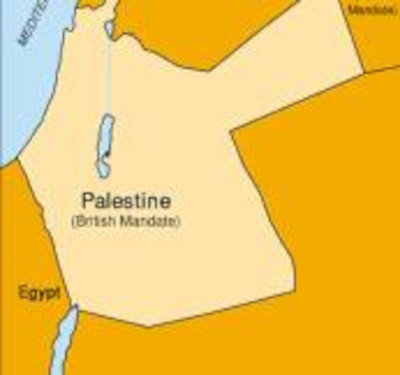
A significant factor contributing to the failure of the British to establish a Jewish state was the creation of Trans-Jordan (present-day Jordan) in 1921. Originally intended as part of the British Mandate for Palestine, Trans-Jordan, which comprised a whopping 73% of the original territory on the East Bank of the Jordan that was earmarked solely for the Jewish state, was carved out and placed under the rule of Emir Abdullah, the brother of Hussein the Hashemite Sharif (ruler) of Mecca. This decision marked a dramatic departure from the commitment to the establishment of a Jewish homeland, as it reduced the territory available for Jewish settlement down to one quarter of the original land set aside at San Remo. The remaining 27% of the territory, on the West Bank of the Jordan, was to be further divided amongst the Jewish and Arab residence of the area, leaving less than 15% of what was originally set aside at San Remo for a tiny Jewish state.
This was not the only British attempt to sabotage their treaty obligations. On the eve of the start of World War II, the British government issued the White Paper of 1939. This British foreign policy statement limited Jewish immigration to Palestine to a mere 75,000 over five years and then called for a complete cessation of all Jewish immigration after five years. The timing couldn’t have been worse. At a time when Jewish refugees desperately sought refuge from the horrors of Nazi persecution and most of the countries of the world had slammed their doors shut, they couldn’t even seek refuge in their historic homeland.
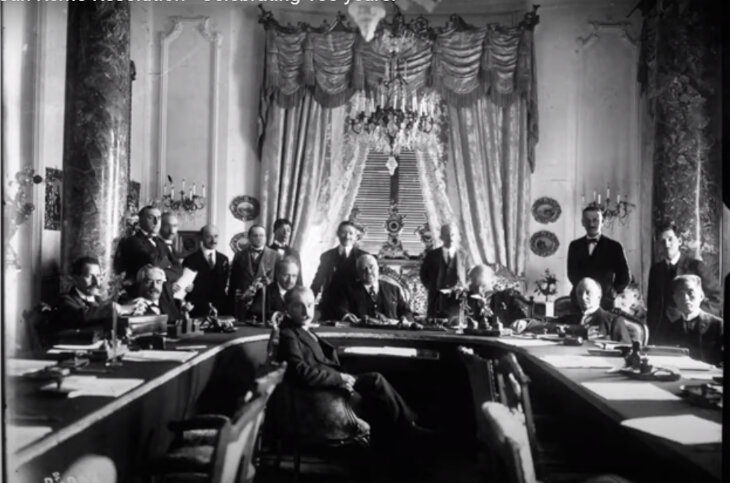 Delegates at the San Remo Conference
Throughout the war, and even after the Holocaust, the British continued their policy of blocking immigration, intercepting boat-loads of refugees and preventing them from entering Palestine. This policy led to the deaths of countless numbers of Jews who perished at the hands of the Nazis and also severely compromised the demographic balance in the region and hindered the development of a self-sufficient Jewish state. If not for world pressure and the sympathy generated by the murder of six million Jews, who knows if a Jewish state would have ever come into existence.
The San Remo Conference created the most significant and transformative treaty in the history of the modern Middle East. If the British had fulfilled their obligations, as they and the French had done elsewhere, the history of Israel and Middle East would have likely been very different.












There was no such "treaty" and no country signatures. Just the minutes of the San Remo meeting of the Principal Allied Powers (Italy, UK, France, Japan) to settle terms for the upcoming peace treaty with the Ottoman Empire. Moreover, the San Remo decisions of the Principal Allied Powers had to be unanimous and Italy specifically withheld its consent at San Remo in April 1920. Rather than the "San Remo Treaty" that never was--the important milestones are the November 1917 Balfour Declaration, the August 1920 Sevres Treaty, and above all, the July 1922 Palestine Mandate of the League of Nations. The last was even more important as repeated in the 1924 Anglo-American Treaty.
The San Remo Conference was far more than the above.
The San Remo Resolution and the ensuing clauses of the Mandate for Palestine are a legal treaty entered into by each and EVERY one of the 52 member states of the League of Nations, in addition to the United States.
So next time you hear “occupation of the West Bank” and “illegal settlements”, remember that this territory, from the Jordan River to the Mediterranean Sea, was LAWFULLY restored to the Jewish people in 1920. Its LEGAL title has been internationally guaranteed and never revoked ever since. Anti-Israel resolutions are in the UN (POLITICAL); NOT in the International Court of Justice(LEGAL). ICJ is LAW-bound and the law is clear.
More:
https://israelforever.org/interact/blog/san_remo_forgotten_milestone_Israel/#
Are you suggesting that the outcome for the State of Israel would have been better had it been established in the 1920s or 1930s? Do you really think that Israel could have fought a war of independence at that time and established a stable state?
Not a chance. A larger chunk of land including more Arabs at an earlier time could not have survived as a Jewish State. You're just dreaming.
And worse, you don't understand WHY the Arabs and others in the Middle East opposed the Jewish state. Don't blame the British for not being able to change the reality.
Everyone understands WHY the Arabs opposed the Jewish state.
Actually, there were Arabs who WELCOMED the return of Jews to their Biblical homeland, but most, if not all, of those moderates were MURDERED. There were 6 Arab clans in the Land of Israel who were basically running the show of controlling the land & they had the most to lose. Jewish success has always been a bone in the throat of Arab national pride. At to that anti-Semitic Hadiths & the witches brew becomes toxic.
In 1920, just 10% of the Jews in Europe who ended up dying in the Holocaust could have gone to Israel (which had no real immigration restrictions). Adding 600,000 Jews would have resulted in a larger population in 1920 in Israel, than it had in 1948's War of Independence. So the answer is, "Yes". Perhaps the Jews, with the green light of the San Remo Conference from 52 nations, should have and could have lived and fought and won in Israel in 1920. The numbers certainly say they could have. The laws set in San Remo say so, too. Official support of San Remo / League of Nations say so, too. Instead,10 times the number of Jews who made Aliya by 1948 perished in Europe. Perhaps it would be wiser to take responsibility ourselves than blame the British. Perhaps there are empowering lessons here.
Most historians dispute your claim that trans-Jordan was intended to be earmarked solely for the Jewish state. Even the Jewish Agency plans only included a sliver of land east of the Jordan River. Furthermore, the vague term "Jewish homeland" and not "Jewish state" used in the Balfour Declaration, suggests that even the territory west of the Jordan river would not necessarily emerge as an exclusive Jewish state. Just saying.
That is not in dispute and only a small fanatical minority demands entirely. Nevertheless the area originally designated for the Jewish homeland was much larger than the outcome and did include territories on both sides of River Jordan.
This needs to be shown very publicly in this present Israel hatred vis-a-vis Gaza, etc. in 1948 the Arabs were offered 76% of the land and the Jews 24%. the Arabs said no we want 100%, and no Jews. Ben-Gurion said we will accept the 24%, and declared Israel as a state. Immediately several Arab nations attacked with the intention of wiping out the Jewish presence in the land. Fortunately the Jews won; had they lost there would have been a lot of dead Jews, and Jewish refugees, and very few people today would be talking about that.
Read my blog entry https://mydailykvetch.blogspot.com/2023/06/falestinian-dezinformatsiya-and-balfour.html
Thank you for this elucidating piece!
Thank you for this wonderful article. A poignant reminder that " those who do not know history are doomed to repeat it" as far too many are proving out daily in our neighborhoods, our classrooms, our streets, places of worship, and halls of governance.
Yes, I always stated that the British were just as guilty for the death of millions of Jews in Europe during Nazi rule in collaboration with other countries around the world. They should be held responsible although, it's way late. These bad behaviors and intentions are now responsible for the hatred of Jews in Israel and around the world.
People are responsible for their own actions. Those who actually murdered the Jews, ie, the Germans and their allies such as Austria, are the ones who murdered the Jews. Britain closed the doors on Jewish immigration into Palestine. That was wrong as was their support for the Arab side between 1945 and 1948. To suggest that Britain was as guilty as Germany is not correct - it tones down what the Axis did to the Jews.