







 Debunking Viral Claim About the Talmud and Minors



6 min read


Nineteen Jewish Americans have received the Medal of Honor. Their stories span centuries—from Civil War scouts to modern warriors in Afghanistan.
From the battlefields of the Civil War to the mountains of Korea, the jungles of Vietnam, and the deserts of Afghanistan, Jewish Americans have stood shoulder to shoulder with their fellow servicemembers in defense of the nation. Millions have worn the uniform; a courageous few have earned America’s highest military distinction—the Medal of Honor.
Since its creation during the Civil War, the Medal of Honor has recognized acts of valor “above and beyond the call of duty.” Among the more than 3,500 awardees, at least 19 were Jewish Americans. Their stories span centuries, embodying bravery, sacrifice, and devotion to both country and community.
In Afghanistan’s Paktia Province on July 12, 2018, Sergeant First Class Christopher A. Celiz of Summerville, South Carolina, faced an impossible situation. His unit was tasked with clearing an enemy stronghold but encountered a force far larger and better equipped than expected. Pinned down and under heavy machine-gun fire, Celiz sprinted into the open to retrieve a heavy weapon system critical for survival.
As chaos erupted around him, Celiz treated a wounded comrade and acted as a shield so others could reach the evacuation helicopter. Even as the helicopter prepared to lift off, he stood alone, laying down covering fire until he was struck by enemy rounds. His courage saved the lives of his unit and the helicopter crew. In 2021, his sacrifice was recognized with the Medal of Honor—the first awarded to a Jewish American soldier in the Global War on Terror.
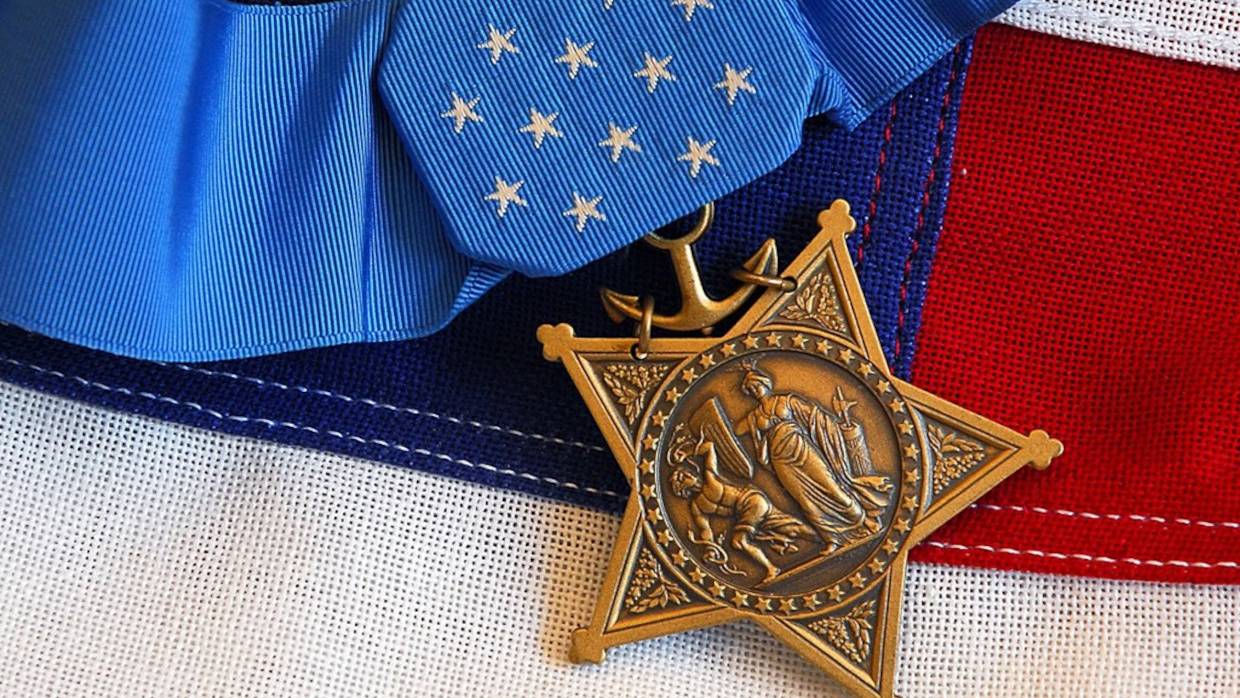
Created in 1863, the Medal of Honor remains the United States’ most prestigious military award. Presented by the President, it recognizes “conspicuous gallantry and intrepidity at the risk of life, above and beyond the call of duty.”
At the National Museum of American Jewish Military History in Washington, D.C., a permanent exhibit honors the 19 confirmed Jewish recipients. Michael Rugel, the museum’s Director of Programs and Content, explained, “Nineteen is our current number. There are some ‘who’s a Jew?’ questions that come up, but these are the ones we’ve been able to confirm through years of research.”
That research continues. In fact, recent discoveries have added new names to the list.
In 2021, continuing scholarship confirmed that Civil War veteran Eugene Philip Jacobson was Jewish, adding him to the honored roster. Born in Poland in 1841, Jacobson immigrated to New York, where he enlisted in the Union Army in 1861. Serving with Company B of the 74th New York Infantry, he rose from private to first lieutenant.
At the Battle of Chancellorsville in May 1863, Jacobson led a daring nighttime scouting mission under heavy fire, returning with intelligence that proved vital. His commander praised his “unwavering gallant conduct,” recommending him for the Medal of Honor.
After the war, Jacobson pursued law, served as U.S. District Attorney in Vicksburg, Mississippi, and later became a Colorado state senator. Celebrated in Denver’s Jewish community, he was described as the “crème de la crème of Denver society” before his early death at age 39. His journey—from immigrant to soldier, public servant, and community leader—reflects both the Jewish and American story.
Another Civil War hero, David Urbansky (1843–1897), was born in Prussia and immigrated to Ohio as a teenager. Enlisting in 1861 with the 58th Ohio Volunteer Infantry, he fought with distinction at Shiloh and Vicksburg.
At Vicksburg, Urbansky ran onto the battlefield, lifted his wounded commander from the ground, and carried him to safety despite relentless enemy fire. For his gallantry, he was awarded the Medal of Honor. Over a century later, in 2000, a Civil War enthusiast rediscovered his unmarked grave in Cincinnati. The U.S. government donated a new gravestone, and his heroism was honored with a solemn military ceremony, including a 21-gun salute and taps.
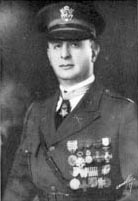 Sydney Gumpertz (1879–1958) embodied the patriotism of a new generation. Born in California and raised in New York, he built a career in advertising before enlisting in 1917.
On September 29, 1918, at the Battle of Bois-de-Forges in France, Gumpertz led a charge against a machine gun nest pinning down his platoon. When his two companions fell wounded, he pressed on alone, leaping into the nest, destroying the gun, and capturing nine enemy soldiers. His Medal of Honor citation praised his “gallantry and intrepidity above and beyond the call of duty.”
After the war, Gumpertz returned to New York, resuming his advertising career while also confronting antisemitism through writing and public speaking. In 1947, he published Jewish Legion of Valor, highlighting Jewish contributions to the U.S. military.
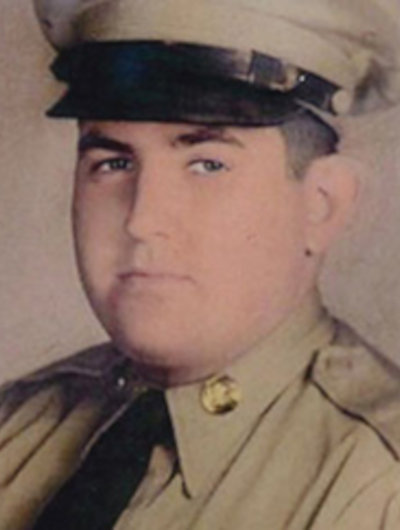
The Korean War produced another Jewish Medal of Honor hero—Leonard M. Kravitz (1930–1951), uncle of musician Lenny Kravitz. Raised in Brooklyn, Leonard followed his brother’s example of military service, enlisting in the U.S. Army.
On March 6–7, 1951, near Yang Pyong, his unit faced a ferocious enemy assault. When the machine gunner was hit, Kravitz seized the weapon, holding back the attackers. Ordered to retreat, he stayed behind, continuing to fire until he was overwhelmed and killed. His body was found beside the gun, surrounded by enemy dead.
Though initially awarded only the Distinguished Service Cross, decades of advocacy revealed that bias may have denied him the Medal of Honor. In 2014, President Obama corrected that injustice, awarding Kravitz the Medal posthumously in a White House ceremony honoring minorities overlooked because of race or religion.
From Jacobson’s Civil War scouting mission to Celiz’s last stand in Afghanistan, Jewish Medal of Honor recipients embody courage, sacrifice, and patriotism. Their stories highlight not just military heroism but also the broader Jewish American experience—immigrants becoming citizens, confronting prejudice, and contributing to civic life after war.
Civil War: Benjamin Levy, Leo Karpeles, Abraham Cohn, David Urbansky, Eugene Philip Jacobson
Indian Wars: Simon Suhler
Haiti: Samuel Marguiles
World War I: William Shemin, Benjamin Kaufman, William Sawelson, Sydney Gumpertz
World War II: Ben L. Salomon, Isadore Jachman, Raymond Zussman
Korean War: Tibor Rubin, Leonard M. Kravitz
Vietnam War: Jack Jacobs, John Lee Levitow
Global War on Terror: Christopher Celiz
Only 19 Jewish Americans have received the Medal of Honor, but their legacy is immense. They remind us that courage knows no boundaries of faith or background—and that the freedoms we cherish were secured, time and again, by men and women willing to risk everything




Abraham Krotoshinsky was the Jewish World War l hero who saved the Lost Battalion. Although receiving much attention and the
Distinguished Service Cross, he was not awarded the Medal of Honor. His family was convinced that he had been passed over because he was Jewish.
https://en.wikipedia.org/wiki/Abraham_Krotoshinsky
https://nmajmh.org/2017/06/over-there-abrah
Love all the great feedback on the article. Thanks for reading it.
For whatever reason, Samuel Marguiles went by (and was awarded the Medal of Honor under) the name Samuel Gross:
https://www.jewishvirtuallibrary.org/samuel-gross
https://www.findagrave.com/memorial/7227433/samuel-gross
There should be a push for "Artie Klein" AKA OMAK or One Man Army Klein! 27 ID. Career Army, He was TWICE recomended for the Medal of Honor! Both denials were apparently due ti Anti-Semitism! He was a Mustang and was killed on Okinawa!
Thank you everyone that served in the army, and other armed forces, my mom( obm) told me she( obm) got liberated in Austria that could of been a sub camp of Mudenhausen( I can't spell the place) during the Holocaust period on May 5m 1945
The stories get better and better. This one hits home. My dad served during WWII. These men Dan wrote about are the definition of hero.
Thank you Phil.