







 Debunking Viral Claim About the Talmud and Minors


4 min read
5 min read


4 min read


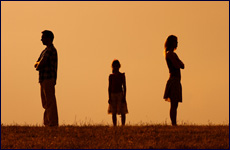
Surprisingly, yes. Long-term research shows divorce can influence family stability across multiple generations.
Could my grandparents’ divorce have a negative impact on my own marriage? Surprisingly, research suggests that it can.*
Sociologist Dr. Paul Amato examined the long reach of divorce across three generations over a 20-year period. His landmark study explored how grandparental divorce affects grandchildren across a range of outcomes, including education, marital conflict, divorce risk, parent–child relationships, and overall well-being. Notably, fewer than 10 percent of the grandchildren studied were even alive when their grandparents divorced—yet the effects of that divorce were still evident decades later. Few would imagine that a marital rupture could echo so powerfully across generations, influencing lives that had not yet begun.
Writing for the Institute of Family Studies, Dr. Scott Stanley has addressed a common misconception surrounding “gray divorce”:
While we may be finally seeing a decrease in gray divorce, I think the mistaken assumption often made by older parents is now that their children have grown and left the nest, divorce simply won’t be as hurtful or disruptive. I would encourage older couples considering divorce to seek therapy and consider the long-term consequences to their adult children, grandchildren, and even great-grandchildren. The greatest gift parents can give their children and their grandchildren is a loving and committed marriage.
When children observe the divorce of their grandparents or the parents of close friends, it can quietly raise questions and anxieties about the permanence of relationships. For parents navigating these conversations, several principles are especially important.
First, reassure children of the strength of your own marriage and your personal commitment to their other parent. If the relationship feels stale or strained, take active steps to renew it. Dr. William Doherty contends that
“Marriage with the long view comes with the conviction that nothing will break us up, that we will fight through whatever obstacles get in our way, that if the boat gets swamped, we will bail it out, we will recalibrate our individual goals if they get out of alignment, we will share leadership for maintaining and renewing our marriage, we will renovate our marriage if the current version gets stale, that if we fight too much or too poorly, we will learn to fight better, that we will accept each other’s weaknesses that can’t be fixed, and that we will take care of each other in our old age.”
Second, listen carefully to your children and seek to understand their perspective. Children are often more perceptive than we assume, and they may be quietly processing fears about relationships after witnessing divorce in the extended family. Empathy and openness go a long way in helping them feel secure.
Finally, be willing to talk honestly about past family marriages and what went wrong. Understanding patterns to avoid can help children develop insight and resilience as they form their own relationships.
Not all marriages can or should be saved. Abuse, addiction, and infidelity are circumstances in which divorce may be the healthiest option. That said, research consistently shows that roughly two-thirds of the approximately 674,000 divorces each year in the United States involve couples who have grown emotionally distant rather than faced irreparable harm. In many cases, partners are more inclined to blame one another than to examine their own contributions to the breakdown.
Any relationship that is neglected can wither. Yet when both partners remain committed and united in the effort to rebuild, challenges that once felt insurmountable can often be overcome. As the saying goes, the grass is not greener on the other side; it is greener where it is watered.
For couples considering divorce after their children are grown, it is especially important to weigh both the immediate and long-term consequences of that decision. Conversations about the relational legacy you hope to leave your children, grandchildren, and even great-grandchildren matter. How might today’s choice shape their future relationships? Many couples who chose divorce later found themselves wishing they had pursued repair more fully.
Those who study marriage have long emphasized the importance of hope, and recent research supports it. Amato’s newer findings suggest that for many couples who remain committed, marriage often improves with time. For the sake of future generations and the strength of family life, we would do well to remain mindful of how our choices ripple outward. Commitment, courage, and foresight today can help prepare our children for stronger, more enduring marriages tomorrow.
*Additional insight into the intergenerational transmission of divorce comes from scholars such as Dr. Nicholas Wolfinger. In Understanding the Divorce Cycle, Wolfinger explains how divorce shapes children’s views of marriage and affects the durability of their own relationships later in life.












Insightful comments Yitzhak and Frank! Thanks for taking the time to post your views.
Dr Alan Singer
When you reflect, the natural reply to the question could have been "Not surprisingly, yes", since two generations is not a large gap at all.
Divorce just publicises the fact of rifts in the marriage lute.
If a spouse is quirky even if not to the point of divorce, it spills over the generations. Remember that before modern relatively easy divorce any number of people died young and their widow(er)s re-married. How many Grimm's and Andersen's tales start with the step relationship with a second spouse? Also qv our Patriarchs in Genesis.
My own maternal grandmother was a clever and frustrated character given the then lack of household machinery and women's career posts and it bent the relationships of her children - my Aunts and Uncles with their families.
Then also one can pick up usually to advantage, the tics and mannerisms of favourite Aunts or Uncles and teachers.