






 Debunking Viral Claim About the Talmud and Minors

28 min read
17 min view



5 min read


This Rosh Hashanah take the plunge—step beyond your comfort zone, embrace neuroplasticity, and open yourself to change.
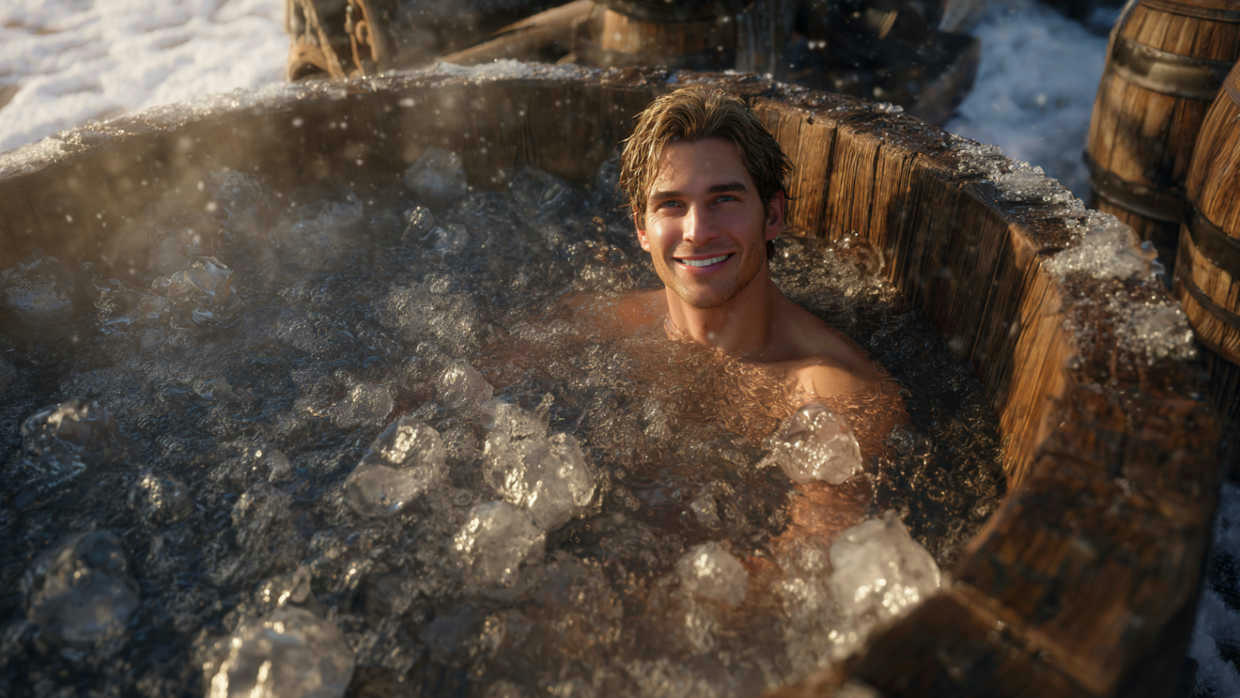
A year ago, I bought an ice bath and I’m proud to say I hardly miss a day: three minutes immersed in 45°F (7°C) water. Many studies now show the health benefits of cold exposure—from cardiovascular health and inflammation control to muscle recovery and increased metabolism. An ice bath triggers a fight-or-flight response; your body knows it can’t stay there, and the cold prompts a surge of epinephrine (adrenaline) and dopamine. These neurochemicals make us feel alert, awake, and energized. After my daily plunge, I feel like I’ve had three cups of coffee and could lift a truck.
All of that is nice, but it’s not what inspires me to use it.
For a long time, scientists believed the brain was hard-wired—rigid, fixed, finite. More recently, neuroscience has shown the brain is “plastic” – we can change and rewire it. We aren’t born with a fixed set of feelings, thoughts, capabilities, skills, strength, and focus. Rather, we are blessed with the gift of neuroplasticity.
Neuroplasticity describes the brain’s ability to change throughout our lives. As Dr. Norman Doidge writes in The Brain That Changes Itself, brain plasticity exists from cradle to grave. New neural pathways can open; we can rewire our brains through our habits, behaviors, choices, and efforts. Even a 100-year-old can still mold the brain; it’s never too late. We can recreate and rewire—if we want to.
Rosh Hashanah corresponds not with the first day of creation but with the sixth—not when heaven and earth came to be, but when humanity entered the world. Only then did the world have meaning and purpose and could be considered complete. On Rosh Hashanah, we don’t say in the Machzor “today was the creation of the world.” It isn’t just a birthday or an anniversary; we aren’t commemorating a past event. Indeed, we aren’t even being judged for what we’ve done with our time since creation until now; judgment is not for our past.
We say, “today is the conception of the world”—today, your new world is being conceived—and therefore today we will be judged for what we do with the opportunity to restart, reset, and reboot. We cannot change the past; we cannot go back and make different choices. Of course, we must take responsibility for the past and feel remorse and regret. But its real significance is what we learn from it: how we change to avoid repeating it, and how we create a new future with our fresh start.
On Rosh Hashanah we are asked: Are you fixed or growing?
The Talmud teaches that we aren’t judged for the past (Rosh Hashana 16b). We are responsible for the present—who we are right now, at this moment. We are evaluated not by the anniversary of our birth, but our “birth-day” – the day we are reborn and start again.
Rosh Hashanah as a gift of new beginnings and clean slates is not only a metaphysical truth; it’s evident in the physical world, too. We are evaluated not for what we have done since creation, but for whether we choose to embrace creation—the power to create again and again, to remold, rewire, and reshape our brains and ourselves.
On Rosh Hashanah we are asked: Are you fixed or growing? A finished product or a work in progress? Stuck in the past or improving for the future? Neuro-stuck or neuro-plastic?
Every time I step into the ice bath, I don’t want to. But I do it anyway, and when I do, I am literally rewiring and changing my brain. There is a part of the cortex that supports willpower called the anterior mid-cingulate cortex (aMCC). When we perform a task that we don’t want to, the aMCC grows—becoming stronger and more capable of completing actions outside our comfort zone. The challenge is that it must be renewed daily. If you retreat to your comfort zone, the aMCC shrinks back toward its original size.
Doing the hard thing makes you more capable of doing more hard things.
We live in an age of “life hacks,” shortcuts for everything. There may be hacks in technology and home improvement, but not in life. The only hack is to do the hard thing; doing the hard thing makes you more capable of doing more hard things. We can sit in 45°F water for three minutes. We can rewire ourselves to be selfless instead of selfish, calm instead of angry, patient instead of rushed, givers instead of takers—to live the life we’ve dreamed of living.
Let this Rosh Hashanah be a day of neuroplasticity. Take time to reflect: How will you rewire? What will you reprogram? Which challenge will you take on? Which comfort zone will you breach? Will you take a plunge—have a change of mind and allow your mind to change?









This is so beautiful! We can all take comfort in the fact that we aren’t judged by the past but rather look at it from a point of view of change and growth.
Great article and I enjoy its meaning. I just wanted to note to your readers that recent studies suggest caution before starting to incorporate cold plunges into your lifestyle. Please remember to consult your doctor first to see if it’s right for you. https://www.healthline.com/health-news/health-claims-cold-water-immersion#Cold-water-exposure-led-to-spike-in-inflammation