







 Debunking Viral Claim About the Talmud and Minors

4 min read



6 min read


To inspire non-observant and disaffected Jews, and excite teens and youth about their Judaism, we all need to be leaders in making happiness, joy and meaning contagious in our institutions and homes.
With my youngest child approaching his teenage years I thought my Disney days were over, but when my grandchildren came to me asking, “Zayda, can you come with us to Disney,” I couldn’t say no. So, I spent two days this week at the Magic Kingdom and Epcot, and brought a baseball cap so that nobody would be able to tell that I am Jewish.
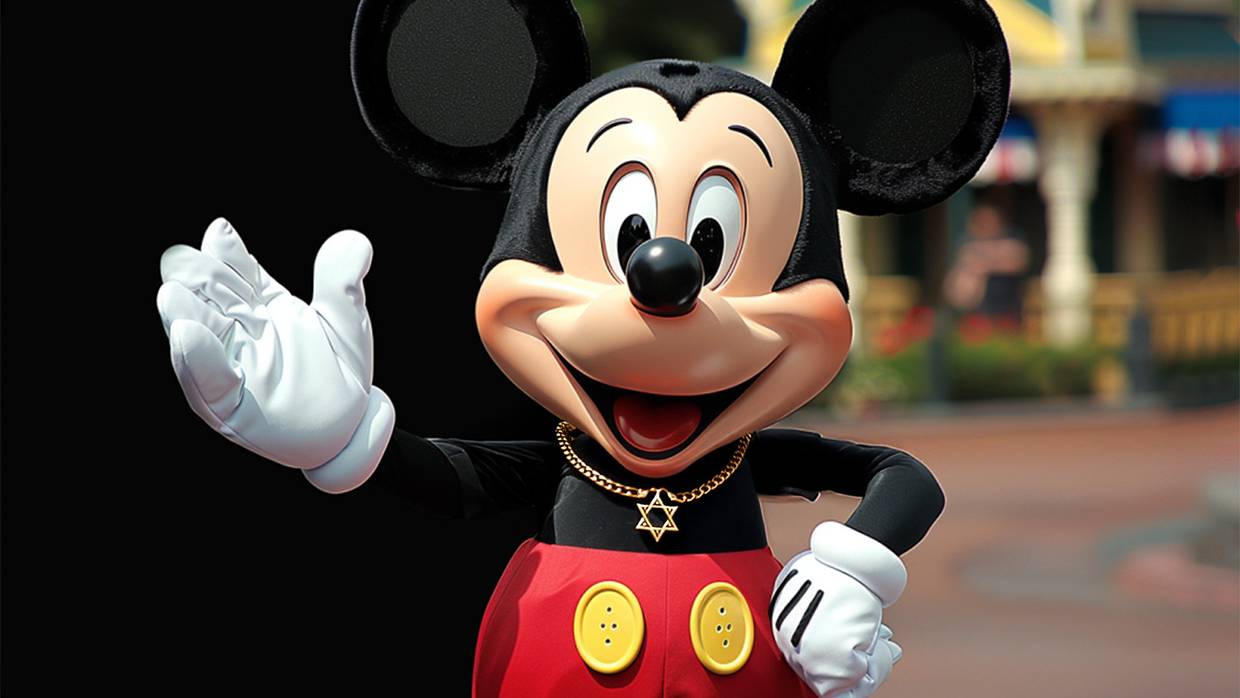
As we pulled into the park, I decided not to wear it. In a time when too many are trying to scare us, attempting to intimidate us into removing our symbols, hiding our practices or being ashamed of our identity, it is more important than ever to proudly wear our yarmulkas, show our tzitzis, or necklaces displaying Jewish stars, maps of Israel, or solidarity with hostages, and not cower from practices that are appropriate in public.
A woman and her family came over to me at one of the parks to say how happy she was to see Jewish people not afraid to wear their yarmulka in public. When I asked if she was Jewish, she told me she was and that she went to a Jewish school in Minneapolis as a child. A man walking by stopped to say, “Shalom.” I responded “Shalom” and asked if he was Jewish. He told me he is a pastor from Alabama and that he and his congregation regularly pray for Israel and the Jewish people. His wife quickly added, “and we have been praying constantly for the hostages.”
We got a “boker tov” [good morning in Hebrew] from one of the Disney employees and a few more “shaloms” and, I’m happy to report, no negativity or hostility. The truth is, I would expect nothing more at the “Happiest Place on Earth.” It is hard to think of another place where such a large quantity of people all seem so courteous, kind, pleasant, and polite.
Generally speaking, one doesn’t find pushing or shoving, short tempers, a culture of criticism, or impolite and impatient people at Disney, despite having to wait on long lines, pay large fees, endure the hot sun, and spend hours on one’s feet.
As we observed the throngs of people with smiles on their faces and extraordinary consideration towards one another, I couldn’t help but think, wouldn’t it be amazing if our shuls were like Disney? Wouldn’t it be wonderful if people thought of our campuses and communities as the happiest places on Earth, places that even if they had to stand for long periods, sometimes wait on lines, endure imperfect temperatures, it would not only be well worth it, they would be clamoring and counting down to coming back.
How does Disney do it and what could we learn regarding creating a culture of happiness?
Many years ago, I participated in a behind-the-scenes tour of Disney to explore that very question. The design and layouts of the parks, the placement of vendors, and the timing of the shows are all meticulously and brilliantly strategized and arranged. But what struck me most from the tour was the culture and how the attitude of the Disney’s tens of thousands of workers impacts each and every one of their guests.
Disney understands a fundamental psychological principle supported by extensive research – happiness and joy are contagious.
In every employee only area, there are signs highlighting the Disney credo, including: “I project a positive image and energy. I am courteous and respectful to all guests including children. I go above and beyond.”
Disney understands a fundamental psychological principle supported by extensive research – happiness and joy are contagious. Just as if one person yawns others will follow suit, so too, if a person smiles, others around him will start smiling as well. A happy disposition, a positive spirit, and a pleasant countenance are quite literally contagious.
Whose responsibility is it to spread the smiles? There are roughly 77,000 employees at Disney World in Orlando. All members of the staff, from custodial and maintenance, to the ride operators and people who wear the Mickey costumes, are all referred to as “cast members.” How many of the 77,000 cast members do you think are responsible for picking up the garbage? The answer is all 77,000. How many are responsible for helping someone with directions or return a lost child to their parents? 77,000. How many are required to smile and spread the happiness? That’s right, all 77,000.
At Disney, the cast members know that they each have different tasks but they are taught that they all have the same purpose: spreading happiness.
How do we go from a culture of complaining and criticism to creating the happiest place on Earth?
Perhaps we can create a culture in which every single Jew, every participant of the community is a member of the “cast.” We must go from consumers, from members with entitlements and privileges, to stakeholders, cast members who feel a sense of personal responsibility, duty and obligation.
We must go from consumers, from members with entitlements and privileges, to stakeholders, cast members who feel a sense of personal responsibility, duty and obligation.
If we want to be a place that attracts all, that inspires non-observant and disaffected Jews, that makes teens and youth excited about their Judaism, we ALL need to be leaders in making happiness, joy and meaning contagious in our institutions and homes.
When speaking with a child, Disney cast members are trained to bend down and meet them at eye level. I saw firsthand the subtle but powerful impact of speaking to someone, even a child, at eye level instead of making them look up at you while feeling small. We need to speak to all the members and participants in our community at their eye level. Sometimes that will mean bending down, ensuring nobody feels small, no matter what their Jewish education or level of observance.
In complimenting and blessing Yehuda, Yaakov says, “His teeth are whiter than milk.” Of all virtues, why is Yaakov highlighting Yehuda’s teeth? The Talmud (Kesubos 111b) explains that Yaakov saw a quality in Yehuda he greatly admired and benefited from. Yehuda had a habit of smiling, of flashing the white of his teeth when seeing others. Indeed, the Talmud concludes when a person shows the white of his teeth to another by smiling widely, it is more beneficial than giving a cup of milk to drink. Why the comparison to milk?
Rav Shlomo Wolbe explains that milk nourishes and nurtures growth. What milk does for the body, a smile does for the heart and soul. He writes that just as plants require sunshine to live, converting the rays of the sun into nutrients, people convert smiles into energy and strength, and without it they wilt and perish. Dogs and cats can’t smile. Smiling at one another is part of what differentiates us as humans.
Let’s all be active members of the Jewish people’s cast and convert our shuls and communities into the happiest places on Earth.














As a current cast member at the Disneyland Resort I regularly wear my yarmulke “on stage” and interact with guests. I have never had a single bad reaction from anyone. It’s true that courtesy is contagious. I have been doing it for almost 25 years.
Walt Disney was a known antisemite. However, that did not stop him from letting Jews spend their money at Disneyland and Disney movies. As my father said "There is only one color and that color is GREEN"
He was not an anti semite. That rumor started when the employees were on strike in the 30s. A man came out from the mid west who was a strike buster. He approached Walt to hire him to end the strike. Some of the people who did not go out on strike pleaded with Walt. They said that this guy had bad connections with people back east. Walt refused to work with the guy. So, he went to the strikers. He noticed that there were several Jews among the strikers. He started the rumor that Walt was anti semetic and firing the Jews. If you go to the Walt Disney Family Museum in San Francisco, you will see several awards that Walt was given by the Jewish community for his work with the Jewish community.
Rabbi, I hope you will share this with every teacher in Jewish day schools. Both of my children had unpleasant experiences with teachers, from those who mocked non-Jews to one who examined a snack in my child’s lunch in front of the entire class to determine if it was kosher (it was, and in December many items have seasonal characters) to a teacher opining that “you can’t imagine a man being a secretary.”
This kind of negativity should be avoided.
I agree as it's a must to share with all teachers across the board and with congregants as well.
Thank you Rabbi
Kol-Hakabod
"Dogs and cats can't smile." People can't wag tails or purr.
Dogs smile. They part their lips. This is learned behavior from living with humans.
thanks for the encouragement. i Smile to all i meet at my shul and say hello. if I don't know them I introduce myself, or as my memory gets shorter, I ask them to remind me of their name
There is a mezuzah on a doorway on Main Street...Every single Disney cast member will point a direction by using three or more fingers as pointing with one finger (index not middle) may be considered rude in some cultures....
Try WAVING to people, too!
When COVID came, people would wave to me, on the street.
But why can't we wave to strangers, even, now?
I wave, salute, give a thumbs up, point, etc, constantly. It lifts my spirits, automatically. I do it outside, on the street, and inside, in Shul, in stores, etc.
"Great everyone with a cheerful countenance" Avos (It's free. No admission needed)
Lovely post
Excellent! Hope everyone shares and puts this in practice