







 Debunking Viral Claim About the Talmud and Minors

28 min read
17 min view



10 min read


Why is the Messianic era – and yearning for it – so central to Jewish belief?
Standing before the Heavenly Court after 120, we will not be asked how financially successful we were or how many social media followers we garnered – but what kind of people we actually were. Interestingly, the Talmud (Shabbat 31a) teaches that one of the first questions we will be asked is: “Did you long for the coming of the Messiah?”*
The Messiah? Let’s face it, who’s thinking about the Messiah? We are so overwhelmed with our day-to-day lives, responsibilities and frustrations that we rarely look beyond the immediate and think about such cosmic matters.
Yet Judaism says not only must we believe in the Messiah’s ultimate arrival—but we should yearn for him and anxiously await him on a daily basis.
Why does it matter so much? Do we even know exactly what we're hoping for — what the world will look like after he arrives? And perhaps most unsettling of all: If life is pretty comfortable already — free to worship, live, and thrive — are we even sure we want the Messiah to come?
Maimonides (Laws of Kings and Their Wars, Ch. 12), after discussing what the Messiah will accomplish (primarily, reinstating the Davidic Dynasty, overseeing the Temple’s construction, and gathering in the exiles), describes what the ensuing Messianic Age will be like. He writes as follows (slightly paraphrased):
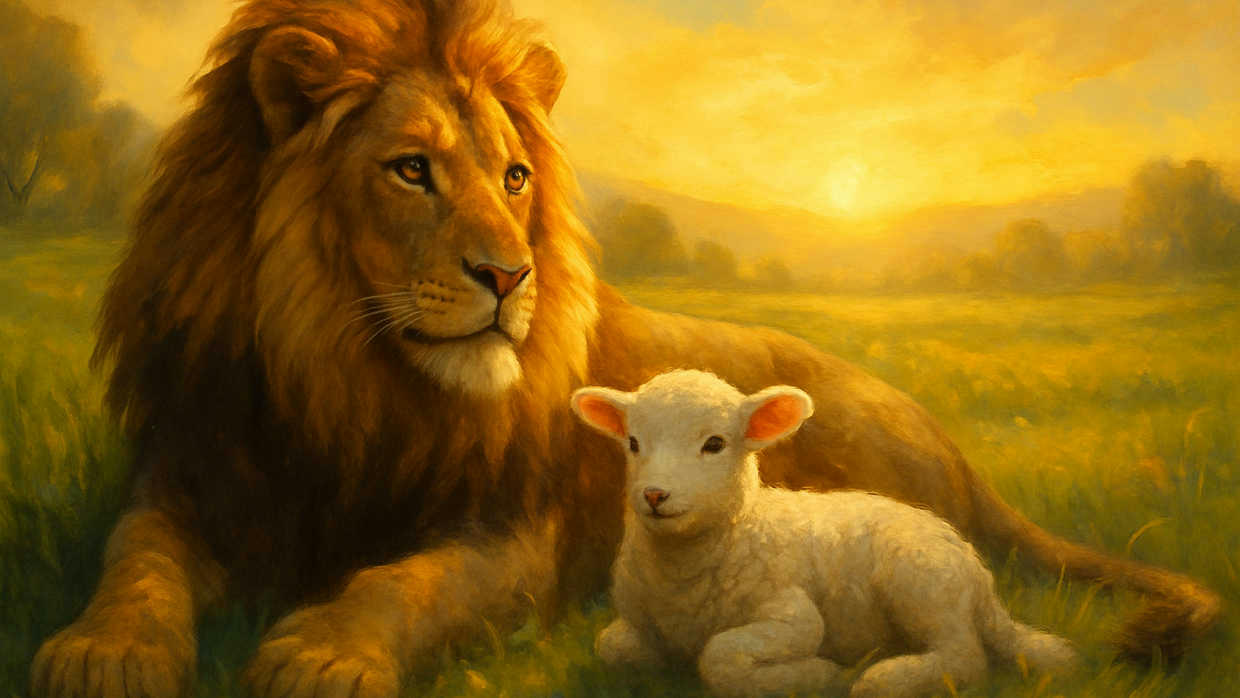
Do not suppose that in the Days of the Messiah any matter from the ways of the world will be annulled or there will be any novelty in the works of creation. Rather, the world will run in its ordinary way. And that which is stated in Isaiah (11:6) – “And the wolf will dwell with the lamb and the leopard will crouch with the kid” – is a metaphor, meaning that Israel will dwell securely together with the [formerly] wicked idolatrous nations, which are likened to wolves and leopards. … The Sages said, “There is no difference between this world and the Days of the Messiah other than the subjugation [of Israel at the hands of] the kingdoms alone” (Talmud, Brachot 34b).
Later in the same chapter, Maimonides continues:
The sages and prophets desired the Messianic Era not so that [Israel] would rule over the world or subjugate the nations, and not so that the nations would esteem them, nor in order to eat, drink and rejoice. Rather, [they desired the Messianic Era] so they would be free for [the study of] Torah and its wisdom, and nothing would disturb them. They would thus earn the life of the World to Come. … In that time, there will be no famine nor war, no jealousy nor competition. There will be a great outflowing of goodness, delicacies will be plentiful. And the entire world will only occupy itself with the knowledge of God. … As it is stated, “For the land will become filled with the knowledge of God as the waters cover the sea” (Isaiah 11:9).
Maimonides upends many people’s understanding of the Messianic Age.
Some tend to think of the Messianic Era in frightful, metaphysical terms — a colossal apocalyptic struggle, the final showdown between good and evil. Good will ultimately triumph but only after much blood is spilled on both sides and the world undergoes many horrific and earthshattering convulsions.
Conversely, some think of the Messianic Era in otherworldly terms, living some kind of surreal, supernatural existence – feeling more frightful than appealing to us today. And there are those who see the End of Days in political terms. The Messiah will be warrior-king, scion of King David, running a worldwide empire of blood and steel, sending his faithful, fanatical legions to the four corners of the earth, violently subjugating all the nations of the world to God’s majestic (if ironfisted) reign.
In contrast, Maimonides depicts the age of the Messiah in much more modest, ordinary terms. When the Messiah arrives, the world will not be turned upside-down and transformed in some fearful, unrecognizable way. Rather, the world will be as we wished it had been all along. It will be a time of plenty and prosperity, of world peace and universal love – ideals man has eternally longed for yet which have perennially remained elusive.
The world will not be transformed in some fearful, unrecognizable way. It will rather be as we wished it had been all along.
Mankind will live in comfort; no one will struggle to survive or to make ends meet. Nations will no longer expend vast portions of their budget on defense and weapons of war. There will be no more war or terrorist attacks. No more parents burying their children – please God, not ever again. As it is written in Isaiah, “They shall beat their swords into plowshares and their spears into pruning hooks; nation will not lift sword against nation and they will no longer study warfare” (Isaiah 2:4).
Israel and all mankind will seek wisdom and spirituality – and will have both the time and peace of mind to discover it.
Israel and all mankind will seek wisdom and spirituality – and will have both the time and peace of mind to discover it. And far from the Jewish people having to forcefully subjugate the nations of the world to God, they will seek out the Jews – to assist them in serving God and to learn God’s wisdom. The verse likewise states, “And it will be in the End of Days that the mountain of God’s house will be established on the top of the mountains … and all the nations shall flow unto it. And many people will go and say, ‘Come, let us ascend God’s mountain… and He will teach us of His ways…’” (Isaiah 2:2-3). For above all, the Messianic Age will be a time of universal knowledge. “For the land will become filled with the knowledge of God as the waters cover the sea” (Isaiah 11:9).
There are two important takeaways from Maimonides’ depiction of the End of Days. Firstly, the Messianic Era will not be the end of world history, but in a sense only its beginning – the beginning of how the world ought to have looked like all along.
The Messiah will not arrive to bring the world to its successful culmination. He will not single-handedly bring mankind to its salvation – with nothing more left for us to do. Rather, he will merely set the stage, ushering in an age of peace and prosperity. But then it will be up to us. We will then study God’s Torah and find spiritual fulfillment. Every person, both Jew and Gentile, will live happy, meaningful lives and earn a share in the World to Come. The stage will be set for mankind to truly perfect the world. And then, at long last and after millennia of struggle, strife and hatred, we will finally begin.
Secondly, it will be a time of universal harmony. Mankind will unite in the service of God. We will all be striving toward the same noble goal, and we will all help each other get there. And when we look back at world history until that awaited time, a very inspiring message emerges.
The Jewish people have arguably been the most mistreated and persecuted nation to have walked the face of the earth. We have suffered pogroms, expulsions and genocide. And for the vast majority of Jewish history, there has been virtually no accountability. After the pogrom or expulsion, the surviving Jews would just have to pick themselves up, move on, and start anew.
And to be sure, Heaven has not forgotten a single injustice perpetrated against His beloved nation – nor against any of the world’s oppressed for that matter. God has not forgotten a single tear nor a single drop of Jewish blood. Surely, we would suppose, the Messianic Age will be a time for settling many scores – of at last getting our sweet revenge against our many enemies who have tormented us so.
Yet, such an image does not figure in to the Talmud’s description of the End of Days in the slightest. The Messianic Age is not about settling scores or getting the last laugh. As Maimonides wrote, the sages and prophets did not long for the End of Days to lord over the rest of mankind – to at last stick it to those who looked down on us and persecuted us for so many centuries.
It is true that many of the wicked and undeserving will be punished in the wars leading up to the Messianic Era. But ultimately, our job will be to guide – not gloat over – those very nations which have hated and oppressed us so. Our mission will not be to seek revenge against them, but on the contrary, we will teach them about the God they so strongly opposed yet deep down truly longed for all along. And in so doing, we will help our very enemies attain happiness and fulfillment.
Our job will be to guide – not gloat over – those very nations which have hated and oppressed us.
Why does Judaism consider it so important that we actively long for the Messiah?
God didn’t create the world so that only the few who recognize Him would live meaningful lives. He wants all mankind to unite in His service and find truth and fulfillment. Not a single human being should be left behind.
When we yearn for the Messiah, we express our deepest hope for a world finally at peace — where there is no more war, hatred, or suffering.
When we yearn for the Messiah, we express our deepest hope for a world finally at peace — where there is no more war, hatred, or suffering. It will be a world where every person will know their purpose, where the Jewish people will fulfill their mission to be a light unto the nations, and where all humanity will live in harmony under God's truth. Yearning for the Messiah means longing for a world where justice prevails, where families live in joy and security, and where the knowledge of God fills the earth. We might be alright serving God as we do now — in an ugly, godless world. Indeed, our challenge — and reward — is even greater discovering God in the darkness. Yet we must not care about ourselves alone. We must care about God's sake — and the sake of so many others on this earth. God wants all mankind to reach fulfillment, not just us — and we must actively long for the day when that will at last come to be.
But our yearning is not passive — it is a daily reminder that we each have a role in bringing that reality closer: by spreading kindness, seeking truth, living with integrity, and drawing ourselves and others closer to God. In longing for the Messiah, we commit ourselves to help build a world which will one day soon greet the Messiah. May he arrive speedily in our days.
*Some of the other top questions are if we conducted our business affairs honestly and if we set aside time for Torah study.












Great!
Cutting to the chase - there are those who - everyday pray for the messiah to come NOW - & there are those who occasionally abstractly/obtusely - think about it. There are those - who think the messiah - will be the deity they believe in. Then - there are also those - who fear that the messiah will come & strip them of the liberal shield - that allows them to perform their life - without having to keep any of G-D's Written Torah Commandments & exposing the hedonistic ways they followed. Let's pray NOW for - the messiah to come NOW - & REVEAL THE TRUTH T0 ALL MANKIND - FOREVER!
Every day I yearn for internal peace, the type that will likely exist in a Messianic age.
I find it interesting that your article begins with a picture of a lion and a lamb which symbolizes Messiah Ben David and Messiah Ben Joseph - two missions of the Messiah - one who restores Israel (lion) and one who atones for Israel & everyone (lamb). Could it be possible that Messiah Ben Joseph has already come as a Lamb and will return as a Lion and “the land will become filled with the knowledge of God as the waters cover the sea” (Isaiah 11:9).
Hi,
The graphic is based on the verse in Isaiah, which Maimonides quoted: “And the wolf will dwell with the lamb and the leopard will crouch with the kid.” It really pairs a wolf and lamb together, and a leopard / panther with a kid, but the common image has become a lion and lamb reclining together.
The notion of the Messiah coming as a lamb and then as a lion is really Christian - as is the idea that as a lamb the Messiah atones for other people. Judaism doesn't believe in a Second Coming. Also, as I wrote, the Jewish concept is that the Messiah will not grant us atonement. We'll have to do that ourselves. He will only create world peace and harmony so we can begin serving God wholeheartedly and undisturbed.
There is a story that in the early days of the state of Israel visiting world leaders were taken to see a cage in which a lion and a lamb lay side-by-side. When asked how this was achieved, the Israelis answered: easy - each day we put in a new lamb.
Excellent and inspiring article. Thank you.
Wonderful!