








When people hear my family emigrated from Uzbekistan after the fall of the Soviet Union, I’m usually asked “So, are you Bukharian?”
Bukharian Jews refer to the unique Central Asian Jewish communities that resided along the Silk Road for 2,500 years, from as far back as the destruction of the First Temple in Jerusalem in 586 BCE.
Bukharian Jews are named for Bukhara, a main hub and city that resides in modern day Uzbekistan. The term identifies Jews in the entire region, not only Bukhara, as many Jews lived throughout the regions of Bukhara, Samarkand, Tashkent and Dushanbe.
My firmly Ashkenazi family escaped the claws of the German Nazis to live amongst their Bukharian cousins in Tashkent, Uzbekistan for the last 50 years of the two and a half millennia of Jewish presence in the region. During those 50 years, from the 1940s until the early 1990s, Uzbekistan was part of the Soviet Union.
I always found Bukharian culture fascinating because unlike their Ashkenazi counterparts, Bukharian Jews, on the whole, more successfully resisted assimilation throughout thousands of years of diaspora, even maintaining their strong religious affiliation through the religion-hunting Soviet Regime.
My grandmother always says with respect, “Oh the Bukharians? They are very religious!” Along with trying to keep to Torah traditions, they created a whole smorgasbord of unique cuisine that highlighted their Silk Road connections.
With Jews barred from many trades, Jewish merchants and traders were heavily active along the Silk Road, which connected China to the Mediterranean. To understand Bukharian cuisine, it is essential to explore the historical backdrop of Bukharian Jews. The Jewish community in Bukhara, one of the significant urban centers on this trade route, grew over the centuries due to trade, migration, and other social factors.
While the cuisine thrived due to its location along the Silk Road, the Jewish community was largely isolated and doesn’t quite fit into the general Sephardi or Mizrachi molds we are more accustomed to placing one another in today. On the whole, many historians agree that Bukharian culture, customs and cuisine can be categorized as a unique member of the Mizrahi Jewish family.
By the 9th century, Bukhara had become a major center of Jewish life, with Jews settling in the region and establishing a vibrant community. This period saw the growth of Jewish scholarship and culture, particularly within the broader context of Islamic rule in the region. The community lived relatively peacefully under various Muslim empires, including the Samanid, Karakhanid, and Timurids, each leaving its imprint on the local culture and, by extension, on Bukharian Jewish cuisine.
Bukharian cuisine is a rich tapestry woven from diverse influences, including Persian, Turkish, and Russian, but it also reflects Jewish dietary laws and customs, as milk and meat are never mixed to adhere to the laws of kashrut.
The use of fresh herbs, spices, and vegetables is a hallmark of Bukharian cuisine. Ingredients such as coriander, cumin, and paprika are commonly used to impart distinct flavors.
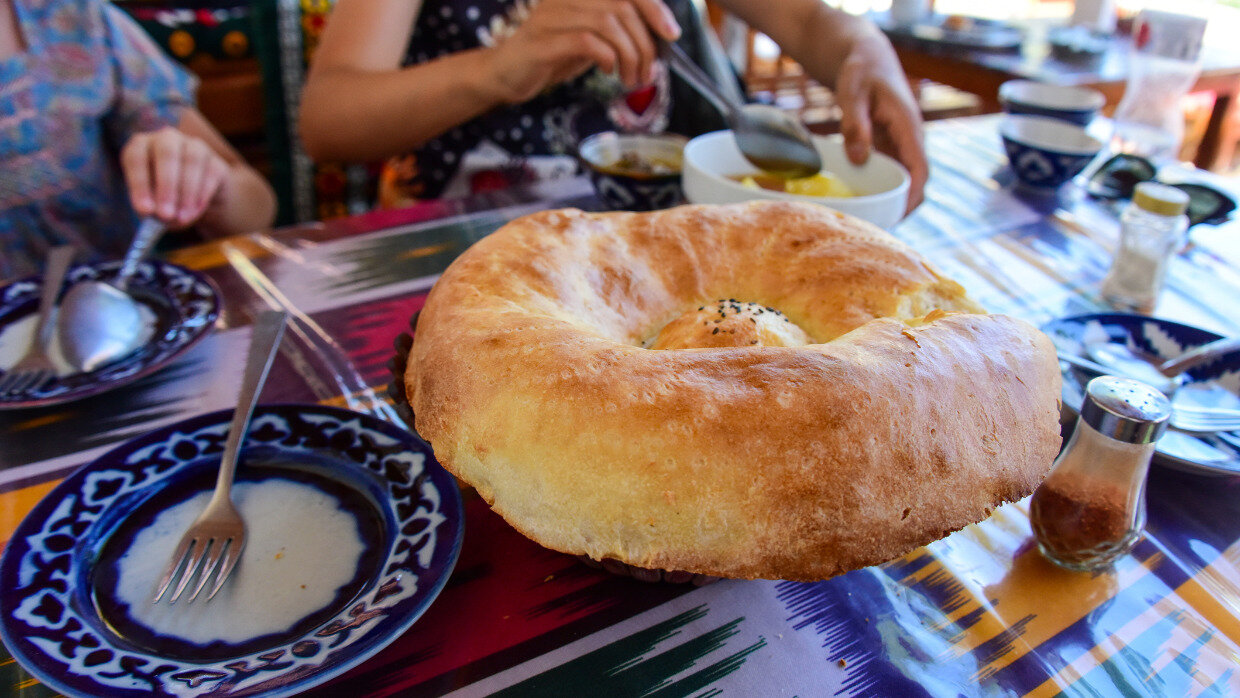
Some of the most popular recipes like samsa and lepoyshki are so reminiscent of Indian samosas and naan bread that it’s easy to see the influence of the Silk Road. Although unlike the Hindu culture’s vegetarian meals, Bukharian food is laden with meat, most traditionally lamb and sometimes beef.
Samsa from Bukharian Jewish Link

Uzbek Leyposhki

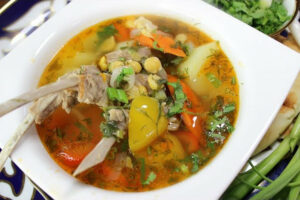
Bukharian soups you’ll want to try include lagman, a combo of meat, thick noodles, and vegetable and sherpa, a rich, fatty broth generously filled with lamb and vegetables.
Lagman

Sherpa
Main dishes are full of meats, rice, dried fruit and hearty vegetables. Shashlik, or kabobs of every variety rule the roost, and while lamb, beef, and chicken are popular, you won’t find any pork because both Bukharian and their muslim neighbors did not eat swine.
Uzbek Plov
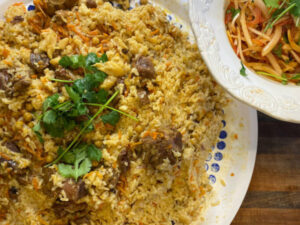
Plov is a favorite Bukharian dish. There are many unique recipes depending on the community, but the basics include slow roasting meat, rice, carrots, chickpeas and black currants over an open fire with a generous helping of oil and spices. Sometimes plov is made with dried fruits as well.
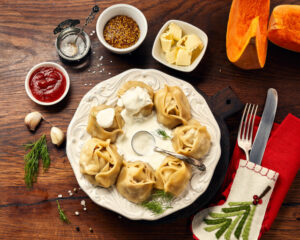
Manti
Osh Sovo
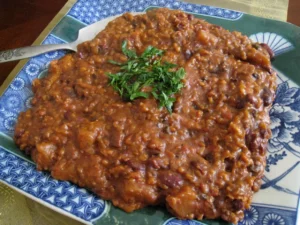
Osh Sovo is the Bukharian Jewish answer to the prohibition of cooking on shabbat. The Bukharian equivalent to the Ashkenazi cholent, Osh Sovo is a slow-cooked meat, fruit, rice combo.
After the fall of the Soviet Union, almost every single Jew, Bukharian and Ashkenazi alike, left the Central Asian region and settled primarily in Israel and America. They brought their unique culinary and cultural traditions of the Diaspora with them as they reunited with Jews around the world.
And while it may be wildly understated to say that the diaspora hasn’t been easy for the Jews, it can be credited for the incredible array of dishes Jews from around the globe, especially the Bukharians, bring to the table.















So interesting thank you.
Thank you for the informative article about Bucharian Jewry and their unique cuisine.
My husband's family emigrated from Samarkhand to Israel over 80 years ago and started their community in southern Tel Aviv.
The food and recipes are perfect . Everyone makes their own versions, but all so delicious and creative and prepared with love.
Thank you for spotlighting their unique culture and cuisine.