







 Debunking Viral Claim About the Talmud and Minors

4 min read



6 min read


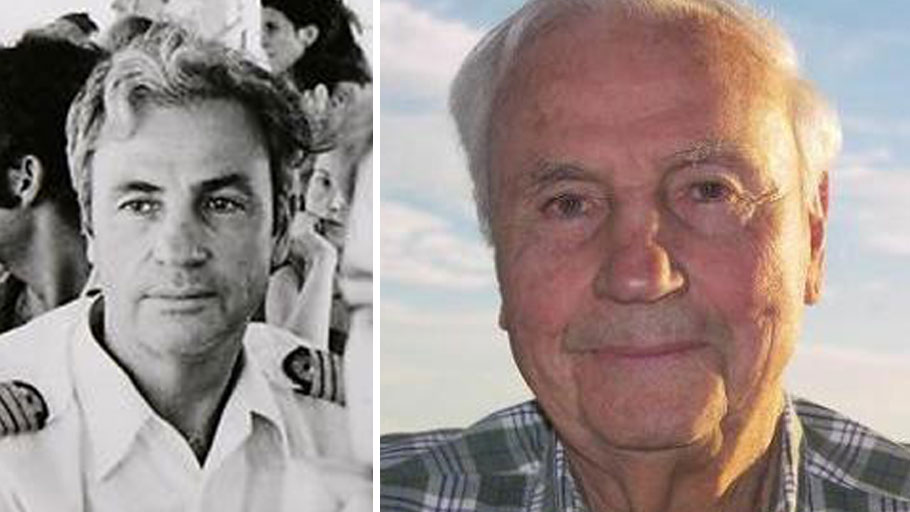
Capt. Michel Bacos recently died at age 94.
French airline pilot Michel Bacos knew what terror and Jew-hatred looked like.
A former free French fighter during World War II, Captain Bacos later recalled: “I fought the Nazis. I knew precisely what fascism was all about. The genocide (of Jews during the Holocaust) is a horror that none of us had forgotten.”
That memory sustained Capt. Bacos years later, in 1976, when the plane he was piloting was hijacked by Palestinian terrorists. With his life in danger, Capt. Bacos chose to stand with his Jewish passengers.
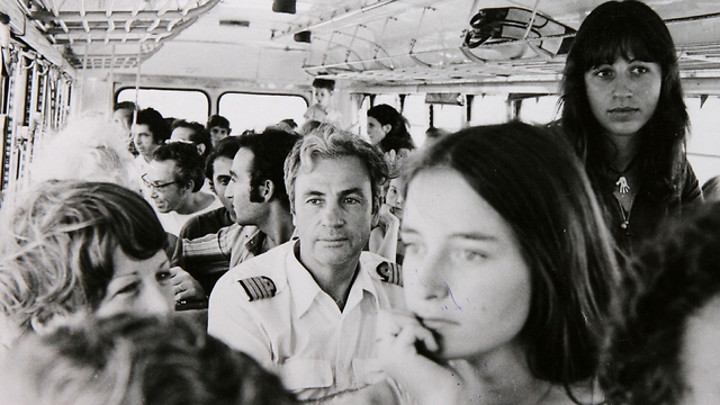 Air France pilot Michel Bacos, in uniform, returning from Entebbe with the other hostages
The first leg of Air France Flight 139, headed from Tel Aviv to Paris on June 27, 1976, was uneventful. It took off as scheduled, carrying over 240 passengers and 12 crew members. After a routine stop for refueling in Athens, the flight departed once more, headed to Paris. A few minutes after takeoff, terrorists from the Popular Front for the Liberation of Palestine and the pro-Palestinian German terror group Baader Meinhof pulled out guns and announced they were hijacking the plane.
Hearing screaming from the cabin, Capt. Bacos initially thought there was a fire on board. The plane’s chief engineer opened the door to the pilot’s cabin and found himself nose to nose with a German terrorist holding a pistol and a grenade. “If you stay still and do nothing suspicious, no one will be hurt,” the German told the crew. The terrorist pushed the muzzle of his gun into Capt. Bacos’ neck and ordered him to turn the plane away from Paris and fly to Libya instead.
Capt. Bacos later explained he felt he had no choice. “We could only obey the orders of the terrorists…Every time I tried to look in a different direction, he pressed the barrel of his gun against my neck.” Capt. Bacos, a 52-year-old veteran of World War II, was a seasoned pilot and kept his calm. He flew to Benghazi, Libya, where the sympathetic tyrant Muammar Gaddafi allowed the plane to refuel. The terrorists then directed the crew to take off once more and fly to Uganda.
The plane landed in Entebbe, where Idi Amin, the genocidal dictator who ruled Uganda, met it on the tarmac with a warm welcome for the hijackers. More Palestinian terrorists boarded the plane as well as Ugandan troops. They went through the cabin, examining the papers and passports of passengers, separating the Jewish and non-Jewish passengers.
148 of the passengers were neither Jewish nor Israeli and they were freed on June 29, 1976. The 53 remaining passengers were brought to a sweltering abandoned terminal and held hostage. The hijackers and Ugandan troops told the non-Jews they were free to leave on the next flight to Paris. For the Jewish passengers, a terrifying fate awaited: the hijackers demanded the release of 54 convicted Palestinian terrorists being held in prisons in Israel and around the world, as well as $5 million. If these demands were not met, the terrorists would start to kill Jewish passengers.
Capt. Bacos and the rest of the crew were told they were free to leave, but the captain refused to abandon his Jewish passengers. “I told my crew that we must stay until the end, because that was our tradition, so we cannot accept being freed. All my crew agreed without exception,” he later recalled.
Capt. Bacos demanded to see the Jewish passengers and was allowed to visit the terrified hostages. After years of flying to Israel, he spoke some Hebrew and was able to comfort them, trying to convey a sense of reassurance he hardly felt himself. The situation appeared hopeless.
Unbeknownst to the hostages, Israeli commandos were contemplating a daring raid. After attempts to reason with Idi Amin proved fruitless, Israeli officials tried to gain the cooperation of France to help free the hostages. As the days dragged by and the terrorists set one deadline after another for their unreasonable demands, it became increasingly clear: Israel stood isolated and had to find a way to free Jewish hostages hundreds of miles away in a hostile nation, alone.
On July 3, 1976, with just hours to go before the terrorists had vowed to start shooting hostages, Israeli Prime Minister Yitzhak Rabin authorized an unprecedented, top-secret attack. Four transport aircraft carrying Israeli troops took off from Israel, landed in the Egyptian port of Sharm el-Sheikh, then took off again, headed towards Entebbe.
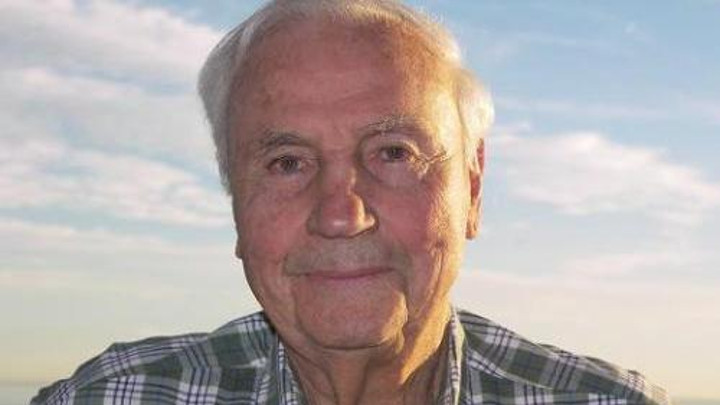 Captain Michel Bacos
They were helped by a Jewish passenger from the doomed Air France flight named Ninette Morenu. She was mistakenly identified as non-Jewish by the terrorists due to her very French-sounding name, and she quickly contacted Israeli authorities after arriving back in Paris. Before departing Entebbe, Ms. Morenu had made a determined effort to memorize the layout of the airport, particularly the terminal where the Jewish passengers were being kept. The diagram she drew helped Israeli officials decide they had enough information to go ahead with their plan.
Under cover of night, the soldiers flew to Uganda. They knew that upon landing they would be marooned in a hostile country, far from any logistical or military allies. Once in Uganda, the Israeli commandos changed into uniforms of the Ugandan army. The plan was to pretend to be a motorcade carrying a triumphant Idi Amin to the airport where his miserable hostages were being kept.
The plan nearly was derailed. The motorcade came under fire from Ugandan troops operating a roadblock, but managed to drive through and arrive at the airport. For Capt. Bacos, the site of the motorcade was initially terrifying - until he got a look at the soldiers. “I lifted my head,” Capt. Bacos later recalled, “and I saw a soldier dressed like a member of the Ugandan army with a white hat, and he said in Hebrew: ‘Listen, guys, we’re coming to take you home.’”
Israeli soldiers battled with the terrorists and Ugandan troops. In the melee, three passengers were killed: Ida Borochovitch, Jean Jacques Maimoni, and Pasko Cohen. A fourth passenger, Dora Bloch, had been hospitalized in a Ugandan hospital and was murdered there after the raid. One Israeli soldier, Lt. Col. Yonatan Netanyahu, the older brother of Israeli Prime Minister Benjamin Netanyahu, was killed in the fighting.
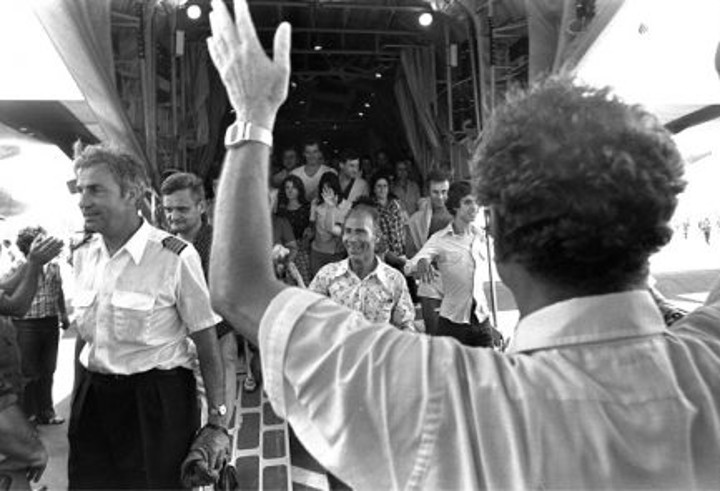 Michel Bacos (left) emerging from the Israeli military plane
after the Entebbe rescue mission. Photo: Ya'acov Sa'ar
As the Israeli soldiers flew home, they had a special message for Capt. Bacos, whose commitment to his Jewish passengers had never wavered, and who was sitting with them in the main body of the plane. “Your place is not here,” a soldier told him, “but in the cockpit.”
After the daring raid on Entebbe, Capt. Bacos took off two weeks for a vacation. Then he resumed flying for Air France and had a request for his very first flight back on the job: he wanted to fly to Tel Aviv.
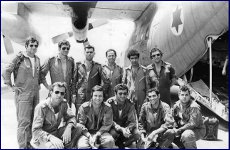






For more details on this amazing operation, I recommend the book Operation Thunder: The Entebbe Raid by Yehuda Ofer.
None of these movies are anything like being there and in fear of being killed, but otoh, I expect any of them are worth watching, https://www.youtube.com/results?search_query=entebbe and whilch will give you more of a feel than text can. Eight of them (although one of them is animated!!). Between 15 minutes and 2 hours. Another thing I remember is the tailors, who were up all night making Ugandan army uniforms/
Thank you Ivy it made me teary
Ninette Moreno was my friend in Montreal. In the 70’s we worked together in the fashion industry.
She was a great lady, of great beauty and intelligence. Her name was Moreno and not Morenu. She was of Moroccan-Spanish descent.
She never bragged about the ordeal. She was a hero! 💕💕
Of course, I like the story of the rescue. It does show also what Israel has had to put up with all these decades.. people need to do independent reading to hopefully learn the actual history and going on before posting comments.
I love this story!
Where did the rescuers land in Uganda?
Entebbe
Just imagine if Israel wasn't around to save the hostages. Where was France?
Idi Amin was a psycho. Pour Ugandans.
I am an 82-year-old Canadian Jew. Why do I think that the rescue planes stopped in Kenya, not Sharm el Sheikh, for refueling? I seem to recall that much was made of Kenya's support for the operation.
Yes, it was Kenya. Idi Amin later ordered the murder of all Kenyans living in Uganda (and Ida Bloch, and her doctors and nurses who tried to protect her) out of revenge. 245 were killed and 3,000 expelled.
I can't find any source for Amin murdering 245 Kenyans living in Uganda, can you post yours?
That's the trouble with the web. There are lots of things that happened that never made it to the web, or made it but were deleted later (not for censorship usually but for reorganization, moving files to another machine, or space, or something.) But Nachum's report is what I also heard 20, 30 years ago, when even more stuff that happened did not get stored on webpages. I did find one current link about a 21-year old Kenyan woman tourist in Uganda, whose father was a Kenyan official, who was kept back at the border (while her friend was allowed to go home) and then murdered.
Yes, I'd forgotten that he had the doctors and nurses killed too. Dora Bloch. Maybe Ida was her middle name?
And let's not forget Dora Block, a Jewish grandmother who got sick and was taken to a hospital where she should have been safe, but Idi VD Amin's men came there took her, and killed her.
And let's not forget Kenya, that let the Israeli planes land and refuel on their return to Israel and the fact, that one, maybe all the Kenyan tourists and businessmen in Uganda at the time were murdered before being allowed to go home. Let's not forget that the internet, even with google, and especially with so-called AI, is not an adequate history of the world. All I can find now is about one 21-yo who was murdered and one sent home. Maybe my 1 prior source exaggerated, or maybe I did, but I still think t here was more than one murdered for Kenya's help to Israel. See next, or prior post.
Hundreds of Kenyans were murdered.
It was an almost warm day yesterday, and I have some summer fence maintenance that didn't get done in the summer, so I was eager to get outside in the daylight, and I skimmed the article but did not read it closely or I would not have repeated things as if they were not already mentioned. So my apologies to Dr. Yvette Miller, who did mention Dora Bloch, Kenya, and the flight attendants. I actually searched the article for "attendant" and "stewardess" before I said they were not mentioned, but did not search for "crew". That'll teach me.
It must be remembered that the stewardesses, the flight attendants, also refused to be released and they stayed with the other hostages. It seems to me they were even more courageous because they had (IMO far) less duty than the captain to provide for the safety of the passengers and they were probably younger and had more to live for. I was not too surprisd that the captain stayed, but I was startled to hear that they did. Even now I still am. Based on her picture, Dr. Miller is young and does not remember this in real time, and I think it's a shame no one she talked to told her about the flight attendants.
The article clearly mentions that the captain's crew unanimously went along with his decision!
In any case, as the one making the phenomenal decision (you seem to shrug off the fact that he had the opportunity to save himself, yet he chose to stay in a mortally very risky situation with a minority of his passengers!) he certainly deserves to be the focus of the article.
Yes, it does mention the crew. I searched for attendant and stewardess but not for crew. Please see my other post where I apologize to Dr. Miller. But I am certainly not shrugging off the captain's bravery in staying with the hostages. I only said that I'm even more impressed by the others. Captains have a long tradition of, aiui, going down with the ship, for some reason, and this is sort of similar. One never hears of the stokers, firemen, cooks, waiters, waitresses feeling obliged to go down with the ship. And even if there were a known obligation, the captain makes 3 times or more money than the stewardesses do, and also has much more status. In a way that's likely to encourage him to do his duty. (continued, probably below)
Whether the crew stayed because the captain told them they should or must, or for their own parallel sense of duty and honor.... Well, I'd like to think I would have stayed if I were the captain, but if I were a steward on that plane, I think it likely I would have left when I had the chance and not risked my life for people I only met 4 hours ago, no matter how deserving they were or how righteous the cause, and no matter what the captain said. So I remain quite impressed by the captain, and more impressed by the crew, especially the stewardesses.
the captain will not leave the ship until everyone else has been evacuated. The horrible exception was the use of slave rowers in Ancient Rome, who were chained to their benches so that they could not get out. Passengers leave first, along with crew needed to assist them. Crew is next, followed by officers. The captain is last. If every other person has gone, the captain will be the final evacuee. And you are correct: aviation developed centuries after ships, but is based on the rules in place for ships.
A true hero. What a soul the captain had. My heart goes out to his family. He will be remembered forever.
Gd bless the pilot and all those that lost their lives should rest in peace … Islam is a plague
Back in the 1990’s, following an aviation accident in which a plane crashed into the ocean off the coast of New York, there was initially concern that it was due to terrorism. At the time, PM Netanyahu made a speech stating that it was necessary that the crash be fully investigated. He also said that no one should blame all Muslims, members of a great faith, if there was evidence that terrorists had crashed the plane.
If PM Netanyahu could take such a measured tone, I think it behooves the rest of us not to call Islam a plague. Btw, I lost 2 friends in the Lockerbie bombing— committed by terrorists.
I love this amazing rescue, only Israel would dare to do such a brave act.
i have seen the movie and it shows their incredible courage!
I am Israel chai
There are two movies. One had big name stars. The other was made for TV, had actors one had never heard of, cardboard boxes for props,. They were both good but the second was t he better movie. It repeated facts and dialogue from the newspaper interviews with the hostges and soldiers. It captured better iirc how one of the hostages was shot accidentally by an Israel.
There were two American movies, both made for TV, both with big name actors. There was one Israeli movie.
Recently there was another Hollywood movie made which of course made Israel the bad guy.
There was another movie, an Israeli film starring Yoram Gaon as Yoni Netanyahu, a very realistic version in Hebrew, called Operation Entebee, later changed to Operation Yonaton. I have that version on DVD, and its the version I trust. The other two movies were ridiculously bad. IF you can find the Israeli film, I recommend it, but it was impossibly hard for me to get. The French pilot and his crew were real heros.
FYI, Sharm el-Sheikh was still in Israeli hands in 1976
Correct Heshy - The Camp David Accords that ceded the Sinai to Egypt took place in September of 1978
But it was still in Israeli hands in 1981-82. I was in Israel then, and we were on our way to Sharm el-Sheikh to go snorkeling but were forced to turn back because the IDF was there breaking up massive protests against giving it back to Egypt. We ended up in the Negev, then at the Red Sea, where we did go snorkeling.