







 Debunking Viral Claim About the Talmud and Minors

4 min read


6 min read


The UN built institutions for Palestinian refugees while ignoring Jewish ones from Arab lands and Iran. That silence fuels myths—and blocks justice.
I left Iran with my family in the early 1990s. By then, most of my relatives had already fled around 1978, as the revolution gathered force and the tyrannical regime that replaced the Shah tightened its grip. Sons were moved out first. Families like my own scattered overnight. People left homes, businesses, and heirlooms behind because staying meant living in fear, or worse.
My family left because we were Jews, and being Jewish in the new Iran meant our lives, our safety, and our future were suddenly in question.
My story is not unique. It is one thread in a much larger, nearly erased story: the story of more than 850,000 Jews from Arab countries and Iran who were forced out of their homes in the mid-20th century. They were stripped of citizenship, their property seized, their bank accounts frozen. Many fled with nothing—literally without the shirts on their backs.
They were not migrants seeking a better life. They were refugees, driven from the only places they had ever called home. They left heartbroken. They left knowing they would never be able to return.
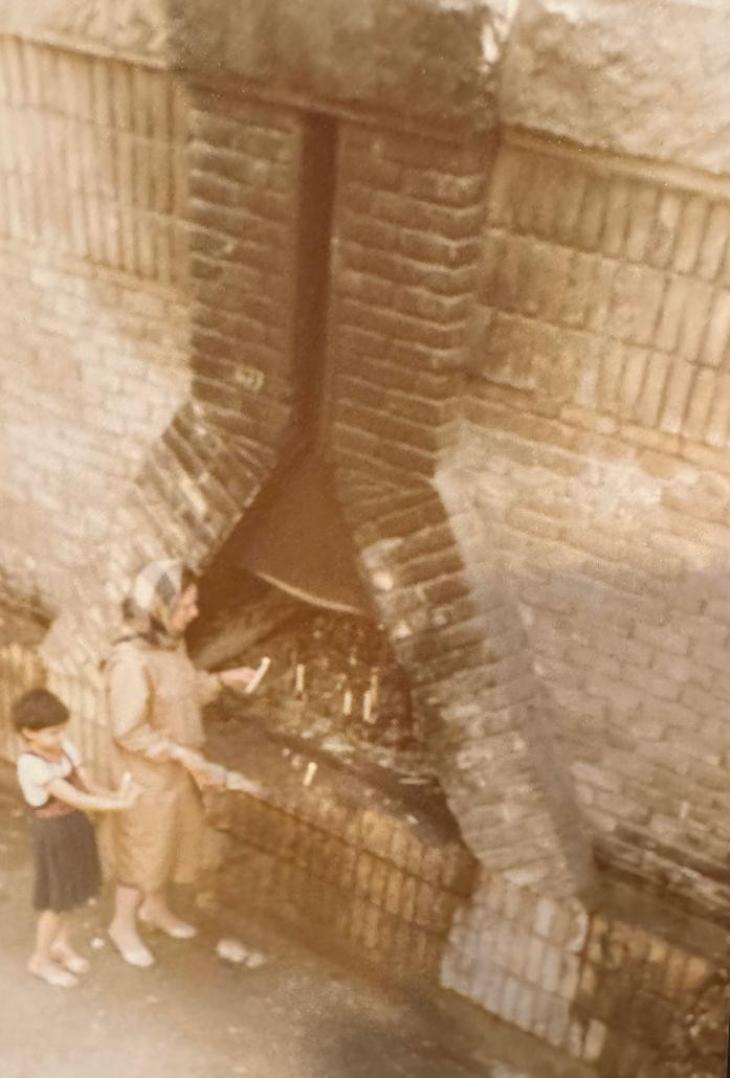 My mother and I at the entrance of Esther and Mordechai tomb in Hamadan
From Baghdad to Cairo, Tripoli to Sana’a, Aleppo to Tehran, Jewish communities that had existed for millennia were crushed in a single generation. In Iraq, Egypt, Yemen, Syria, Libya, Morocco, Tunisia, Algeria, Lebanon, and Iran, Jews faced riots, pogroms, arrests, public hangings, show trials, and official campaigns of intimidation. Papers were revoked, passports confiscated, emigration blocked—until suddenly it wasn’t blocked anymore. It was forced and final.
Most of these forgotten refugees went to one place: Israel.
From Baghdad to Cairo, Tripoli to Sana’a, Aleppo to Tehran, Jewish communities that had existed for millennia were crushed in a single generation.
Israel in those years was a poor, embattled young country absorbing Holocaust survivors while fighting multiple wars. Yet it opened its doors to penniless Jews from Arab and Muslim lands. Families were packed into tents and transit camps; conditions were harsh and often humiliating. But they were given something many of their Arab neighbors still deny their own refugees: citizenship and a future.
Over time, those Mizrahi and Sephardi Jews—Jews from the Middle East and North Africa—were integrated into every part of Israeli society: government, culture, the army, universities. Today, they make up the majority of Israel’s Jewish population. When people look at Israel and see only “European” faces, they erase my family and millions of others like us.
Now hold that reality up against another one.
Many of the same Arab regimes that urged or pressured Arabs to leave the new State of Israel in 1948—promising a quick victory and return—then refused to integrate those Palestinians into their own countries. Instead, generations were kept in permanent limbo: stateless, camp-bound, blocked from full citizenship and opportunity.
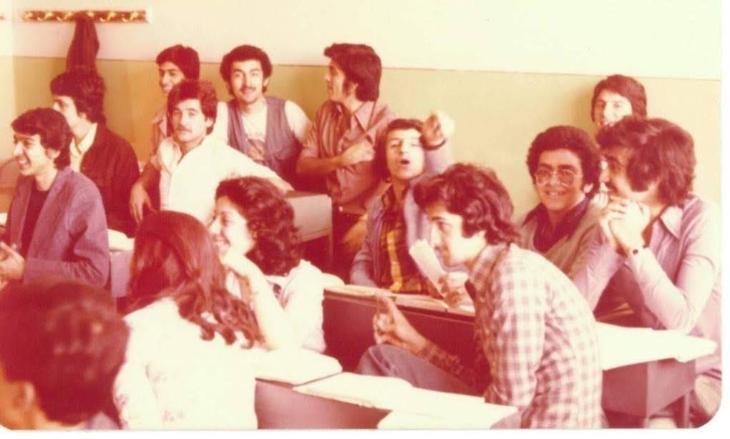 Students at the coed Attefagh school, a Jewish private school in Tehran before the 1979 Islamic Revolution. © Pirooz Abir
Rather than resolving the refugee crisis, those governments froze it in place and turned it into a political weapon. Human lives became props in a narrative designed to demonize Israel, while the parallel story of Jewish refugees from Arab lands and Iran was pushed off the stage entirely.
The result is a grotesquely one-sided memory, one the United Nations has helped cement for decades.
Entire UN agencies, committees, and annual resolutions are devoted exclusively to Palestinian refugees. There is no equivalent UN framework for Jews who fled Arab and Muslim lands. No standing body tracks our dispossession. No widely marked UN day commemorates our expulsion. Our communities—2,500 years of history in places like Baghdad, Aleppo, Fez, Sana’a, and Tehran—are treated as if they simply evaporated.
They did not evaporate. They were driven out.
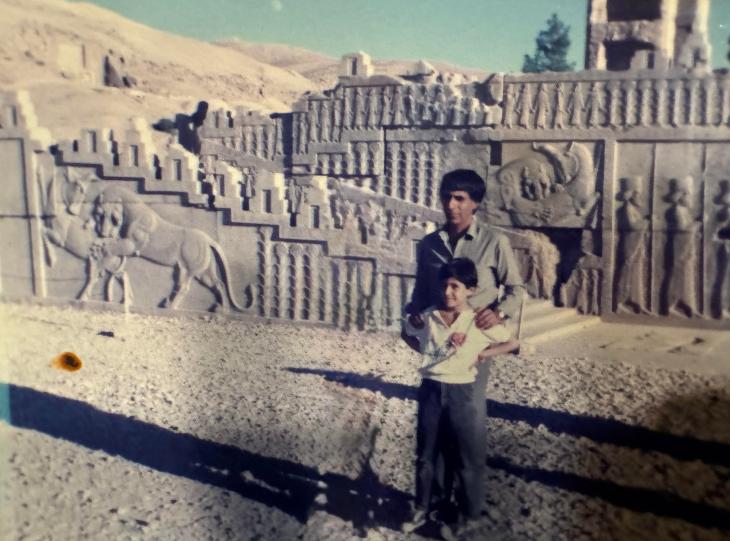 My father and I in Pasargadae
By ignoring Mizrahi and Sephardi Jewish refugees, the UN reinforces several dangerous lies:
November is Mizrahi Heritage Month. On November 30, Jews around the world mark the day that symbolizes the expulsion of Jews from Arab countries and Iran. For families like mine, this is not abstract. It is grandparents who never saw their homes again. It is stories whispered over Shabbat tables about the night everything changed. It is the ache of exile that never fully goes away.
November 30 should also be a test for the international system.
Recognizing Mizrahi and Sephardi Jewish refugees does not erase Palestinian suffering.
Will the UN continue to hold conferences, pass resolutions, and publish reports as if only one group of refugees emerged from the Arab–Israeli conflict? Or will it finally acknowledge the full truth: that there were two refugee populations—Palestinian and Jewish—and that both deserve to be seen, remembered, and treated with dignity?
Recognizing Mizrahi and Sephardi Jewish refugees does not erase Palestinian suffering. It simply puts reality back together. One group of refugees was taken in and made citizens by the world’s only Jewish state. The other was largely left stateless and used as a permanent political tool by regimes that refused to solve the problem they helped create.
As someone who fled Iran, as a descendant of Jews who ran for their lives from a regime that turned them into targets overnight, I am asking for something very simple:
Tell the truth.
It is incumbent on us—the children and grandchildren of those who lost everything—to refuse to let this story be buried. It is on us to say to the world, and especially to the United Nations, that Jewish refugees from Arab countries and Iran existed, that they suffered, that they were real, and that their rights and losses matter.
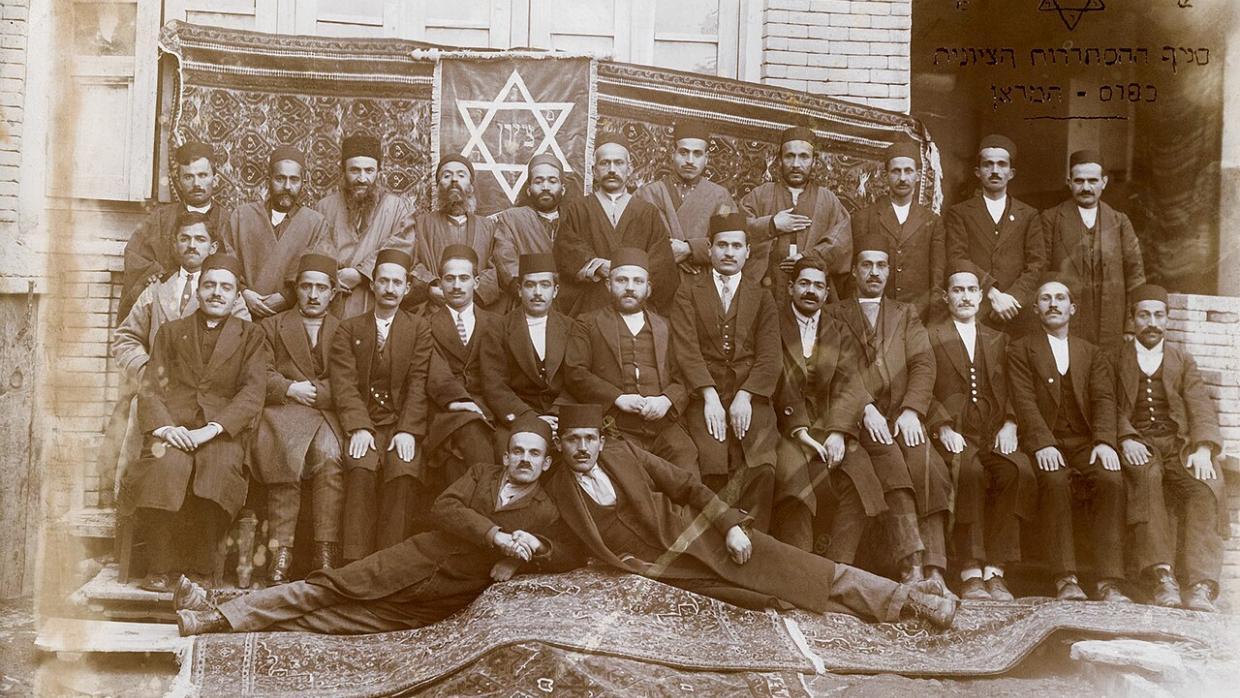
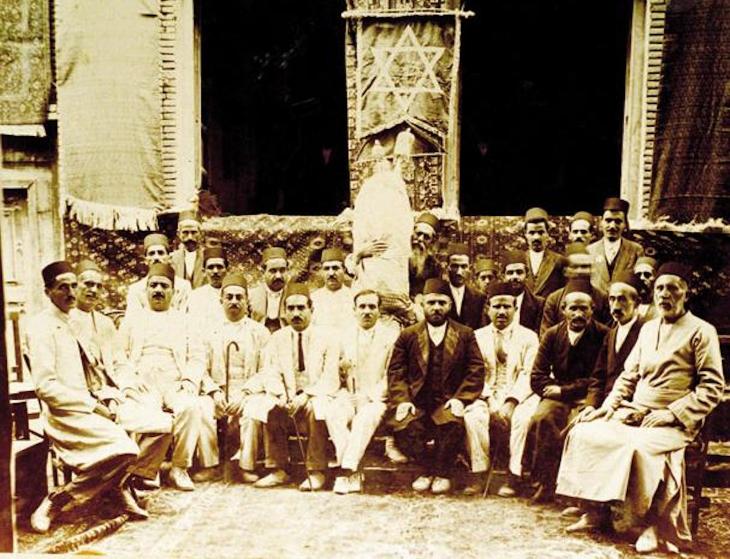 A photo of Jews in Hamadan
The UN can no longer claim moral authority on refugee issues while pretending that my family’s story, and the stories of 850,000 other Jews from the Middle East and North Africa, never happened.
I am calling on the United Nations to finally give voice to Mizrahi and Sephardi Jewish refugees: to recognize us in its resolutions, to mark November 30 as a day of remembrance, to commission serious research into what was taken from us, and to include our story in every serious conversation about refugees from the Arab–Israeli conflict.
Our grandparents may never go home. I could never take my children to see firsthand where I grew up, lest the IRGC hold me prisoner. Many of the synagogues, schools, and cemeteries we left behind may never be restored in many Arab lands. But our history is not up for erasure.
We are still here. And we will not be silent about what was done to us.












Language is important. I think it is wrong to refer to "Palestinian refugees". They were Arabs, not Palestinians. They did not count themselves as "Palestinians". They identified as "Arabs".
The only thing I would add is the Maghreb Jews from North Africa, many there for 2000 years like the Mizrachi Jews. All before Islam.
And is still being done to us over and over again.
Generally speaking, Jews help(ed) other Jews. Generally speaking, Arabs do not.
Very interesting read, something I didn’t know even though I have visited your beautiful country and was overwhelmed by what you have achieved in a short space of time. I’m a non practicing Christian but my family tree puts my paternal grandmother with the pre marriage name as Mary Levy so there is a definite connection there of a Jewish history, unfortunately she passed away when my dad was born so I have been unable to find any history
Good article, however, instead of presenting the interests only of those Jewish people who were forced to become refugees, the comment “ does not erase Palestinian suffering” is not only insufferable, it’s also unnecessary? Some 55 Muslim countries, millions of fascist Palestinian supporters worldwide, and ‘we’ have to almost compensate the ‘other side’ by ‘reconfirming their ‘rights’! One may suggest it’s the ‘liberal’ thing to go. Those of us who lived through 7th October, may well say “our ultra liberal leaning, being the nice guy and always willing to look at how others are being treated” nearly through the country down the sewers!
Winning at international politics in about saying what YOU want and standing by your words. Bottom line, Stand Up For Israel Without Apologising FFS
BRAVO! Standing ovation- I agree 100%
may I have an address to send a check to support your mission
100000000000000reasons not to believe the truth Qatar. Qatar qTar
November 30 should be named " The Real Nakba".
The " other " Nakba, the fraudulent one that simply mourned the Arab defeat of 1948 and the establishment of Israel, was covered up by "the Palestinians refugees" hoax for which the Arabs were 100 % responsible.
They refused the Partition. They started the genocidal war. They told the fleeing Arabs they would be back when Israel was destroyed. Those Arabs who stayed in Israel did well to this day.
The Arabs lost 48, 67, 73, 82, and all Hamas successive attacks. The Arabs should have suffered the consequences. They should have absorbed their 48 Arabs . They should still. " Palestine" ceased to exist in 1947.
Add to that-- the "Palestinians" are an invention, created by Arafat et al, in 1967. And the world believed it because of anti-Israel and antisemitic sentiment. There is NO SUCH THING as a Palestinian!!!
Thank you for this article!
I am a refugee from Egypt on 1948 -1956 - 1967 Jews from Egypt not only were through out of the country with nothing except what you are wearing but husbands and sons were put in jail for being Jews and my husband was one of them in 1967 were all the Jewish males were put in prison even the chief Rabby of Egypt was lock at the Rabbinate the place was surrounded by police wife’s didn’t know were there husband were taking N Nation never mentioned anything about Jews from Arabs countries I am wondering why all the Europe countries who took refuge never talk about it at the United nations it like it never happened everyone talk about Gaza what about us Jews we need to raise our voices to the media so the whole world world will know thank you
Thank you. My husband's parents fled Iraq and arrived in the nascent State of Israel. Coming from Canada, I have always encouraged a strong recognition of and embraced his family's culture, both for its own value and for our children, who are half Mizrahi Jews.
Your last comment needs clarification because many people are confused about the term "half" when it refers to Jewish identity:
For example, a person cannot actually be (1) "half Jewish" or (2) "half Mizrachi." What those terms mean is that (1) the person has only one Jewish parent, or (2) just one Sephardi / Mizrachi parent.
In the first case, Jewish identity is determined by Torah law according to matrilineal descent—i.e., one is considered Jewish if his/her mother is a Jew. (In the reverse case of having only a Jewish father, the person isn't recognized as a Jew without undergoing a halachic conversion.
However, cultural identity is determined by patrilineal descent, so that children of a Mizrachi father and Ashkenazi mother are supposed to follow Mizrachi minhagim (customs).
And yet Law of Return grants Israeli citizenship to any oleh with only one proven Jewish grandparent, either matrilineal or patrilineal.
This is because Israel decided to take in anyone the N+zis would have persecuted as a Jew, but that doesn‘t make these people halachicallv Jewish unless they convert.