







 Debunking Viral Claim About the Talmud and Minors



5 min read


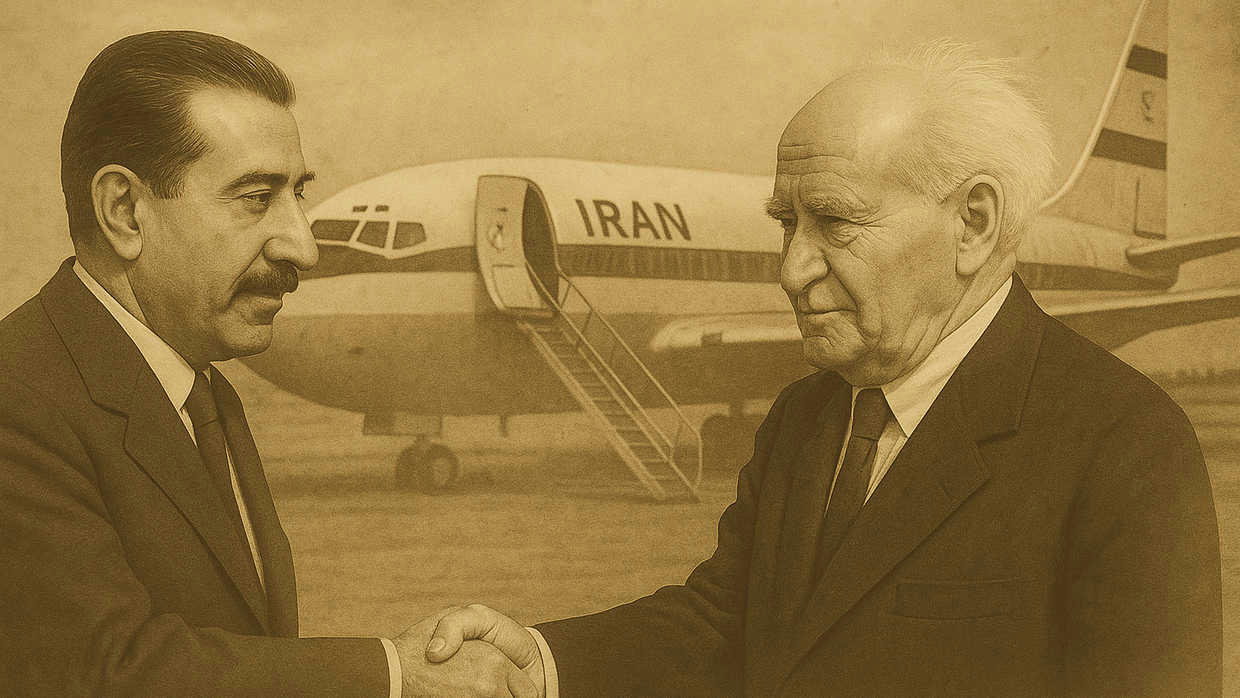
Before today’s bitter conflict, Iran and Israel were close allies—sharing oil, intelligence, and friendship. This is the lost chapter the world rarely remembers.
Picture this: El Al flights landing in Tehran. Israeli engineers building Iranian infrastructure. Iranian oil fueling Israeli cities. Israeli intelligence training Iranian security forces.
This isn't some utopian fantasy—it's history. And it wasn't that long ago.
In the present moment, as we are shaken by the news of a new war, it may seem as if the story of Iran and Israel is one of eternal enmity. But as Prime Minister Netanyahu emphasized in his war announcement, addressing the Iranian people: "Our fight is not with you. Our fight is with the brutal dictatorship that has oppressed you for 46 years. When that happens, the great friendship between our two ancient peoples will flourish once again."
Let’s not become prisoners of the present. The truth is, there was a time when Iran and Israel stood side by side—not as enemies, but as allies.
Long before modern states, the friendship between Persians and Jews stretched back millennia. King Cyrus the Great is honored in Jewish tradition for liberating the Jews from Babylonian exile and allowing them to rebuild the Second Temple. Centuries later, the Sassanian Empire became a center of Jewish life, producing luminaries like Rav Ashi, a key editor of the Babylonian Talmud.
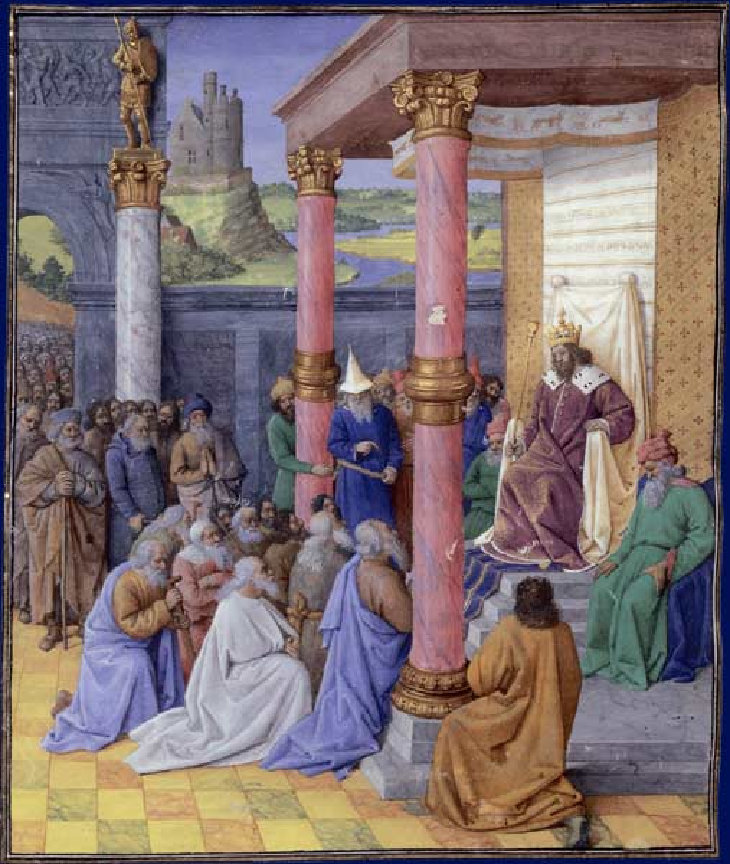 Cyrus the Great releases Jews from the Babylonian captivity to resettle and rebuild Jerusalem. Jean Fouquet, 1470.
Even after the Islamic conquest, Persian-Jewish relations remained remarkably stable. Medieval travelers marveled at thriving Jewish communities in Isfahan, Shiraz, and beyond. This wasn’t mere tolerance—it was genuine coexistence between two ancient civilizations.
Under Shah Mohammad Reza Pahlavi (r. 1941–1979), that ancient respect blossomed into a modern alliance. From the early 1950s until the 1979 Islamic Revolution, Iran and Israel maintained a quiet, pragmatic partnership grounded in shared strategic interests.
Iran supplied up to 60% of Israel’s oil through a discreet pipeline. El Al flights connected Tel Aviv and Tehran. Israeli experts aided Iranian agriculture, while Iranian students studied in Israeli universities.
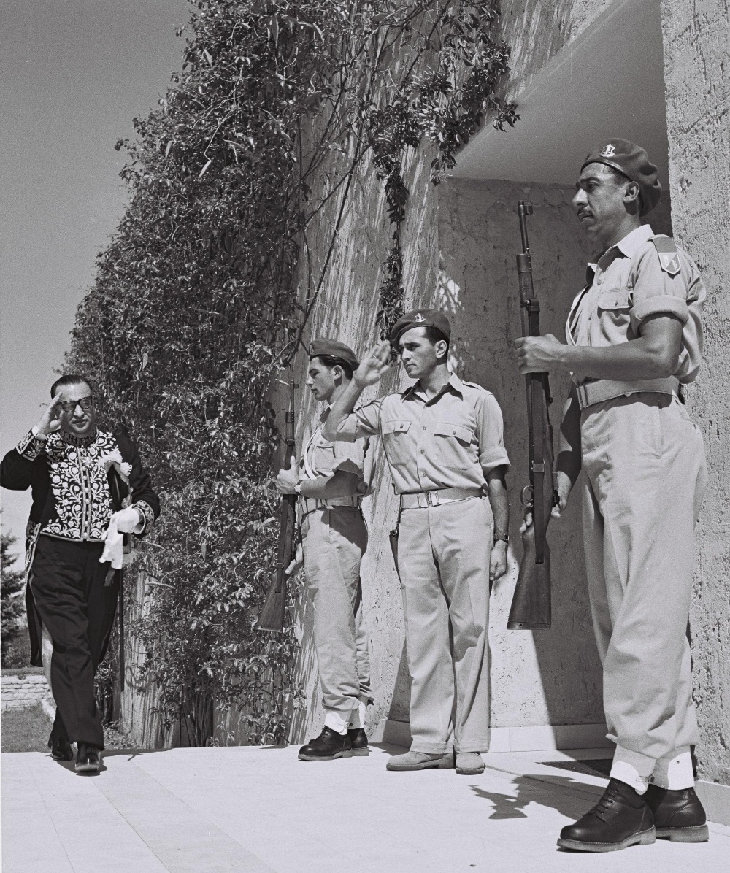 Iranian minister Reza Saffinia arriving at the house of Israeli president Chaim Weizmann in Rehovot on Yom Ha'atzmaut, 1950. (Israel Press Office)
Behind the scenes, cooperation ran deeper. Mossad helped train the Shah’s secret police, SAVAK. Israeli leaders like Rabin and Peres visited Tehran to coordinate policy. Both nations saw themselves as non-Arab powers in a hostile region, fostering alignment based on mutual security concerns.
For Iran’s Jewish community—then around 80,000—this was a golden age. They served in government, thrived in business, and maintained vibrant religious life. Synagogues operated freely, kosher food was available, and Jewish schools flourished.
In February 1979, everything changed. The Ayatollah Khomeini swept into power, toppling the Shah and ushering in a regime driven by militant Shi'ite ideology.
Within days, Iran cut ties with Israel—and made a spectacle of it. The former Israeli embassy in Tehran was handed to the PLO. Yasser Arafat raised the Palestinian flag where the Star of David once flew. In one stroke, decades of discreet cooperation were erased and replaced by open hostility.
Khomeini’s words were chilling: “We must all rise to destroy Israel.” Israel was now the “Little Satan,” alongside the American “Great Satan.” The new regime didn’t just adopt the Palestinian cause—it made it sacred.
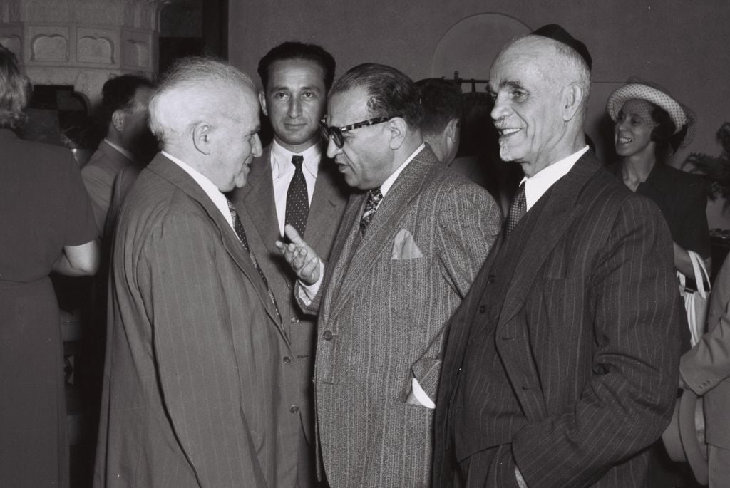 Iranian Minister Plenipotentiary Reza Safinia, center, who represented Tehran in Israel, chats with then-prime minister David Ben-Gurion at a party in Jerusalem, June 1, 1950. (photo credit: Teddy Brauner/GPO)
Khomeini also inaugurated Quds Day, turning the last Friday of Ramadan into an annual rally for Israel’s destruction. Tehran’s streets filled with chants of “Death to Israel,” flag burnings, and speeches denouncing Zionism as a corrosive threat.
But this wasn’t just political—it was ideological and antisemitic. Supreme Leader Khamenei repeatedly described Israel in pathological terms, calling for its eradication and denying the legitimacy of Jewish self-determination. The rhetoric blurred the line between opposing a state and denying a people’s right to exist.
Yet even within this atmosphere, a remnant of Iran’s ancient Jewish community—some 10,000 strong—endures. Their continued presence speaks to a deeper truth: the ties between Jews and Persians, forged over millennia, are not so easily erased.
This transformation was not just geopolitical—it was an assault on memory. The regime has worked tirelessly to erase the history of Persian-Jewish friendship, replacing millennia of coexistence with manufactured hatred.
But memory is stubborn.
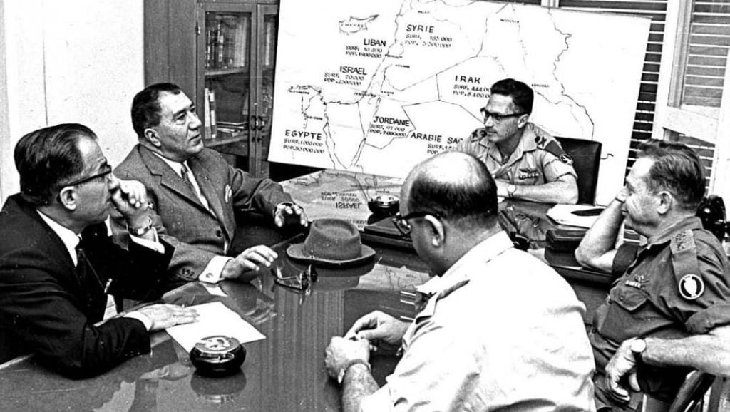 Top Iranian military officials Hasan Toofanian and Bahram Ariana (left), meet with Israeli officers in the headquarters of the Israel Defense Forces, 1975. (photo credit: public domain, Wikimedia Commons)
Iranian exiles still speak warmly of their Jewish neighbors. Israeli-Iranians preserve Persian culture, cuisine, and language. And even inside Iran, cracks in the narrative persist. It’s widely believed that some of Israel’s most daring intelligence operations—including strikes on nuclear sites—were made possible with help from brave Iranians themselves. These quiet acts of defiance suggest a different story is still unfolding—one rooted in shared interests and mutual respect.
Netanyahu recently spoke to this possibility: “The peoples of those two countries now have a chance for a different future, a better future. So, too, do the brave people of Iran.”
This isn’t just political hope—it’s a moral one. History shows Iran and Israel were not destined for conflict. Once, they built together. Perhaps one day, they will again—not as enemies, but as partners with shared memory and mutual respect.
May we live to see those days return.












I don't know if Iran and Israel were allies in the past, but now Israel and Iran are enemies, also in ancient times Jews lived in Persia which is now Iran, in Iran/ Persia they still have the tombs of Mordichai and Esther the hero and heroine of the Purim story
Allies? Israel cravenly allowed itself to be used in all the wrong ways just it did with South Africa and now with Azerbaijan. Be a little more discerning about what you sell to these countries.
The duplicity of Iran should also be noted in more ways than one, especially a glaring example involving Iran’s long oppressed 8-10 million Ahwazi Arabs in Khuzestan (oil rich) province, which has also been known as Arabistan for the past few centuries. Please see this expose which few folks are aware of in the link below…
https://www.theunitedwest.org/2018/01/02/viva-arabistan/o
This link may be more direct to this widely published article. This is one version of it:
Source: The United West
https://share.google/cjmbYT0B2gBEAGh24
In 1961 on my way back from the Atomic tests in the Australian desert I decided to visit Israel for the first time. My BOAC Comet landed at Merhabad Airport in Teheran at 1 am and as I disembarked I was greeted by a tall figure in an airline uniform and on his cap a Magen David. He was of course from El Al and he knew my name. He said we have a taxi waiting for you and have booked a hotel room in the city. Please take a taxi in the morning and charge it to El Al. I then flew by El Al Brittania to Israel. It was a wonderful introduction and although I eventually made Aliyah in 1973 with my wife and young family things never went to well again.
The relationship between Israel and Iran was discreet and complicated for sure. However, if we're being honest, the training of the Iranian Savak was not something to be proud of, and not to be admired at all. The Savak was a brutal organization, responsible for the surveillance, interrogation, torture, and death of many Iranians. Perhaps in the sphere of geopolitical considerations, Israel did what it needed to do, but it was not something that should be minimized or ignored.
https://www.jewishpress.com/indepth/analysis/purim-5778-persians-jews-and-kurds-still-dealing-with-haman-and-achashverosh/2018/03/02/
I’ve done extensive doctoral work in both Middle Eastern and National Security Policy Studies. Please read my above article from yesrs ago which supports your own timely, important piece nicely.
I remember clearly that in the years 1976-78 a close cooperation existed between the two countries with MD’s Flying everything week from TLV Hospitals to Téhéran for medical assistance.