



 Debunking Viral Claim About the Talmud and Minors

11 min read
4 min read
16 min read



9 min read


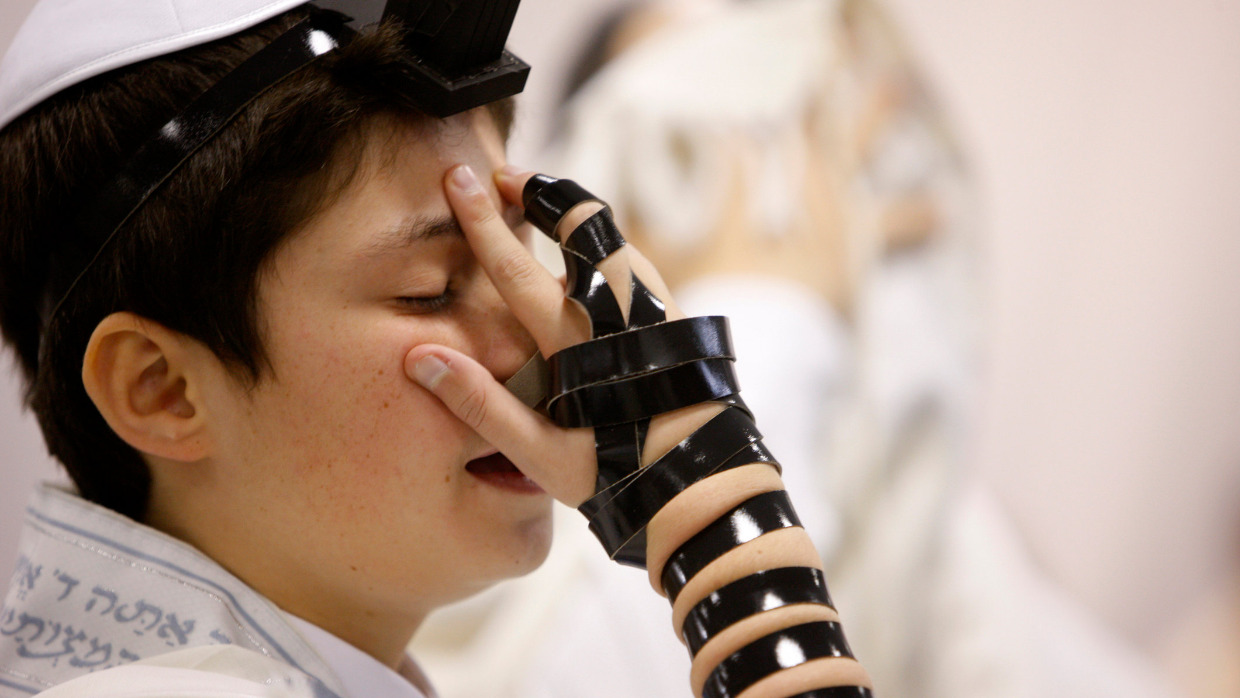
Tefillin: Everything you need to know about those powerful black boxes, placed on the head and arm.
Tefillin are special boxes and straps placed on one's head and arm, as the Torah says: "Bind [these commandments] as a sign on your arm, and as totafot between your eyes" (Deut. 6:8).
Tefillin are sometimes referred to as phylacteries. This stems from the ancient Greek phylakterion, which means a safeguard. Apparently, the Greeks misunderstood the Tefillin to be some sort of amulet or charm. Actually, Tefillin serve not as a superstition, but as a bona fide connection to God.
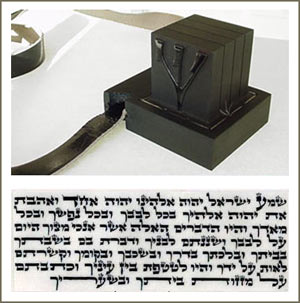
Tefillin consist of two square, black leather boxes, which contain parchments of Torah verses. One of the boxes is worn on the bicep (Tefillin shel yad), and the other is worn on the front of the head (Tefillin shel rosh). Attached to each box are black leather straps.
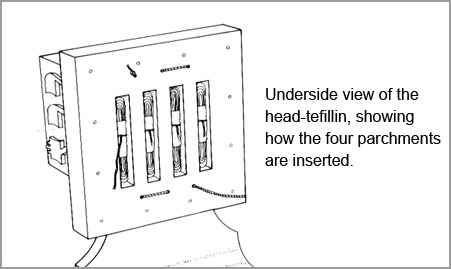
Inside each Tefillin box are parchments containing four Torah sections:
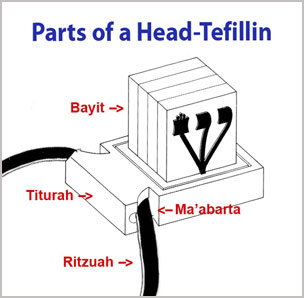
There are five main parts of tefillin:
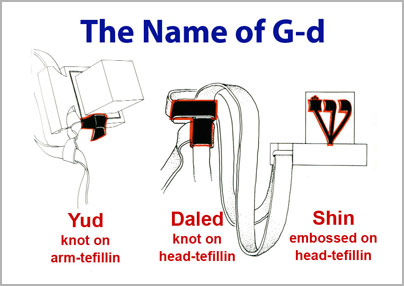
The outer structure of the Tefillin contains three Hebrew letters, which spell out God's name, Shadai:
There are innumerable details that go into producing "kosher" Tefillin. For example:
Tefillin should be worn for the morning prayers. Men who wear a tallit should don it before laying Tefillin. If for some reason, the Tefillin were not put on in the morning, they may be donned at any point during the daytime. The earliest time to wear Tefillin is approximately one hour before sunrise. They may never be worn at night.
Although the mitzvah of Tefillin extends throughout the daytime, Tefillin are not worn all day long. This is because a person's body and mind must be halachically "clean" while wearing the Tefillin.
The word mitzvah, commandment, relates at its root to the word "to bind." As such, every mitzvah is an act of love that binds us to God. But Tefillin is the paradigm mitzvah, in that we literally bind ourselves to the will of God. Tefillin represents a total dedication and union with the Almighty.
Tefillin have a tremendous power to connect spiritually. Remarkably, The Chinese Journal of Medicine claims that the contact points of Tefillin are exactly those points at which acupuncture needles are inserted in order "to increase spirituality and to purify thoughts."
The two boxes represent the two ways that we serve God in this world: thought (the head) and action (the arm). When putting on the arm-tefillin, we focus on devoting our strength to the Almighty. The head-tefillin imbues us with the idea of subjugating our intellect for the love of God.
The arm-tefillin is placed at a level opposite the heart, to teach that if our heart isn't in sync with our mind, our decisions will remain half-hearted and flat.
The arm-tefillin is placed first, following the order in which the Torah commands the mitzvot, as it says: "Bind [the mitzvot] as a sign on your arm, and as totafot between your eyes" (Deut. 6:8).
To start, one should open the tefillin bag halfway, and remove only the arm-tefillin from the bag – to avoid "passing over one mitzvah for another."
Next, uncoil the strap, being careful that it doesn't touch the floor. Many have the custom to kiss the tefillin before putting it on.
Ashkenazim put on the tefillin while standing. Sephardim have the custom to put the arm-tefillin while sitting, and the head-tefillin while standing.
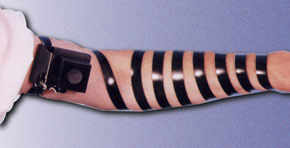 The tefillin box is placed on the center of the bicep muscle, with the box facing inward toward the heart. It is placed on the weaker arm – i.e. right-handed people place the tefillin on the left arm, while left-handed people place it on the right arm.
There should not be anything between the box and your skin.
When laying the tefillin on the arm, a blessing is recited. The blessing is said after the box is placed on the arm, but before the strap is tightened around the upper arm.

Ashkenazi Pronunciation
Sefardi Pronunciation
Immediately after saying the blessing, the straps are wound around the forearm seven times. The straps are always arranged so that the smooth black side is facing outward. There are different customs whether the encircling of the arm should be done clockwise or counter-clockwise (i.e. toward the body, or away from the body).
Once the strap is properly wound around the arm, one should not yet wrap the strap around the hand. Rather, wind the excess strap around the wrist or palm temporarily, so it does not interfere with the donning of the head-tefillin, which is put on at this time.
It is important that there be no interruption of any kind from the blessing of the arm-tefillin, until the head-tefillin are securely in place. This includes talking, gesturing, or even joining in a congregational prayer like Borchu, Kaddish or Kedusha.
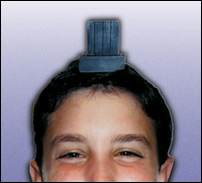
The box of the Tefillin should be placed on the front of the head, just above the hairline (i.e. where it is resting entirely on hair). One who is balding should put it on a location where there used to be hair.
The strap of the head-tefillin forms a large loop which rests on the crown of the head. At the other end of the loop is a knot that should be positioned on the nape of back of the head, above the hairline.
Both the box and the knot should be at the center of the head, i.e. equally centered between right and left.
The straps of the Tefillin are always arranged so that the smooth black side is facing outward. The two straps of the head-tefillin should hang down in front of the person.
Before reciting the blessing, first get the head-tefillin in "ready position." (Sefardim do not say a second blessing, unless there was an interruption since the blessing on the arm-tefillin.) Be careful to hold the box in one hand, rather than let it disrespectfully dangle.
For Ashkenazim, a moment before placing the tefillin on the head, recite the blessing. Once the tefillin are properly in place, recite the "Baruch Shem."

Ashkenazi Pronunciation
Sefardi Pronunciation
Next, the strap of the arm-tefillin is wrapped around the hand and fingers. There are different customs how it is wound.
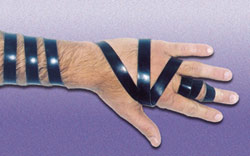 While wrapping the strap around the hand and fingers, many have the custom to recite verses which declare the loving union between God and His people Israel (Hosea 2:21-22):
I will betroth you to Me forever.
And I will betroth you to Me with righteousness, justice, kindness, and mercy.
I will betroth you to Me with fidelity, and you shall know God
After completing the morning prayers, the tefillin are removed while standing. The head-tefillin are removed before the arm-tefillin. Out of affection for the mitzvah, some people kiss their tefillin before putting them away. In recollection of the Talmudic story of Elisha, some wrap the straps of the head-tefillin on both sides of the box, to resemble the wings of a dove.
NOTE: Over the course of time, tefillin can begin to deteriorate. Therefore, if you have an old pair of tefillin (perhaps even inherited from your grandfather), you should have it inspected by a scribe. In general, it is a good idea for tefillin to be checked at regular intervals.
While our Tefillin are an expression of love of God, the adoration is mutual. The Sages relate that God Himself wears a pair of Tefillin, on which is written His expression of love for the Jewish people: "Who is like Your people Israel, a nation upon the earth" (1-Chronicles 17:21). (This anthropomorphism should not be understood in a literal sense. Since God is incorporeal, he does not "wear" a physical item.)
Throughout Jewish history, and more recently in the Holocaust, many Jews risked their lives for the sake of Tefillin. Rabbi Joshua Aronsohn, in The Holocaust and Halakhah, describes how Tefillin were put on in Auschwitz:
When we arose in the darkness of the night, we had just managed to wash, the block leaders and their helpers were hurrying us along to the forced-labor details. There were long queues of prisoners waiting in line, not for bread or coffee, but to fulfill the mitzvah of Tefillin. We appointed a special "guard" whose job it was to make sure that no one kept the Tefillin on for longer than it took him to say the one verse "Shema Yisrael," so that more would be able to fulfill the mitzvah.
Tefillin is the epitome of closeness to God, the true strength of the Jewish people. In referring to Tefillin, the Torah says: "The peoples of the earth will see that God's name is called upon you, and they shall be awed by you" (Deut. 28:10).
For further study:
Photos and illustrations courtesy of Feldheim Publications
Photo credit: Courtesy of www.mezuzahstore.com.