







 Debunking Viral Claim About the Talmud and Minors




8 min read


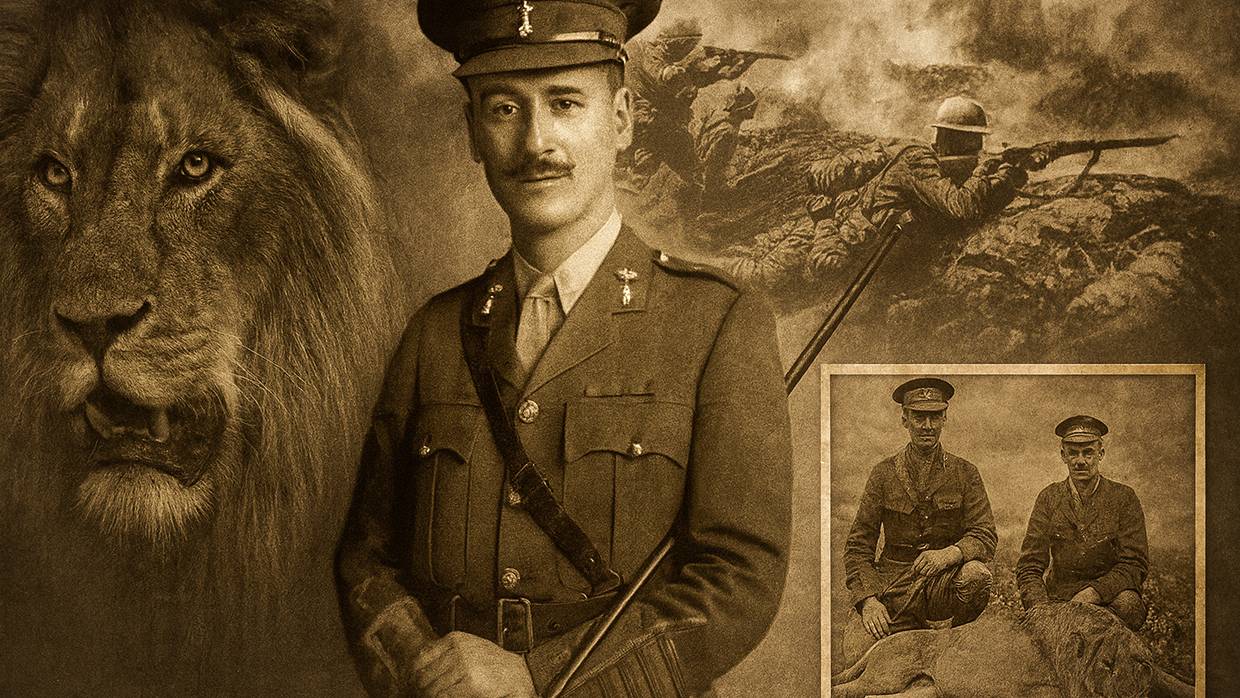
Maj. John Henry Patterson created the first Jewish fighting force in 2,000 years.
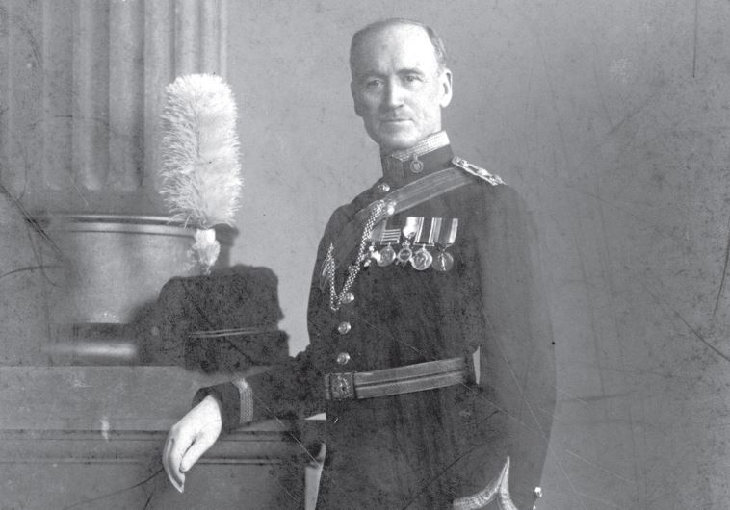
John Henry Patterson was born in Ireland in 1867. His Catholic mother gave him a strong Biblical education, and he grew up enthralled by stories of Joshua, Gideon, and the Maccabees—heroes who fought for Israel’s survival. That early fascination shaped his destiny. Patterson rose to prominence as a decorated soldier, adventurer, and world-renowned hunter, but his greatest achievement was forging the first Jewish army in the Land of Israel in nearly two millennia.
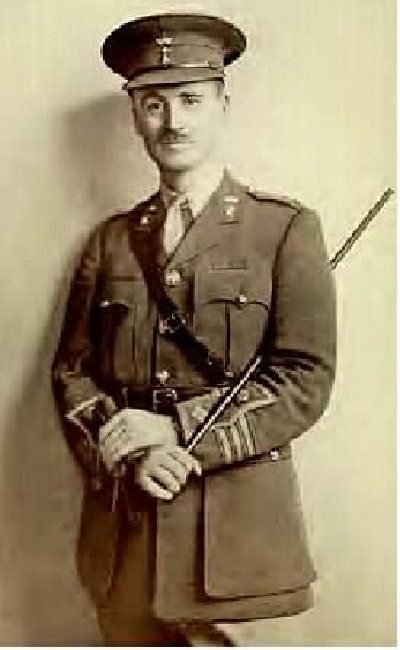 Lieutenant Colonel John Henry Patterson, commander of the Zion Mule Corps and the 38th Battalion, photographed in 1917.
In 1898, as a young British officer, Patterson was sent to Kenya to oversee construction of a railway bridge across the Tsavo River. The project was paralyzed by terror: two massive lions repeatedly raided the camps, killing more than 140 workers. Patterson took it upon himself to end the nightmare, often serving as bait and enduring long nights of fear and exhaustion.
After weeks of pursuit, he shot both lions—each nearly ten feet long—ending the bloodshed and saving the project. His book The Man-Eaters of Tsavo became a bestseller, inspired films, and earned him admirers from Ernest Hemingway to military leaders.
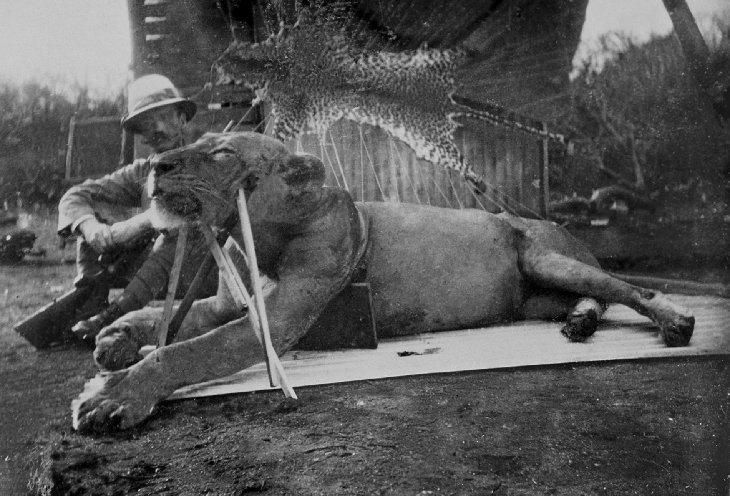 Lieutenant-Colonel Patterson with the first Tsavo lion – killed 9 December 1898
This fame as the “lion hunter of Tsavo” gave Patterson more than celebrity status. It won him credibility, influence, and powerful connections—qualities that would later allow him to take on an extraordinary role: championing the Jewish people and leading the first Jewish fighting force since ancient times.
In 1914, war broke out between the Central Powers—Germany, the Ottoman Empire, Austria-Hungary, and Bulgaria—and the Allies, led by Britain, France, and Russia. Jews in the Land of Israel, then under Ottoman rule, suddenly found themselves in peril. Sultan Mehmet V declared jihad against the Allies and suspected Jews of sympathizing with Britain. He was right to worry: the NILI spy ring in northern Israel provided the British with critical intelligence.
Ottoman authorities unleashed brutal persecution. Jews suspected of helping the Allies, on the flimsiest of pretexts, were arrested, tortured, expelled, and stripped of property. The Ottomans seized Jewish land and expelled nearly 7,000 Jews, forbidding them from living in Turkish-controlled areas under pain of imprisonment, torture, and death. The Ottomans particularly
wanted to erase records of Jewish ownership of property, going so far as to kill and exile land-owning Jews destroy their property records.
Most of these Jews fled to Alexandria in nearby Egypt, joining Alexandria’s sizable Jewish community. Britain ruled Egypt at the time, and British military forces repurposed barracks in order to house the thousands of Jews who were seeking refuge there. Many of these Jews wanted to fight and began planning ways to lend their services to Great Britain.
Col. John Patterson arrived in Alexandria and was immediately asked if he would command a force of these patriotic Jews.
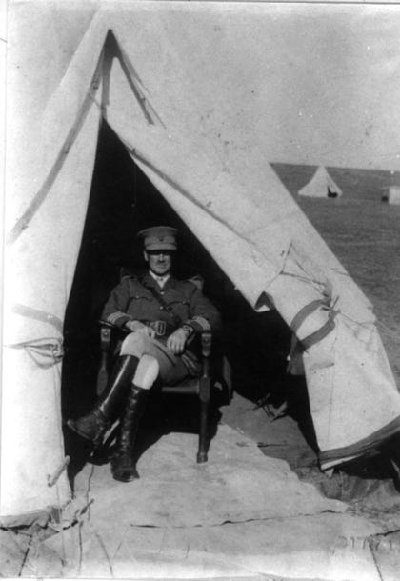
Patterson and his commanders suggested forming a mule corps to ferry supplies—an essential but unglamorous task. He was aided by Joseph Trumpledor, a Russian Jew who'd served in the Russian Imperial Army with distinction and was both decorated and previously wounded in the Russo-Japanese War. Trumpledor was an ardent Zionist and moved to the Land of Israel in 1911 - only to be expelled by Sultan Mehmet V. He and Patterson became fast friends, and Trumpledor recruited Jewish refugees to serve in Patterson's mule corps.
While many British officers regarded Jews with antipathy, Patterson leapt at the chance to raise a Jewish force, writing:
It was strange…that I, so imbued with the Jewish traditions, should have arrived in Egypt at the psychological moment when (the British Army) was looking for a suitable officer to recruit a Jewish unit. A Jewish unit had been unknown for 2,000 years, since the day of the Maccabees, those heroic sons of Israel who fought so valiantly, and for a time so successfully, to wrest Jerusalem from the Roman Legions.
Soon, the Zion Mule Corps was born with 650 Jewish volunteers. Patterson drilled them relentlessly, ensured they had kosher food and time for Jewish holidays, and proudly sent them to war singing Hatikva, the future Israeli national anthem.
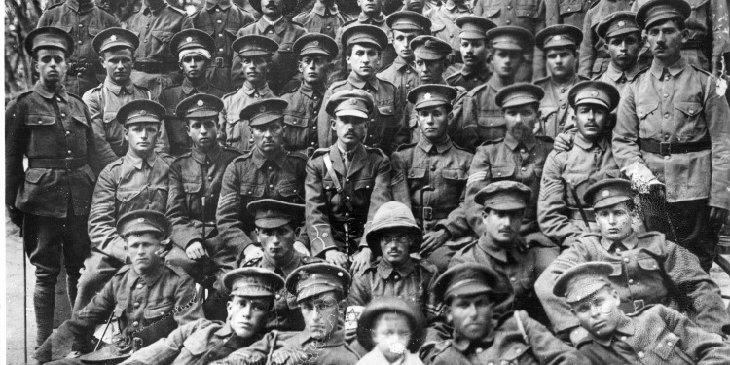 The Zion Mule Corps
In World War I's brutal Gallipoli campaign, the Zion Mule Corps proved indispensable, ferrying supplies and ammunition to Britain's 29th Division. Patterson praised their courage under fire, describing how they carried supplies across battlefields littered with the dead, unfazed by relentless shelling. In May 1915, when attacked directly, they fought back fiercely and repelled the Turks. Eight members of the corps died in action.
Patterson described their fortitude:
These brave lads who had never seen shellfire before, most competently unloaded the boats and handled the mules whilst shells were bursting in close proximity to them…. Nor were they in any way discouraged when they had to plod their way to (another theater of war), walking over dead bodies while the bullets flew around them. For two days and nights we marched. Thanks to the Zion Mule Corps the 29th Division did not meet with a sad fate, for the ZMC were the only Army Service Corps in that part of Gallipoli at that time. (Quoted in With the Zionists in Gallipoli by John Patterson: 1916)
Although officially disbanded in 1916, the unit proved Jews could once again fight as a people.
Patterson's next task, in 1917, was forming a Jewish fighting force to battle the Ottoman's in the Land of Israel itself. He commanded a new Jewish Legion, part of the Royal Fusiliers, while battling British bureaucracy and antisemitism. Many of the members were British citizens recruited in England; about 120 members of the Zion Mule Corp joined too. Patterson fought for kosher food, Shabbat observance, and even the right to fly a flag bearing the Star of David. The men adored him, insisting he remain their commander.
In the closing days of the war, the Jewish Legion fought with distinction in the Land of Israel, capturing towns, taking prisoners, and symbolically returning Jewish fighters to their ancestral soil. Patterson was proud that Jewish soldiers under his command were once again battling their foes in the Land of Israel, where a thriving Jewish nation with its own army once stood.
Denied promotion because of his support for Jews, Patterson left the army but never ceased championing their cause. He toured England and America, raised funds for Zionist projects, and befriended Ben-Zion Netanyahu, father of Israel’s future prime minister.
During World War II, Patterson tirelessly lobbied Winston Churchill and others to form a Jewish brigade. In a rally in 1940 in New York’s Manhattan Center, Patterson addressed American Jews directly, asking them to volunteer:
If I were a Jew, nothing would give me greater pleasure than to show the German criminals that the Jews of today are capable of fighting just as their forefathers were, when in seven years of bitter warfare they shook the mighty Roman Empire to its very foundations.
At last, in 1944, the Jewish Brigade was created, fighting in Italy and later helping Holocaust survivors reach Palestine.
By the mid-1940s, Patterson, then in his late 70s, was ill and lived in California with a Jewish family he’d befriended through his Zionist activities. He railed against Britain’s refusal to allow more Holocaust survivors into the Land of Israel and “the inhumanity now being perpetrated by England against the unfortunate immigrants fleeing from worse than death to their homeland.”
Patterson died in 1947, just a year before the creation of the State of Israel he had so fervently supported. He is buried in Netanya, a city in the north of Israel. Today, Jerusalem has a John Patterson Street, and Israeli museums honor his story. Most poignantly, Ben-Zion Netanyahu - a journalist and academic who befriended John Patterson when they were both advocating for a Jewish state - named his firstborn son Yonatan after Patterson, asking him to be the boy’s godfather. Yonatan Netanyahu later became one of Israel’s greatest heroes, killed in the 1976 Entebbe rescue.
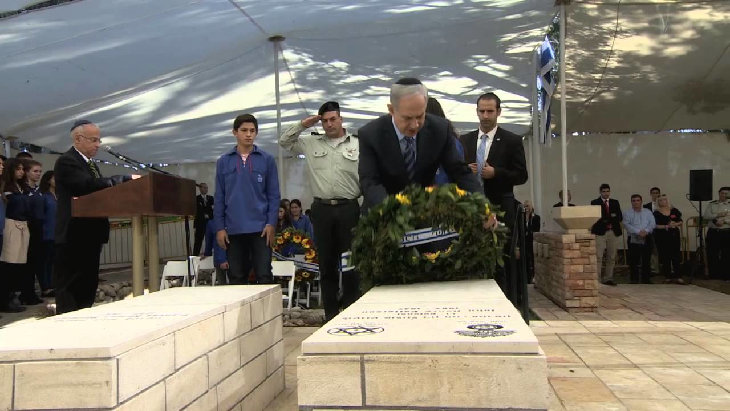 Internment of Patterson in Israel (Youtube)
John Henry Patterson, the lion hunter who became the godfather of the Israeli Army, helped turn Biblical dreams into modern reality. His life remains a testament to courage, faith, and the enduring bond between a Christian soldier and the Jewish people.
Thank you to Rabbi Zvi Engel, who first told me the remarkable story of Maj. John Henry Patterson.





Excellant article. Do you want to read about another Irish Israeli hero? Mike Flanagan, the Founding Father of the IDF Armoured Corps. See http://www.Buckleyhistorybooks.com
Thank you.
Beautiful article, great courage trait along. I loved the history part too of the man eaters of Tsavo. When going to Mombasa in a train l love looking intently through the window for a chance to see a generational lion in the park. Obviously courage is a key aspect of loving God. Without courage there would not have been the gland return to Israel. Asante sana!
This otherwise excellent article omits the name of my sister Attorney Myrna Linett Strapp who, before making Aliyah, over10 years ago, volunteered pro bono, to effectuate Col. Patterson’s cremains removal from Los Angeles to Israel. Thus, bringing to conclusion Col. Patterson’s desire to be buried alongside of his men.
Wonderful to know, and inspiring.
Wonderful story. Israel was another example of Britain's need to divide and conquer as they did to Ireland creating an artificial divide between the North of Ireland and the south through what was known as the plantation system: bringing Scots from the Island of Britain and creating a small gathering of counties with a Protestant majority. Indeed, the Irgun supposedly used some of the tactics of the IRA against the British in mandatory Palestine.
beautiful story, greatness is achieved by hard choices and is at everyone´s grasp, we have to see it and reach out to it.
When I first read the biography of Col. Patterson, I was in awe of this steadfast Christian Friend of the Jewish people. At the end of the biography was an afterward by Alan Patterson, the Colonel's grandson. Alan lamented that he did not know how to fulfill his grandfather's last wishes, to be buried with his men.
I wrote to Alan. As president of the Jewish American Society for Historic Preservation, I knew how to fulfill his grandfather's wishes and rebury him with his men in Israel. Alan eagerly accepted the offer.
It took three years and support from Christians and Israelis together to accomplish the mission of duty, honor, respect, and obligation.
https://www.jewish-american-society-for-historic-preservation.org/internationalprograms/coljhpattersonisrael.html
This is one of Dr. Miller's most interesting and inspiring articles ever!. As a donkey and mule caregiver and former artillery officer, the Zion Muleteers story is history I needed to know!! Thank you.
I will forward this story to an Irish friend, to Irish newspapers and post on LinkedIn
You must read Patterson of Israel by Melbourne writer Henry R. Lew (Hybrid publishing) A detailed account of John Patterson’s contribution to Jewish history.
Don't tar us all with the one brush. Think of Mary Elmes, Hugh O'Flaherty, Mike Flanagan, Paddy Cooper etc.