







 Debunking Viral Claim About the Talmud and Minors

10 min read
14 min read


7 min read


The hit musical was inspired by and warns against anti-Jewish hate.
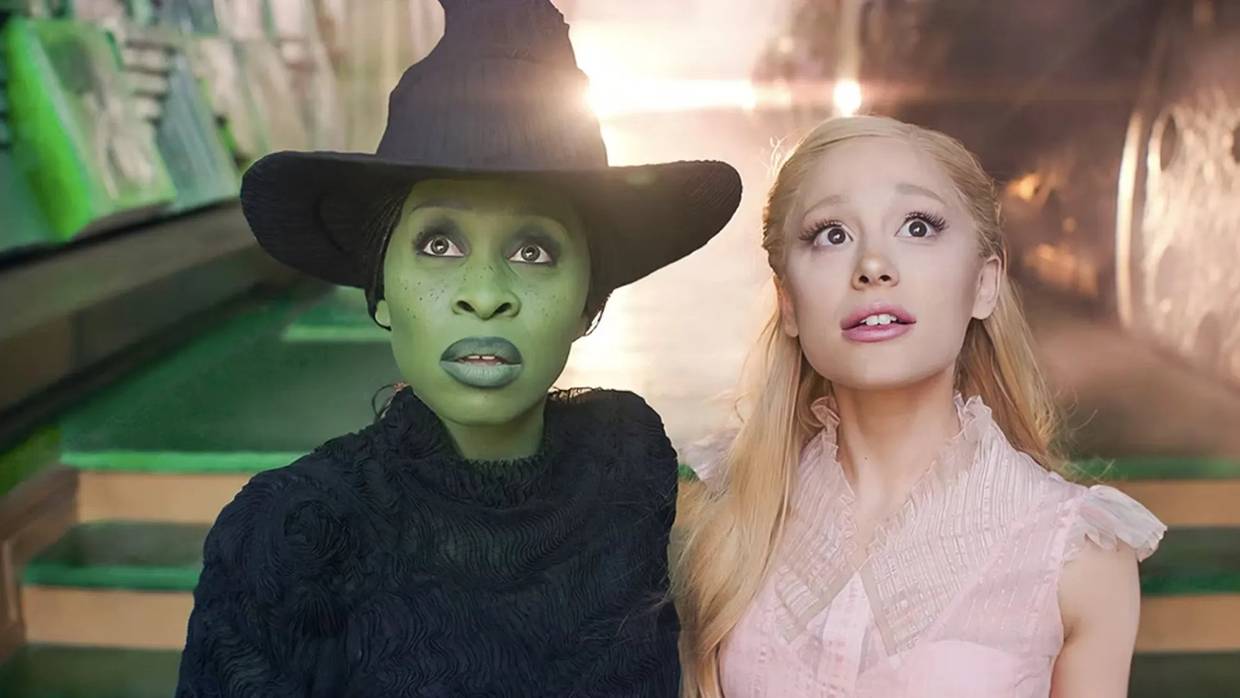
Wicked offers a thrilling prequel to The Wizard of Oz, describing how the Wicked Witch of the West - named Elphaba in the musical - rose to power and how she gained her fearsome reputation as an evil sorcerer. Along the way, Wicked is rife with Jewish references and images.
Here are five Jewish facts about the hit musical and new film adaptation of Wicked.
The musical adaptation of Wicked is based on the 1995 best-selling novel Wicked by children’s book author Gregory Maguire. It tells the story of a society sliding into fascism, where sentient, speaking animals are being demonized by humans and other human-like creatures.
Maguire hoped that his book - and the three sequels he wrote to Wicked - would give children courage to stand up against hate and prejudice. In an interview Maguire said, “We can choose to ignore the problems, which is the most common way human beings have of severing themselves from the pain of fecklessness, or we can say we’re going to fight as hard as we can, and we’re going to lose. Or we can say it’s all beyond us, no one person can change the history of the Holocaust…” Maguire has explained that Wicked is his way of letting kids know that they could stand up for what is right, even when doing so is difficult, and not be so quick to judge and demonize others.

He has explicitly said that his book refers to dictators like Hitler, who demonized and oppressed marginalized groups like Jews.
Watching the new film adaptation of Wicked, that primarily takes place in Shiz University where Elphaba and her best friend Glinda become roommates, I couldn’t help but think of my grandmother’s stories about leaving the University of Vienna in the 1930s where Jewish faculty and students were subject to years of rising abuse and vilification. After years of increasing antisemitism and the widespread demonization of Jews, the University of Vienna fired all Jewish teachers and expelled all Jewish students in April, 1938.
The films echoes this anti-Jewish history.
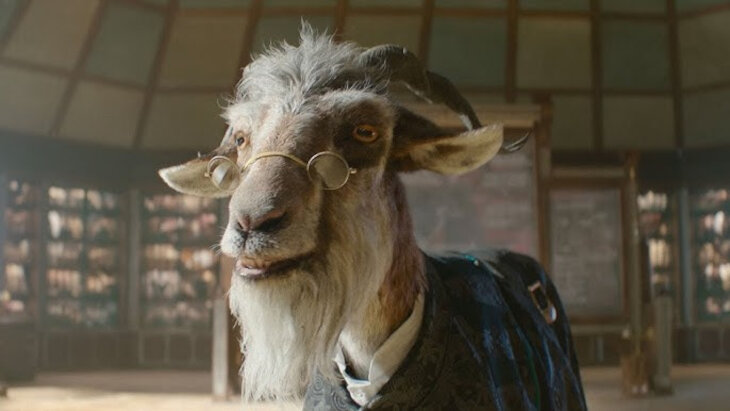 Dr. Dillamond
In some of the movie’s most chilling scenes, students watch as their history professor, a magical, gentle speaking goat named Dr. Dillamond, is persecuted for being a non-human. First he has to contend with cruel anti-animal graffiti. No students other than Elphaba try to stand up for his rights. Eventually, Nazi-like soldiers storm into his classroom and tell him that animals are no longer allowed to teach. Elphaba has a terrifying premonition of Dr. Dillamond being imprisoned later in a cage. The implication seems clear: it’s easy to demonize people, as Jews were demonized in Nazi Europe, and it’s difficult - though crucial - for us all to stand up for others’ rights.
Wicked’s fabulous music and script were written by Jewish composers Stephen Schwartz and Winnie Holzman. Schwartz, who also wrote the music for the hit Prince of Egypt, drew on his Jewish heritage when he created the character Elphaba. Born with green skin, Elphaba grows up to be a kind, moral person who cares for her paraplegic younger sister and who sticks up for her persecuted teacher Dr. Dillamond.
Even though she is kind, brilliant, and giving, Elphaba is hated by virtually everyone who sees her. People turn away from her green skin in disgust and laugh and mock her mercilessly. Even Glinda hates Elphaba at first, only gradually becoming aware that her green-skinned roommate is a wonderful person as the movie progresses. Schwartz notes that Elphaba’s difference - and the fact that she is hated for being different - echoes the Jewish experience.
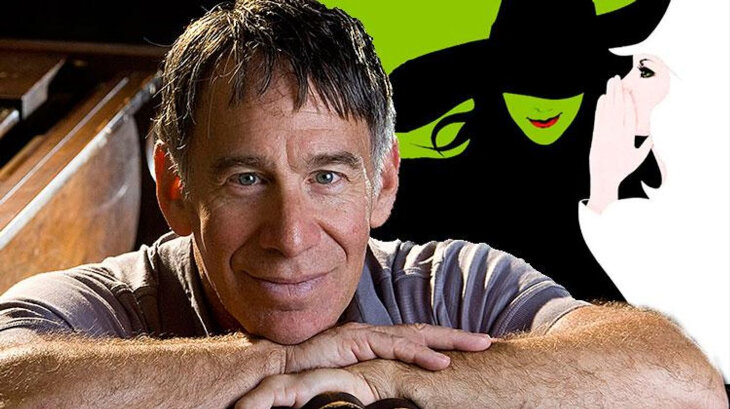 Stephen Schwartz
“I think a lot of musical theater themes speak to Jewish audiences because in many instances musicals are about outsiders, striving to discover how they might fit in,” Schwartz has explained. “Wicked…certainly resonates with many Jewish people’s experience.” In today’s world, where Jews face rising antisemitism and are once more being demonized and seen as “other,” Elphaba’s green skin and the hatred and derision that evoke feel terribly timely and familiar.
In addition to composers Stephen Schwartz and Winnie Holzman, a number of other Jewish film and musical professionals helped develop this hit movie. Wicked is produced by veteran film producer Marc Platt, who also produced the musical on Broadway. (Marc Platt now has another claim to fame: his son is the Tony-award winning star Ben Platt.)
Wicked opened on Broadway in 2003 with Jewish singer Idina Menzel playing Elphaba. She and Kristin Chenoweth, who played Glinda in the original Broadway production, both have cameos in the new film version of the musical. Other Jewish actors in the film include Jeff Goldblum, who plays the Wizard; Ethan Slater, who plays Boq Woodsman; and Andy Nyman, who plays Elphaba’s father Frexspar Thropp.
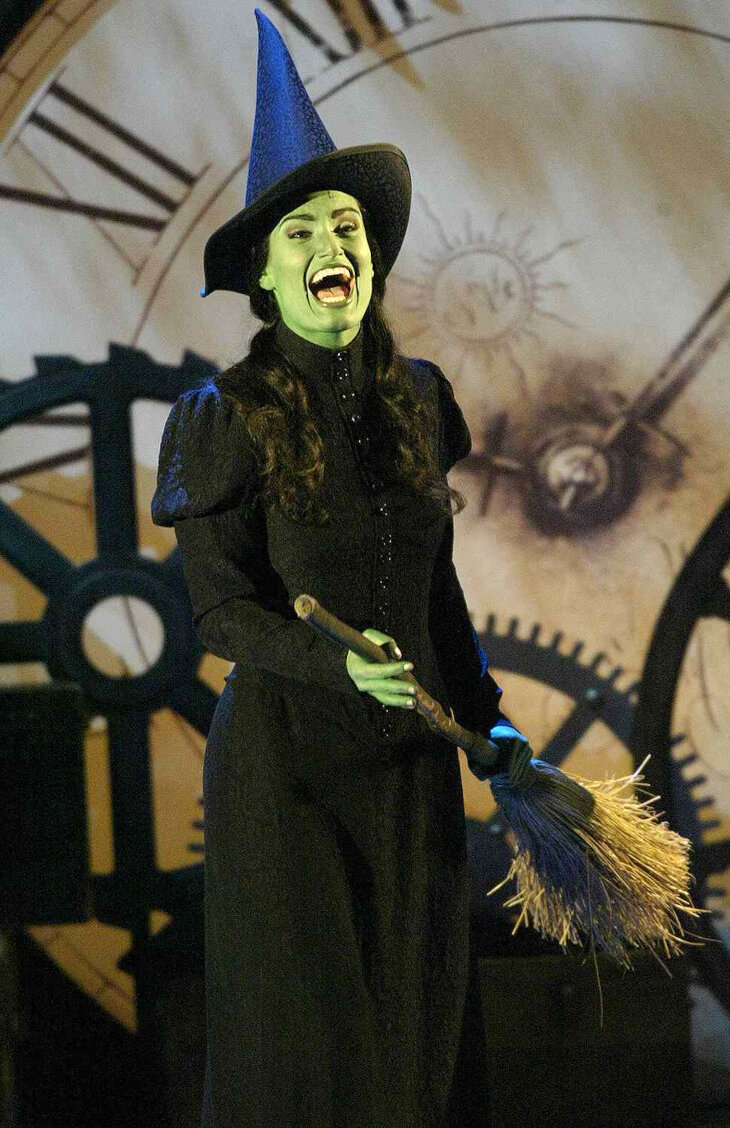 Idina Menzel playing Elphaba
In the original musical version, Idina Menzel’s stereotypically “Jewish” looks gave the show a power, highlighting the way that Jews have historically been marginalized and hated merely for being who they are. Watching the fantastic British actress Cynthia Erivo play Elphaba in the new film lends a new dimension to her character, linking the prejudice Elphaba experiences for being green to the hatred that so many Black people have similarly experienced because of the color of their skin.
Wicked showcases a beautiful, magical world with dark secrets at its heart. These include the fact that the Wizard of Oz - the land’s absolute ruler - is actually a sham. He’s consolidated his power through fomenting fear of minorities. In one of the movie’s most memorable scenes, the Wizard tells Elphaba and Glinda: “The best way to bring folks together is to give them a real good enemy.”
The musical’s beauty lies in showing how Elphaba, with her innate goodness and morality, is able to stand up to evil.
Jewish actress Talia Suskauer played Elphaba on Broadway and has described how the musical helped shaper her thinking and give her the strength to stand up to antisemitism: “There’s a line in the show that says, ‘The people just need a really good enemy. They need a scapegoat.’ Throughout history, Jews have been designated as that scapegoat. If there’s an issue, the Jews did it. This happens time and time again - the Inquisition, the Crusades, the Holocaust - and that’s exactly what is happening here on the show.”
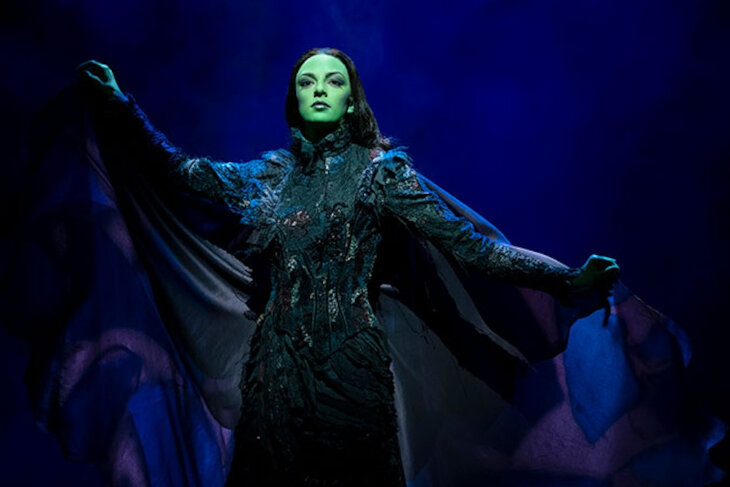 Talia Suskauer as Elphaba
Suskauer notes that when she was younger, she was “embarrassed” to draw attention to antisemitism, noting, “Someone would make a Jewish joke in school, and I would just laugh it off. Thinking about that makes me so ashamed because I should have said, ‘You’re being antisemitic, and that is hurtful and mean.’ Now, I can’t sit on it anymore. It’s getting to the point where people are being targeted because they’re Jewish, that it’s very scary. I have to use my platform and I will continue to use my platform.”
If Wicked inspires us to do anything other than sing its catchy tunes, it’s to stand up for what is right, to resist prejudice in all its forms, and have the courage and pride to be your authentic self.







Perfect article!
When I watched the first part of Wicked -
My gut reaction was everything you bring to light. It was so reminiscent of what we know happened in 1930’s Germany and what is happening's today on the campuses and streets of USA cities!
Thank you to all the creators and actors
Excellent article. I learned a great deal
The book, Wicked, was very much a commentary about politics and the use of propaganda in our society. In both the musical and the movie, those two issues come to the fore in part 2. Elphaba may be a bit immature in how she carries out her side of the conflict, but she is dead on about the issues. For those who have not seen the musical, the propaganda against Elphaba becomes clearer, and we will see Glinda manipulated into one of her prime accusers. As the Wizard said, "The best way to bring folks together, is to give them a really good enemy". Whether about Jews, racial, political, national, or other minority groups, Wicked speaks for "the other." I can't wait for Part 2. We see it everyday in the way Israel has been maligned in the press.
I guess wicked is also a story, that is similar to the comic book the x-men, about the other being different and having prejudice against them, and someone has to come to stand up and protect, the ones that are the so called underdogs of society, but really Jews are special because we were chosen by Hashem
In the movie, yes, Elphaba is kind, giving and brilliant and she is rejected, shunned and betrayed from the moment of her birth. Unfortunately, instead of staying kind and good she does transform into the Wicked Witch. This is a significant movie in the nature vs nurture discussion, showing that lack of nurturing can do devastating damage to an innately good person, leading them to an unfortunate diabolical transition in personality.
The moral is even if you get bullied, you shouldn't become evil you should still do a be good, Jews went through a lot but still help others, from all people Jews give and do the Jewish version of charity and mitzvahs
So this is a bit tangential, but I read that Over the rainbow is a song about Israel.
It's a shame that the teacher is represented by the demonic image of a goat. No other animals were available to audition? Also, this rendition/story is rife with political ans social agendae, pushing homosexuality, etc., etc.
What wrong with goats? They're wonderful.
Talking goats are fine, but I draw the line at flying monkeys!
The goat is a scapegoat. Therefore, a goat. What's problematic to me is that he is an animal, not a human. People don't see Jews as humans, they see them as "Other."
I was happy to read that Suskauer is committed to using her platform to speak out against antisemitism, especially given that Hollywood and Broadway are in dire need of perspectives like hers. However, a quick look through her instagram posts (of which there are many and frequent) revealed no references to antisemitism at all. Disappointing.
I would like to point out a factual error in this article: THE PRINCE OF EGYPT was produced by DreamWorks, not by Disney.
Where does it say that in the article?
The representation of antisemitism is not limited to the 1930's as same hatte filled rhetoric is alive and well on university campuses in the 2020s
Not having read the books or seen the musical/movie, I seem to have missed something - throughout the article Elphaba is described as a kind, moral person, standing up for the rights of "others".So how does she grow up to be the wicked witch of the west?
If I remember correctly from the book and the musical (it's been 10-15 since I read/saw it), she's not "kind." She's kind of prickly and harsh. She's morally correct, but she's not Cinderella. You have to look past her behavior to find the good person underneath. (Which I personally think is a better message. Don't be fooled by smooth talkers.)
Your last sentence hits the nail on the head! Smooth talkers and people who smile too broadly make me feel
Uneasy.
The aclamated film Wicked teachs us a lot of things. One of them is: stand up for what's right, like: defending animals rights, respecting the diversity of colors and disabilities. That's why I loved Elphaba and her sister Nessarose.
Wow, very interesting!
As always, Yvette, you provide insight and clarity into an essay. Thank you!