






 Debunking Viral Claim About the Talmud and Minors


12 min read


After witnessing the horrific massacre of October 7th and the onslaught of antisemitism, why are many non-Jews responding by joining the ranks of the Jewish People?
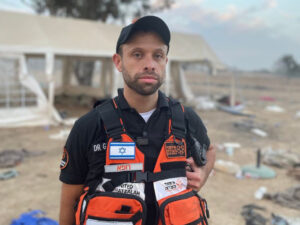
When Andres Mustafa, a practicing Muslim, watched the news on October 7th, 2023, and saw the footage of the Hamas invasion of Israel, he says, “My heart was breaking. I actually started crying.” He ended up watching every single video of Hamas atrocities that was available. “I had never been more angry,” he says. “I said, what are we living in? Holocaust 2.0?”
Trying to process his own emotions, Mustafa, who now goes by Ariel, reached out to a Jewish friend who recommended that he speak to a rabbi. Thus began Ariel’s journey to Judaism. Currently, Ariel is studying for his Orthodox conversion and planning to move within walking distance of a synagogue.
He explains, “I did a lot of research because I couldn't understand why I wanted to convert, why I felt connected to the Jewish people, why I felt connected to God through the Jewish people. Now, I would say that I had a Jewish soul all along, and that’s what really pushed me.”
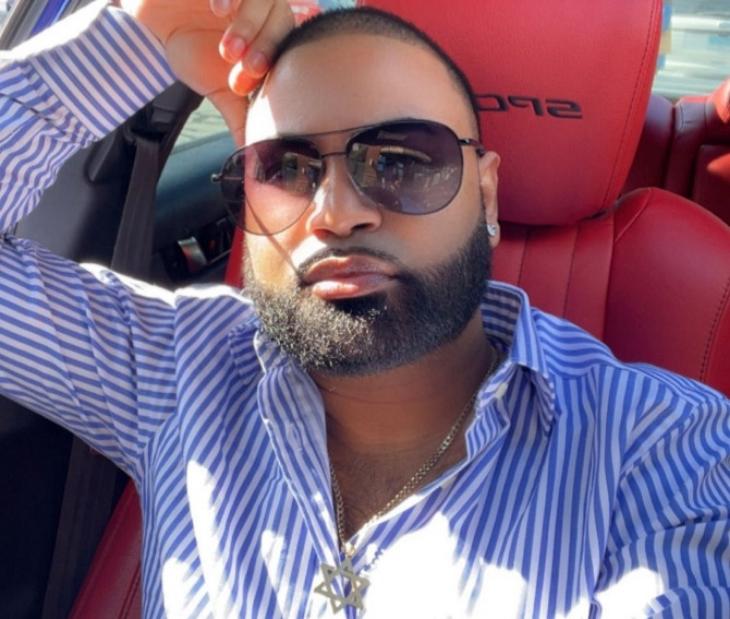 Ariel Mustafa
Ariel is one of a growing number of non-Jews who were drawn to Judaism in the aftermath of the October 7th Hamas massacre and the rise in antisemitism around the world. Ariel says, “I'm not the only one, because when I speak to other people, instead of scaring us, October 7th really only just hardened our resolve.”
Instead of scaring us, October 7th really only just hardened our resolve.
The evil they witnessed on October 7th propelled these converts to bring more good into the world and to seek out God. Ariel continues, “We just had to move forward, knowing that God is behind us, and if He's with us, then who could be against us? So I just went for it and it's been the best decision of my life. I have never been more satisfied and more happy.”
Though Ariel encounters plenty of antisemitic sentiments from his friends, he says, “I deal with antisemitism through education. Antisemitism is a fear, it's a phobia of what people don't understand, or what people sometimes don't want to understand.” He speaks of seemingly educated people who believe ridiculous blood libels. When confronted with facts, some of his friends recognize the truth and apologize, while others stubbornly cling to their irrational fears. “Sometimes, no matter what you say, people are still going to hate you,” he concludes.
Rabbi Eliyahu Raskin, founder and director of Jewish Conversion Academy, the largest online learning program for potential converts to Judaism, says that he has seen a “huge uptick” in conversion to Judaism post-October 7th.
Many converts describe themselves as a Jewish soul born into a non-Jewish body. “Serious converts do not feel that they have an option not to be Jewish,” says Rabbi Raskin. “For them, it's something they have to do. And so, when they saw what happened on October 7th, they felt like their sisters and brothers were captured. And then they look at themselves like, oh, there are a lot of people who don't consider me their sister or brother. I need to change this.”
Founded almost two years ago in response to a growing need, Jewish Conversion Academy is an educational platform that caters to English speakers of various backgrounds. Candidates whom they deem ready are referred to accredited Beth Dins for actual conversion. Currently, about 100 students are enrolled in the Academy. Over 50 graduates have successfully converted to Judaism. The majority come from a Christian background, but some are from a Muslim or secular background. A significant percentage have some Jewish ancestry.
The intense schedule and challenging curriculum helps to ensure that only those who are sincere complete their conversions. A potential convert needs to practice Judaism for at least a full year before converting. The process usually takes much longer. Some people have been studying for years, or even a decade, and still do not feel ready to complete their conversion.
“Most of the people that have come to us post-October 7th are people that were always interested,” says Rabbi Raskin. “They feel Jewish or want to be Jewish, and this was just kind of a wake-up call, like, you’ve got to do it now.”
For Betzalel Schraeder, the turning point was the antisemitic murder of Sarah Milgrim and her boyfriend, Yaron Lischinsky, outside the Capital Jewish Museum in Washington, D.C.
For Betzalel Schraeder, a registered nurse from Kansas City, the turning point was the antisemitic murder of Sarah Milgrim and her boyfriend, Yaron Lischinsky, outside the Capital Jewish Museum in Washington, D.C. Sarah grew up in Kansas, and though Betzalel had not known her personally, they had some mutual friends. Her murder hit close to home.
“It was so senseless, so ridiculous,” says Betzalel.
Betzalel came from a Christian background. It was Bible study and a search for meaning that had originally led him to study Torah over ten years ago. Several years later, his paternal grandmother revealed to him that she was Jewish. The discovery of Jewish ancestry increased Betzalel’s interest in Judaism.
When he began studying for conversion, “I approached it very carefully and methodically,” he recalls. “I’ve taken one thing at a time and integrated it into my life.”
Sarah’s murder led Betzalel to realize that “it doesn’t matter whether I convert or not. Antisemitism is pointed at me, even though I am not part of the Jewish nation [yet]. And that was the thing – I feel deeply inside myself that I am part of the Jewish nation, and there was a sense of, I’m not fully part of the mourning because I am not technically Jewish.”
Betzalel has a date scheduled for his conversion.
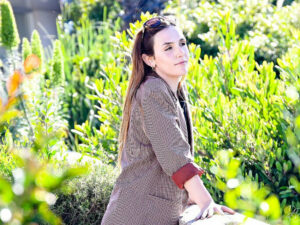
Others report that their commitment to convert only strengthened in the aftermath of Oct. 7. Henrietta Weekes, born and raised nominally Christian in England, discovered Judaism in her late forties.
“It’s been three years of a process of completely changing my life,” she says. “But even though it’s counterintuitive to the way I was raised, it also feels the most natural, what I’ve wanted my whole life, which is to always live with God. Every single thing makes sense to me on the soul level, but I was never taught that by the people I was around or by the society I was in.”
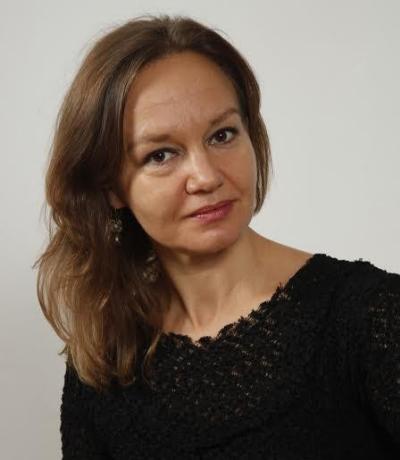 Henrietta Weekes
For Henrietta, who currently lives in New York, the rise in antisemitism “has been very challenging in lots of aspects, because I’ve lost a lot of my friends.” Many of her former friends have expressed pro-Palestinian sentiments, and sometimes, plain antisemitism.
But Henrietta has no regrets. “I just joined with the Jewish people. These are my people… It’s also been very lonely and hard, and I’ve shed a lot of tears. I am not a very fearful person but I’ve felt more fear and anxiety with my shifting friendships, relationships, colleagues – either the hostility towards me and the change I’m undergoing, or just being around antisemitism and them not knowing.”
Henrietta explains that what gives her strength to “stand in front of antisemitism, with literally people shouting at me, which I’ve experienced a few times” is the understanding that evil is a lack of connection with God. “It’s all very well being full of knowledge and intellect, but it’s so dangerous without first knowing Who your Creator is,” she says. “Those kinds of challenges have actually made me more committed. I couldn’t imagine not living on this path anymore, because it would feel like a lie to myself.”
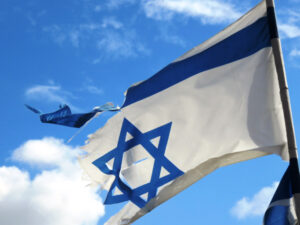
One student was harassed on a train for wearing a Magen David — instead of fear, he felt pride in being a target of antisemitism.
Rabbi Raskin says that he always warns potential converts about the dangers of antisemitism, but they are usually not discouraged. In fact, one student was harassed on a train for wearing a Magen David — instead of fear, he felt pride in being a target of antisemitism.
Rabbi Raskin recalls only one incident of a future convert getting scared because of the hate she received on social media when she shared that she was becoming Jewish. “We spoke through it,” says Rabbi Raskin. Overall, the experience only strengthened her resolve to convert.
The events of October 7th and their aftermath made a significant impact on intermarried couples. For some, the strong emotions experienced by the Jewish spouse and feeling misunderstood, or worse, brought much conflict and eventual separation.
For some intermarried couples, Oct. 7 sparked an interest in Judaism in the non-Jewish spouse and led them on a path of conversion to Judaism.
For other intermarried couples, however, the events sparked an interest in Judaism in the non-Jewish spouse and led them on a path of conversion to Judaism. Rabbi Raskin says, “We saw a lot of people who were married to Jews and who could not experience the pain of their spouse. Or they were interested in converting for many years, but never had the push to do it. After October 7th, they said, ‘This is my people!’” For such couples, their relationship grew stronger as a result.
Mayim Aversa, 65, recently completed her Orthodox conversion. The process took her 25 years, with many obstacles on the way. Mayim’s husband, Adam, was born Jewish but grew up secular. She grew up in Mexico and moved to the U.S. as an adult. There, she met and married Adam, an artist and rock musician.
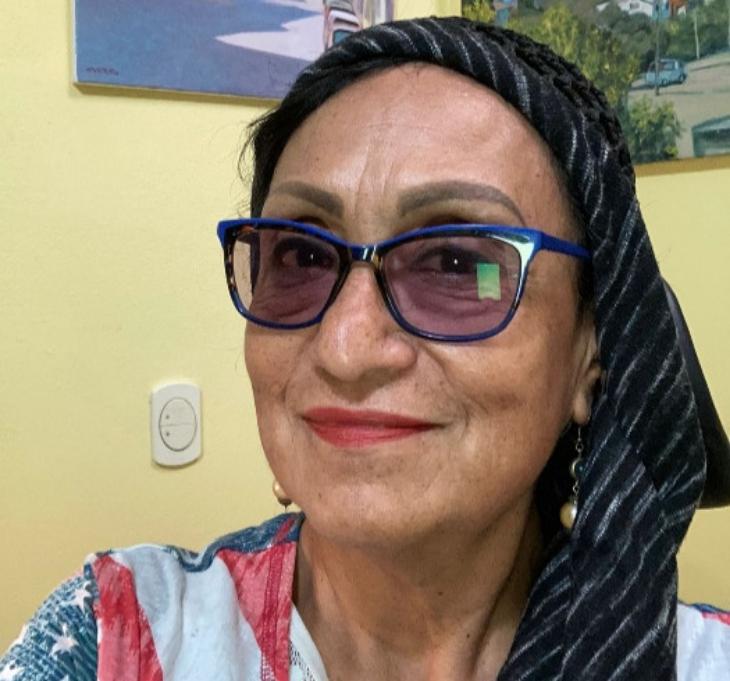 Mayim Aversa
As Mayim learned more about Judaism, Adam was very supportive. “He says, ‘My job is to keep you happy. What do you need? You need me to keep Shabbat? I will. You need me to keep kosher? I will. You need me to wear a kippah? I will.’ He's doing a very good job of keeping me happy,” says Mayim.
Two years ago, after another frustration on the way to conversion, Mayim met another rabbi, who recommended that she move back to Mexico. “And you know what we did?” she says. “My crazy husband and I, my uneventfully American, Jewish-born husband and I, we left everything and we moved!”
It wasn’t easy, but in San Miguel de Allende, Mexico, the Aversas finally found a Jewish community where they feel at home. Today, they host large Shabbat meals. Some of their guests had never been at a Shabbat table before, and others come from various levels of observance. They are of different skin colors and speak different languages.
“It’s a lot of fun,” says Mayim. “It’s wonderful. It’s very obvious that we need one another. We're pieces of the puzzle, and the time to put the puzzle together is now.”
As for antisemitism, Mayim says that she’d experienced plenty of racism living as a Mexican in the U.S. “I’m tough,” she says. “Good luck squashing the olive, trying to destroy it. The more you squash it, the more you activate the Jewish thing – it’s dangerous. How do you make a passionate Jew? Inflict a little bit of pain. That’s how you activate the Jewish passion.”
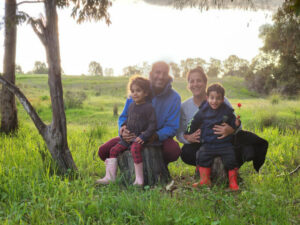
Anelyn and Matthew Massaro and their three sons are currently studying for conversion. Anelyn was born and raised as a Christian in the Philippines. Matthew was born in El Salvador and adopted by an American couple – a Jewish mother and a Catholic father. He was raised with Reform Judaism and even had a Bar Mitzvah.
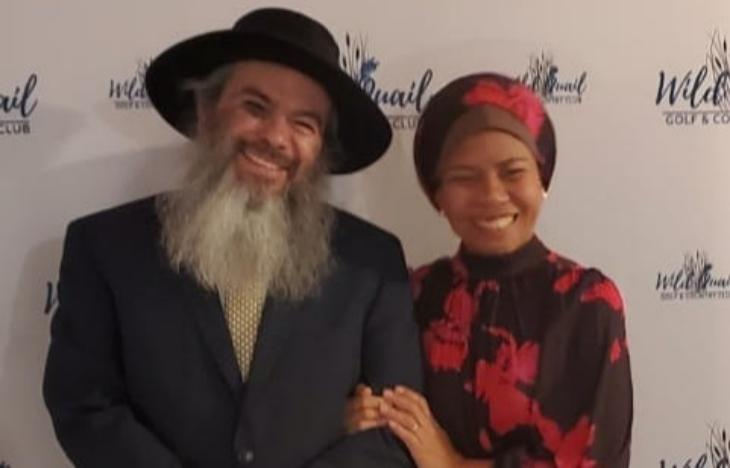 Matthew and Anelyn Massaro
Neither of them had thought much about religion when they got married. It was the Covid pandemic that, Matthew says, “flipped a switch” for them.
Anelyn, afraid of the pandemic, searched for a way to connect to God and to learn what message He was sending through it. “I was looking at our bookshelves, and I found [a book called] Torah. I didn’t know what Torah was.”
The book was a gift from Matthew’s Bar Mitzvah that he had never opened as an adult. Anelyn began reading, recognizing it as the “Old Testament” she had studied as a child. But she found that the Torah was very different from what she had been taught.
Anelyn read the book from cover to cover and then went back to the beginning. She began looking for more information online and came across Jewish perspectives on the Tanach, among them Rabbi Tovia Singer’s anti-missionary lectures. Eventually, she realized that “I grew up with lies,” she says.
We started doing things, and we just fell in love. There is no turning back. We have to be Jews.
Thus began the family’s journey towards Judaism. As Anelyn learned about Jewish traditions, she suggested to Matthew that they incorporate them into their lives. Matthew says, “We started doing things, and we just fell in love. There is no turning back. We have to be Jews. I believe in my heart that my soul is a Jewish soul.”
With their newfound connection to God, the Massaros are no longer afraid – not of any pandemics, and not of antisemitism. Reading the Torah, says Anelyn, helped her understand that antisemitism has a spiritual purpose in reminding Jews at risk of assimilating who they truly are.
“When the spirituality of the Jews declined, God brought antisemitism. That’s why in my heart I don’t have fear. Antisemitism is God’s tool to bring us back to Him.”
Despite their experiences with antisemitism, converts and future converts find comfort in the sense of belonging to the Jewish people and being on a mission. The darkness of October 7th and its aftermath only underscored that point.
“It’s up to us to be the light,” says Matthew. “We have a responsibility, not only to the Jews, but to everyone.”
Henrietta says that being a Jew is a privilege, “and we can stick together. We are all born with a purpose, to bring light to the world. What could be more beautiful than that?”







BEAUTIFUL!
HaShem works in mysterious ways, after Oct 7 you may have thought that people have lost their faith,. Hamas has become the biggest recruiter of converts to Judaism, proper Torah Judaism none of this watered down stuff that vaguely nods a head to the greatest religion in the World. Am Yisroel Chai
I've been interested in Judaism for most of my life, but for various reasons haven't been able to start a conversion process. I've only felt more drawn to it since October 7th. The rise of anti-Semitism feels like a personal attack, and if I feel this connected to the Jewish people, shouldn't I become a part of it?
I'm still not in a position where I can convert right away, but I'm buckling down, really trying to decide if and how I'm going to do this. Learning that this is a widespread phenomenon is encouraging if also a bit uncanny.
All success!
I live in NY and would like to be in touch with Henrietta.
Chaya - please do connect. [email protected]
Thank you for this article. I was definitely not aware of this phenomenon. This is so uplifting to read about!
My book on reincarnated souls from the Holocaust, I've Been Here Before: When Souls of the Holocaust Return, has a whole chapter on Jewish souls born to non-Jewish mothers who feel drawn to convert to Judaism because that's their soul's true identity. Fully one-third of the 550 people born after 1945 whom I researched were born into non-Jewish families. Half of them converted as adults. The book is available on Amazon.
I actually told one of the interviewees about your book, because their story sounded so similar.
I can’t wait to read this book. I understand this. I used to read Primo Levi books when young - on my own. And later went on to study Frankl’s logotherapy (the best method!)
Henrietta, you sound like so many of the people I interviewed for my book. You are a Jewish soul who landed in a Christian family. The Klausenberger Rebbe (who lost his wife and 11 children in the Holocaust) said in 1970 that there are so many Jewish souls who died in the Holocaust trying to come back and there are not enough Jewish mothers to receive them, so they are going to non-Jewish mothers. Welcome home!
Thank you for this information Sara. This resonates very deeply. A new possible piece of the puzzle. BH. Much looking forward to this book.
I'd like to recommend another book, with a disclaimer that it's not for the fainthearted: Returning by Yael Shahar. Amazing story! Sara Yocheved Rigler also cites it in her book.
If you’ve recommended this - then I’m reading it ! Both these books. Thank you !
Sara. I would love to talk with you. I’ve bought the book and beginning it today !
Mayim's statement says so much, "We're pieces of the puzzle, and the time to put the puzzle together is now.” I remember the article about after the Holocaust, people began having horrific, personal dreams about the Shoah, though they were totally unrelated. G-d is lifting up the table, rolling certain neshamoth to their destiny, while others run into something else, stopping, never starting. There's a critique of Babylonians for seeing Jews camp out in the STREETS to learn Torah immediately after the harvests of wine & oil in the months of Adhar & Elul & NOT JOINING THE JewIsh PEOPLE!!! On the other hand, these returnees weren't motivated enough BEFORE the Oct 7 Massacre, so everyone is on a huge spectrum, everyone gets a chance (Se'ir & Paran).
Wonderful Article! These are all incredibly special people. I grew up totally secular (had never heard of Pesach or Shabbat), though both of my parents were Jewish. I became frum when I married my husband who's family is orthodox. The meaning that being observant has brought to my life is indescribably beautiful in so many ways. The feeling of "coming home" was very similar to the stories of these couples.
I attended a Shabbat service for the first time at the age of 12 at my sleepaway camp. (Todah Rabah, Camp Shangri-La!) Both of my parents were also Jewish, but their fear of anti Semitism was just too overpowering. I still have a of work to do but that fact does not scare me. Shavua tov!!
“When the spirituality of the Jews declined, God brought antisemitism. That’s why in my heart I don’t have fear. Antisemitism is God’s tool to bring us back to Him.”
The above quote greatly disturbs me. How could a loving God use antisemitism to bring
his people back to him? This justification for
antisemitism is sick! There is NO justification!!
Maybe it’s better to say not that there is “Somebody Who did something” but instead to see Jew hatred as an opportunity to deepen our own knowledge and spirituality. The saying “Gam zu l’tovah”, This too can be turned to something good, comes to mind.
You're right! no justification for the antisemite - everyone has free will, and s/he's chosen evil. But the larger picture is that whenever there is antisemitism, there is a return to Jewish identity among those for whom Jewish identity was weak. So antisemitism is a wake-up call, and it seems to work. Yes, sometimes our loving Parent has to use harsh measures to get His children back on the right path.
Unlike mere mortals, Hashem needs no justification for whatever He does; the fact that we cannot fathom His ways is beside the point: We are His eternal people who trust that any "surgery" He performs is ultimately for our good.
There’s a tenet of Jewish thought that says everything is from Hashem. So everything has a purpose (a purpose for good), if we look for it. We cannot possibly understand the mind of G-d, but we can find ways, in our limited human understanding, to turn everything to be used for good. I think this is what the author means when she describes the idea that Hashem uses antisemitism to awaken us. It is one way of using our human language and words, with all their limitations, trying to describe something very painful. It doesn’t JUSTIFY nor APPROVE of antisemitism; it merely attempts to explain it & transform it to be used for good. Further, the author explains another very powerful tenant of Judaism: evil is just a disconnection from G-d. Hashem didn’t create antisemitism, humans did.
I am far from being an orthodox Jew. I grew up very secular but became more traditional the past couple of years. Beautiful article.
This is a very special article. Thank you Yehudis